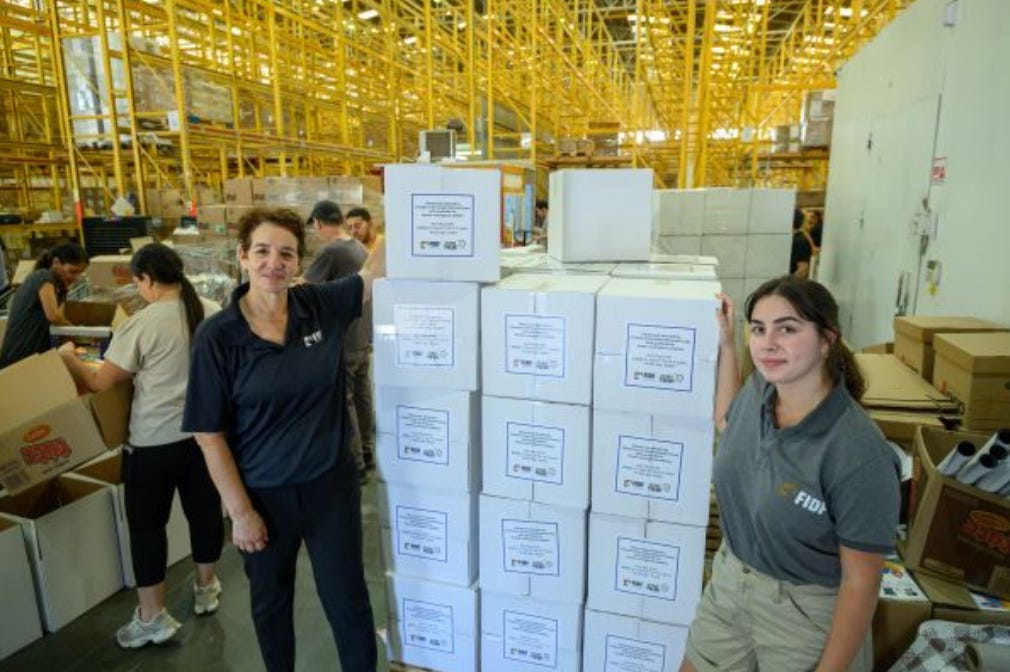
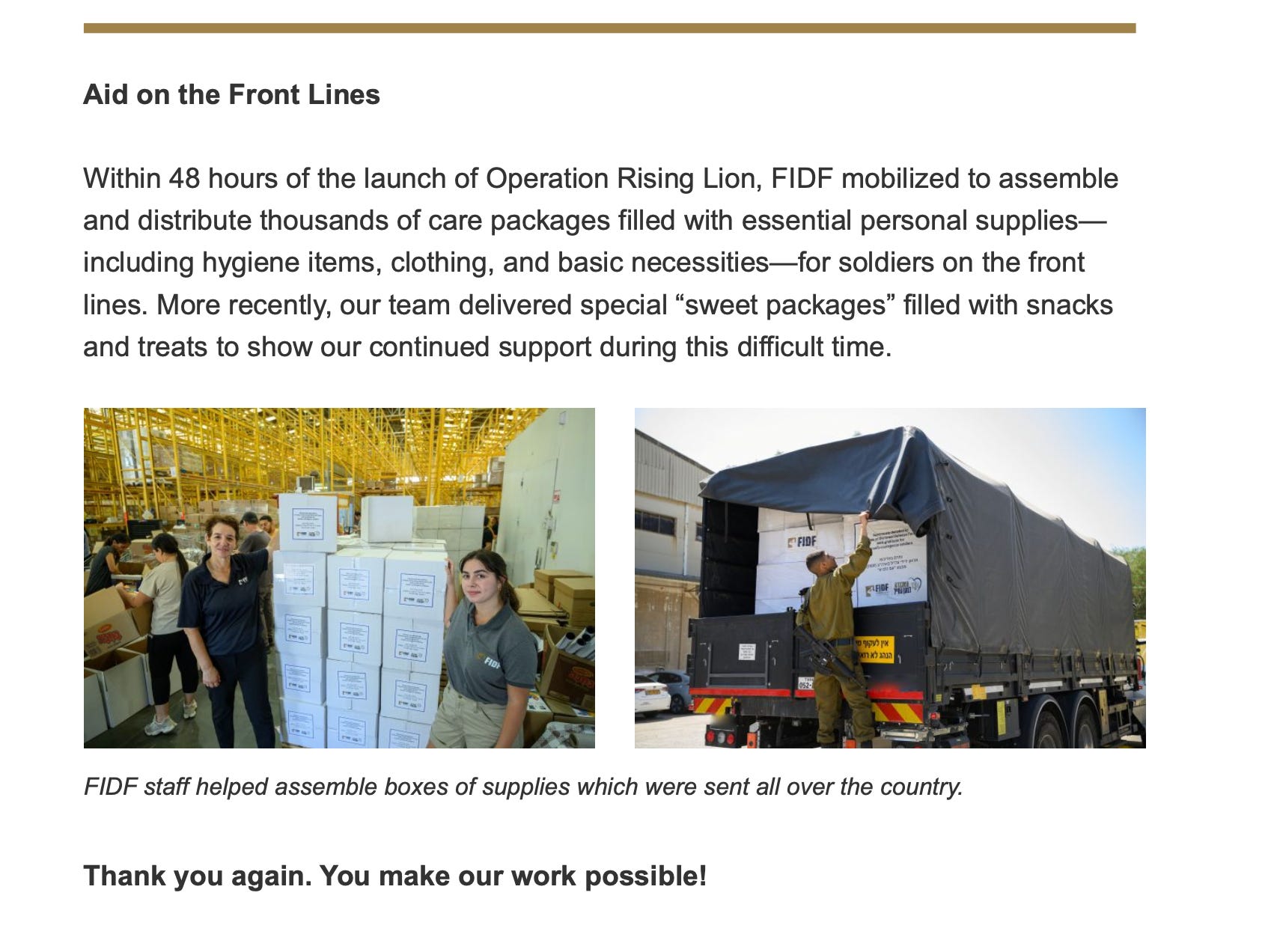
Operation Rising Lion—Israel’s intense aerial campaign targeting Iranian nuclear threats—is now behind us. Yet the painful human toll endures: families left homeless, frontline responders emotionally traumatized from relentless missile strikes, and soldiers grappling with profound psychological wounds. The urgent and genuine needs stemming from this conflict are glaringly obvious and desperately require serious attention.
Yet Morey Levovitz, FIDF’s Chairman, in his June 2025 email to donors, claims with shameless audacity that his organization delivered "critical supplies" to soldiers during this crucial period. One might reasonably imagine these “critical supplies” to be trauma care, psychological counseling, emergency housing, or perhaps substantial financial assistance for devastated families. But in reality, as his own email proudly states, these “critical supplies” included thousands of "care packages filled with essential personal supplies—including hygiene items, clothing, and basic necessities," along with absurdly trivial "special 'sweet packages' filled with snacks and treats." Breath mints and deodorant as critical wartime support? Morey’s claim is as insulting as it is preposterous.
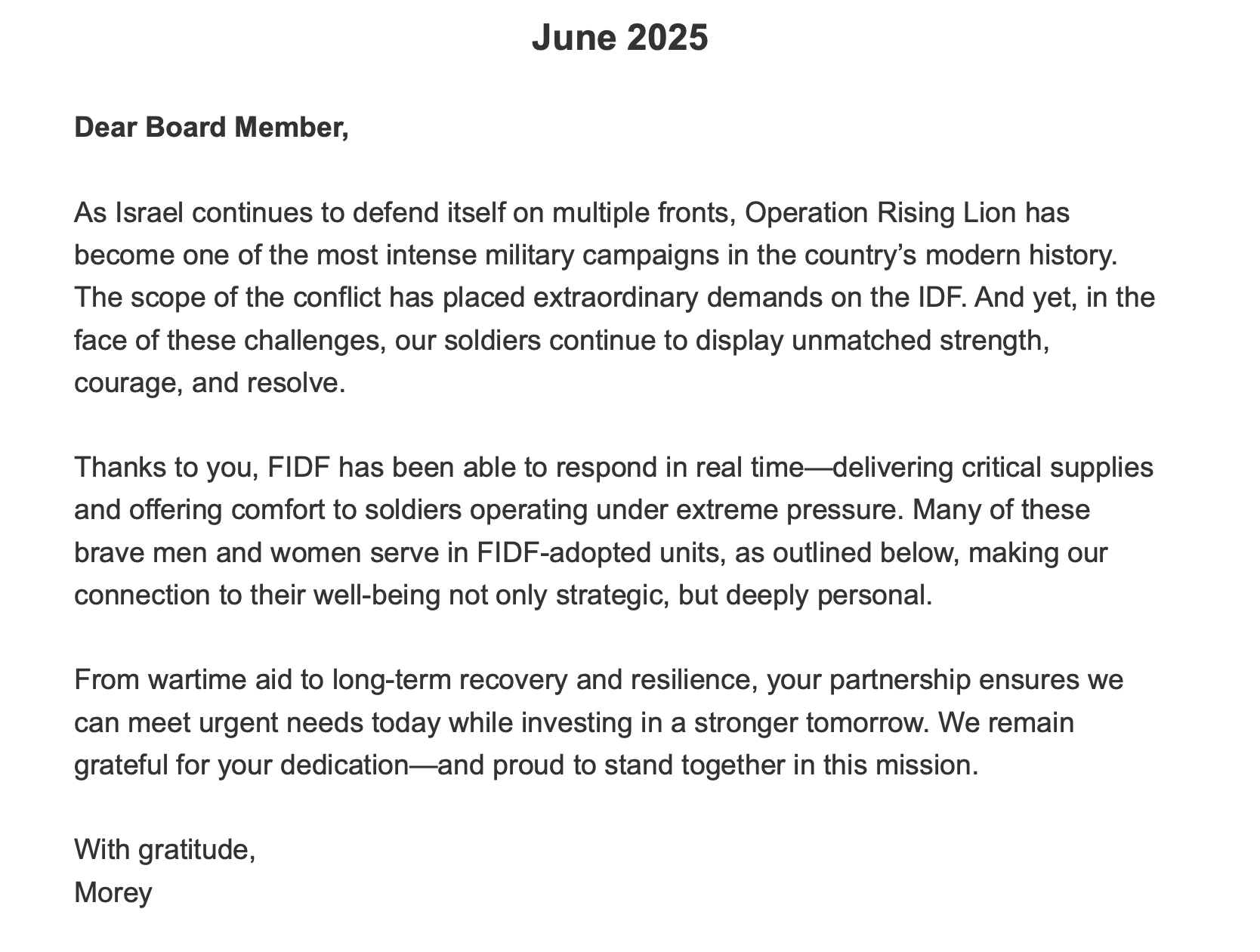
More astonishing is the hypocrisy underlying Levovitz’s current pride. Earlier in the war, Morey explicitly defended FIDF’s choice not to assist soldiers facing truly critical shortages of frontline military gear—helmets, vests, and lifesaving tactical equipment. In an internal memo dated July 2024, Levovitz bluntly stated that FIDF did not engage in helping soldiers with their most essential needs, deeming such efforts “inappropriate” and beyond the organization’s charter. Yet now, when he chooses candy bars and hygiene kits over genuinely critical trauma support or practical relief, he has the audacity to claim success.
FIDF’s stated mission is to support soldiers, including wounded veterans. Yet one must wonder: are all of the needs of wounded soldiers fully met before funds are diverted to yet another shipment of candy bars? Have the families of fallen soldiers been fully supported—every widow financially secure, every orphan properly cared for—before another stick of deodorant or tube of toothpaste is purchased? It strains credibility to think that deodorant and sweets were the next most pressing unmet needs among those devastated by war.
Adding insult to injury, this email from Levovitz comes on the heels of Rabbi Steven Weil, the CEO of FIDF, claiming publicly that the organization is only concerned with genuine “needs,” not personal "wants." Weil had the gall to dismiss serious requests from reservists and their families as mere whims or frivolous desires. One must ask: How in the world are “sweet packages” a legitimate need? Do Levovitz and Weil sincerely believe the public is incapable of distinguishing essential wartime support from frivolous indulgences? Their contempt for the intelligence of their donors and the seriousness of the soldiers’ plight is staggering.
This irresponsible misuse of donor generosity is sadly nothing new. Months earlier, during the height of the Hamas-Israel war, an FIDF campaign flyer proudly listed $172,000 spent on flip-flops, alongside tens of thousands more on similarly frivolous expenditures—such as candy kits, fleece blankets, nail clippers, and gazebos. Clearly, this pattern of absurdly wasteful spending has persisted throughout the conflict, indicating a deeper, systemic failure in organizational priorities.
Even former loyal supporters of FIDF have had enough. Sloane Citron, a longtime board member who served on the SF Bay Area board for two decades, recently resigned in protest. Citron wrote that he was proud to serve the FIDF and had even seen his own son serve as a lone soldier, but ultimately concluded that FIDF had abandoned its core mission, becoming instead a poorly-run scholarship organization. Citron described his frustration when he was denied the ability to provide improved gear directly to his nephew’s Maglan unit—even with explicit approval from the unit’s commander. His repeated attempts to offer genuinely needed support were ignored by FIDF. "I never even received a response," Citron lamented. He pointed out the enormous mistake FIDF made by letting go of Amarelle Green, whom he praised as the "best leader I have ever seen," and who had previously transformed the organization into a "powerhouse." Disillusioned by FIDF’s dysfunction and dismissiveness, Citron has stopped all donations, resigned from the board, and redirected his support to Brothers for Life—an organization truly committed to helping wounded soldiers assist each other.
How can Morey Levovitz and FIDF seriously expect continued donor support for essential post-war programs like PTSD care, psychological recovery, and general support for soldiers when they repeatedly squander funds on nonsensical items and then shamelessly parade these expenditures as meaningful wartime assistance?
To be clear: I am not even asking Levovitz and his organization to step up and address the glaring shortfalls in lifesaving battlefield equipment; that would apparently be far beyond their capacity. But is it truly unreasonable to insist they at least responsibly allocate non-urgent funds toward genuinely effective and meaningful support, rather than trivial comforts and candy-coated gestures?
Levovitz’s proud misrepresentation of trivial expenditures as “critical supplies” is more than merely absurd—it is a disgraceful insult. Israeli frontline responders, wounded soldiers, and traumatized civilians deserve real, substantive assistance—not breath mints and hygiene kits. If this farcical misuse of donor generosity represents Levovitz’s vision of wartime support, perhaps it’s time he steps aside for someone capable of understanding the difference between genuine compassion and shameless absurdity.