


Prime Minister Benjamin Netanyahu made a startling claim on Tuesday: Israeli soldiers died in Gaza because a Biden-era “arms embargo” left the IDF without sufficient ammunition. “We paid a very heavy price in the war,” he said. “Part of it is that at a certain point, we simply didn’t have enough ammunition, and people fell, heroes fell. Part of the loss of ammunition was also a result of the embargo.”
This is not an explanation. It is an alibi. It takes Israel’s own failures, stacks them in a neat pile, and tries to ship them to Washington. The problem is that the most damning evidence of Israeli unpreparedness has nothing to do with America. It has Israel’s fingerprints all over it.
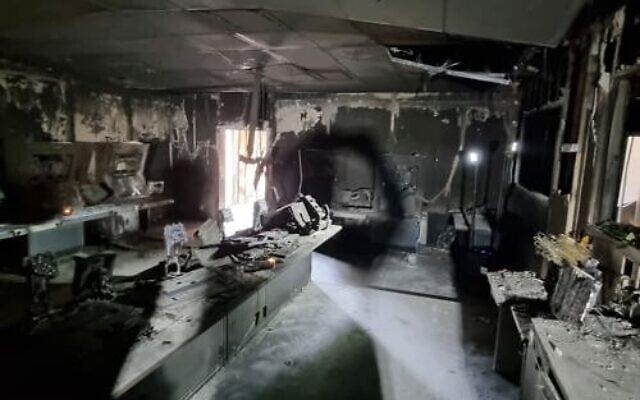
Start at the border before October 7th. Surveillance troops at bases like Nahal Oz described equipment failures that persisted for over a year. Cameras fell and stopped working properly. Observation balloons that were critical for covering blind spots remained grounded for months on end. Soldiers complained and were told there was no budget. No embargo did that. That was Israeli equipment, under Israeli command, neglected long enough that it became normal.
Those troops watched reality in plain sight. Convoys of armed Hamas terrorists drove along the border in pickup trucks, sometimes in large groups, sometimes repeatedly. They reported what they saw. Nothing changed. When Hamas attacked, some of these soldiers had no weapons, no combat training, and no instructions on how to defend themselves. They were told to keep sitting in front of broken screens. Fifteen were killed. If you want a definition of “a heavy price,” start there.
Then the war began and the pattern repeated, only louder. Reservists rushed to the Gaza border and discovered that basic gear was missing. Paratrooper units were issued vests without the protective ceramic plates inside. Families scrambled to find what the state should have supplied. Soldiers were handed helmets from decades past, heavy, uncomfortable, and outclassed. Volunteers abroad raised money to send modern tactical equipment because the official supply chain could not, or would not, keep up.
One commander, speaking while on duty in Gaza, described the reality with brutal clarity: from head to toe, he said, he was covered in donated gear—helmets, protective eyewear, body armor, even the scope on his rifle—everything except the weapon. That is not an image of an army strangled by an American embargo. It is an image of an army that sent men into danger and left civilians to patch the gaps.
Months into the war, reservists were still posting publicly, begging for basics: helmets, uniforms, boots, eyewear, straps, gloves. A logistics officer responsible for a battalion of 450 soldiers described his own bag and said that out of roughly 25 items, the only one that was not privately purchased was the bag itself. Hundreds of thousands, he said, were privately funding themselves through North American and French Jewry. That is not “self-reliance.” It is institutional failure on a mass scale.
And that is where your argument should sting. Civilian volunteers have raised enormous sums since October 7th to provide soldiers with equipment that should never have required a GoFundMe. Tactical boots. Helmets. Body armor. Medical devices. Unit 11741, which I co-founded, delivered tens of thousands of tactical helmets. The point is not that Israelis and diaspora Jews stepped up. They did. The point is that they had to.
Even as evidence piled up, official denials continued. The IDF Spokesperson’s Unit insisted that soldiers had the required equipment according to their mission. People working directly with units heard a different reality on the ground, repeatedly, from soldiers who were missing basics while being told, publicly, that nothing was missing. When institutions deny what their own soldiers are living, the problem is not messaging. It is accountability.
Equipment is not the only failure. Preparedness includes manpower, training cycles, and planning. Brigades were reportedly deployed with only days to prepare instead of the months normally required, because replacements were not lined up. Officers were told to gather equipment without draining stockpiles, anticipating another front. The chief of staff warned of manpower shortages harming readiness. None of that is caused by Washington. None of it is solved by blaming Washington.
To be clear, allies can disagree about arms policy. That is normal. But this accusation is something else: it treats American policy as the decisive cause of Israeli deaths while minimizing Israeli decisions that left soldiers exposed long before any “embargo” became a talking point. Broken cameras for a year. Grounded balloons. Ignored warnings. Vests missing plates. Outdated helmets. Civilians forced into the role of quartermasters. These are not footnotes. They are the story.
A sovereign nation is responsible for its own readiness. That is not a slogan. It is the first duty of a state. When soldiers go to war without functioning surveillance, without adequate protection, without a supply chain that keeps pace, leadership does not get to outsource blame. Not to an ally. Not to a headline. Not to a convenient villain across the ocean.
The response Israel owes its soldiers is not political theater. It is a serious, independent state commission of inquiry with the power to compel testimony and documents. Netanyahu has resisted that, preferring internal reviews that cannot credibly investigate the political level. But without real inquiry, the blame game will continue because it is useful. And the people paying for it are the ones wearing the uniform.
Israeli soldiers deserve better than speeches that redirect responsibility. They deserve leadership that can say: we failed, we will investigate, we will fix it, and we will not use the dead as cover. They deserve answers—about every broken camera that stayed broken, every plate that was missing, every warning that was ignored, and every decision that treated readiness as optional until the bill came due.
Daniel, this is a sobering yet “face reality” moment!!! I donated to and participated in a “Boots for Israel” mitzvah project 2 weeks ago at “OrHaTorah” in Atlanta. U. S.Jews are prepared to continue this assistance but blaming the US for IDF tactical negligence isn’t acceptable. Thanks for the report!!!!
Is Netanyahu just planning on never needing the support of a Democratic administration again or something? Why should a Democratic president ever use his political capital for Israel again after Israel’s treatment of Biden?