


After I posted a few tributes to my late friend Charlie Kirk, I received a number of private messages. They all carried the same odd theme: did I “endorse” everything Charlie had ever said? The question stunned me. It was as if remembering a murdered man required an ideological disclaimer.
I find the very premise grotesque. Sympathy, it seems, now comes with an ideological price tag. Before one is permitted to mourn, one must first pass a test of political conformity. That some people felt the need to ask this question at all tells us something about how warped our civic instincts have become.
Charlie was assassinated on a college campus while giving a speech. He was not committing a crime. He was not inciting violence. He was doing what Americans have done since the founding: standing before an audience and attempting to persuade. That he should be cut down for this most basic of civic acts is the central fact. Everything else is noise.
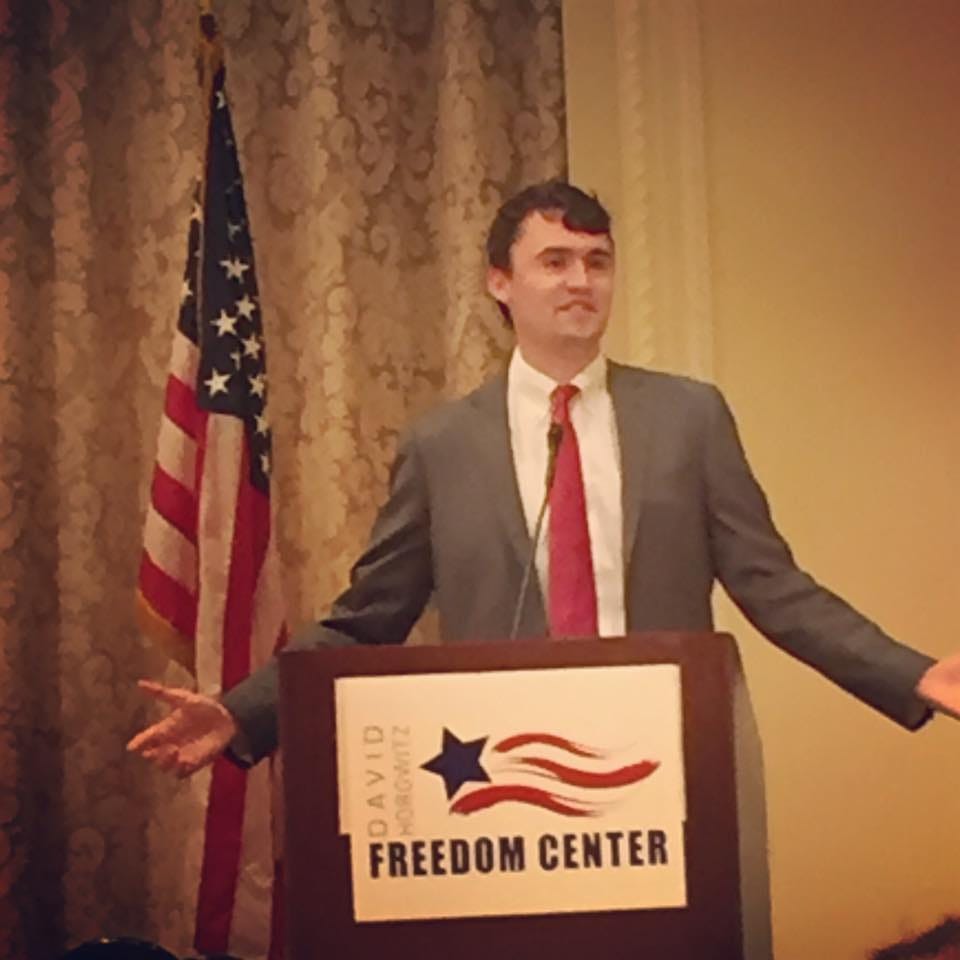
I first knew Charlie when I was a student in college. He was not a student himself, but he was constantly on campuses. He worked with students, organized events, and debated ideas. At a time when Barack Obama and the Democratic Party dominated the intellectual and cultural climate, Charlie was determined to make sure conservative students had a voice. We were not fighting for privilege or recognition, and certainly not for money. Those questions were irrelevant. We were fighting so that students would at least see that conservatism offered a legitimate alternative. That was the cause that bound us.
Charlie brought energy, relentlessness, and a fearlessness that was rare even then. He was not Jewish, but he instinctively understood the plight of Jewish students facing antisemitic campaigns. He saw the hostility directed at Israel and the easy dismissal of Jewish identity on campus. He stood with us. He cared about America, he cared about Israel, and he cared about the principle that young people should be free to choose their own path, intellectually and politically. That was the Charlie I knew.
Fast forward a decade. The same man, still walking onto campuses, still speaking, still sparring with students, is cut down by an assassin’s bullet. And still, somehow, the conversation has been hijacked. Why stand up for him if you did not endorse him entirely? Why grieve if you disagreed with his politics? Since when did sympathy for the murdered require a checklist of ideological conformity?
This is moral illiteracy dressed up as sophistication. In a democracy, the principle is absolute: political violence is illegitimate. Period. You do not need to agree with your neighbor’s views to insist that he has the right to live, to speak, to argue. That is the American covenant. Break it, and every other debate collapses into irrelevance.
The irony is that no one was ever forced to listen to Charlie Kirk. He was everywhere on social media. He had a podcast. He had a massive digital presence. You know what you are supposed to do if you don’t like what he says? Click the “X” in the corner and indicate that you do not want to see his content. Or simply don’t show up to his events. Easy enough. He should not have been murdered. This is not that difficult.
If, G-d forbid, someone were to target a hard-left activist like Max Blumenthal, the same principle would apply. Blumenthal has been an anti-Semitic activist for more than two decades. He harassed us relentlessly when I was a student and he has continued ever since, peddling bile even though his own father is Jewish. His views are toxic. His activism is poisonous. Yet if even a single hair on his head were harmed, I would be writing and posting with the same ferocity. Because the integrity of a republic is not measured by whether you defend your allies. It is measured by whether you defend your adversaries.
What is striking, and profoundly indecent, is that so many seem unable to grasp this. A man is dead. He leaves behind a family, colleagues, and young people who believed in him. To make one’s first reaction not horror but a demand for political purification reveals a civic and moral bankruptcy. It is sectarianism of the worst kind, the kind we expect in societies where grudges eclipse humanity.
Charlie’s murder is not about whether one liked him, or endorsed him, or found every speech persuasive. It is about whether we, as a society, still adhere to the most basic rule of civil life: that violence is not an answer to speech. If assassination is acceptable when the victim is disagreeable, then no one is safe. It never stops with one faction. It metastasizes. It consumes all.
And there is something chilling about what this now implies for the future. Must every college campus speaker one day be accompanied by a counter-sniper team in order to speak freely outdoors? Is this what our republic has become, where the marketplace of ideas must be protected like a battlefield? If so, then we have already conceded far more than we realize.
So when people ask if I “stand by” everything Charlie Kirk ever said, I confess that I am at a loss. The question itself is unserious. What he believed or argued is irrelevant. He was my friend. He was a man exercising his right to speak in a free society. He was gunned down for doing so. That is all that matters. That is all the endorsement required.
Our politics are coarse enough already. If we cannot agree, at the very minimum, that murder is not a legitimate answer to speech, then we have crossed into something far darker. Sympathy for the slain should not be contingent upon ideological purity. It should be contingent only upon our common humanity.
That is what is at stake now. And that is why I mourn my friend, without caveat, without footnote, and without apology.
This is a beautiful tribute. I am so sorry you lost a friend and a guide. He was brave and true to his values, and we lost something noble and very American with his murder and the shocking aftermath I grew up in an authoritarian country and that people now put ideological purity ahead of our shared humanity is terrifying and all to familiar. His memory is a blessing.