


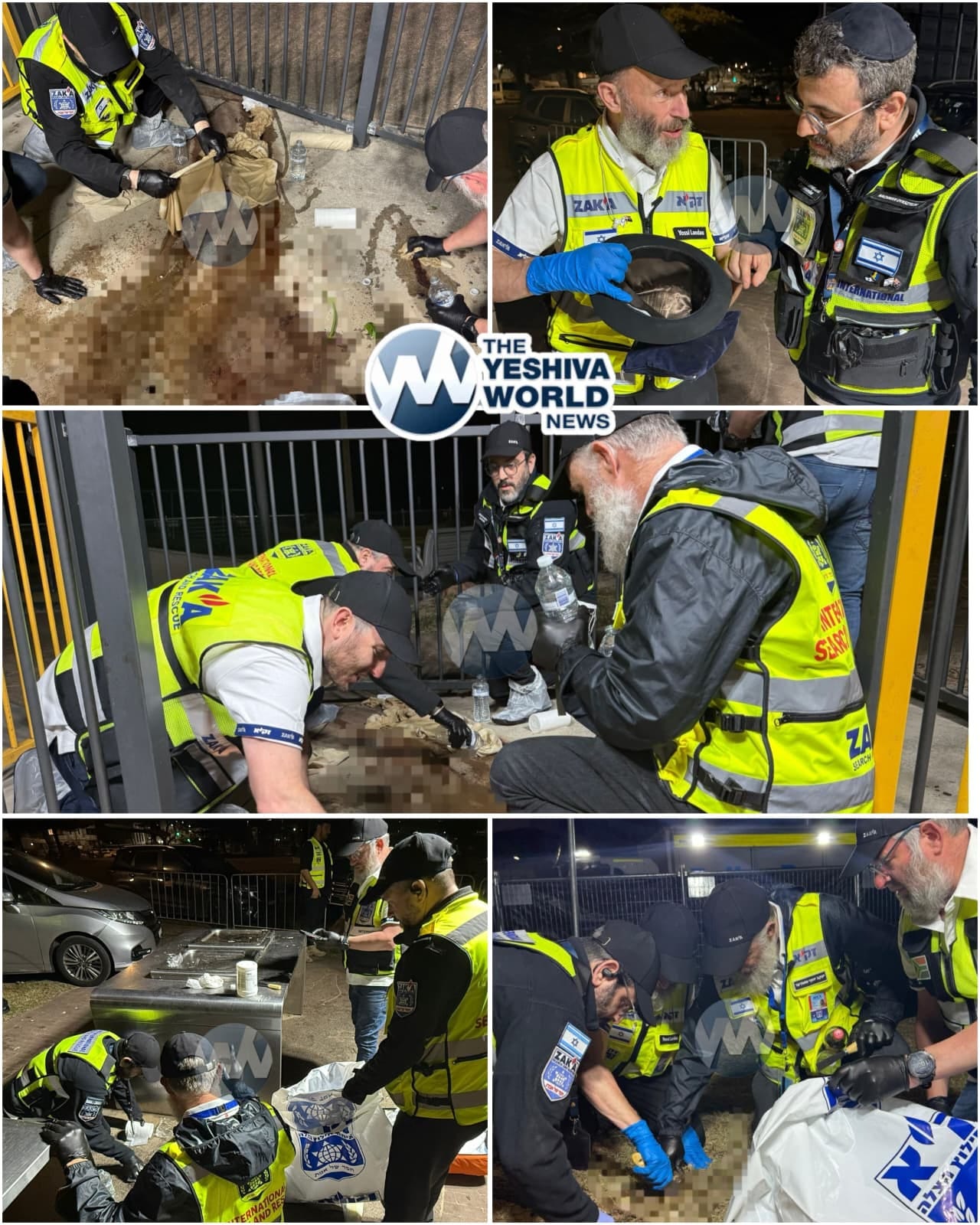
There are forms of service so intimate and so psychologically corrosive that society prefers not to look at them too closely. ZAKA’s volunteers operate in that space. They arrive when order has collapsed, when violence has done its worst, when the human body is no longer recognizable as human. They kneel, scrape, scrub, gather, and catalog. They do not restore life. They restore dignity. To sacrifice one’s peace of mind so that another human being may be buried whole is not merely altruism. It is moral extremity.
That truth must be stated plainly, because it is too often obscured by everything that has come to surround ZAKA in recent years.
At its core, the work itself remains extraordinary. The volunteers are not performers. They are men who return home carrying images that never quite leave, so families do not have to live with unanswered questions. Jewish law places kavod hamet, the dignity of the dead, among the highest obligations precisely because the dead cannot reciprocate. It is kindness stripped of transaction. That is what these volunteers do, repeatedly, and at great personal cost.
And precisely because the work is holy, it must be protected from distortion.
One can, and must, distinguish between the labor itself and the apparatus that has grown up around it. To criticize the conduct of ZAKA’s marketing operation, the relentless fundraising, the taste-blind timing, the conversion of tragedy into content, is not to diminish the sanctity of the work on the ground. It is precisely the opposite. It is because the work is holy that it deserves insulation from spectacle and excess. Institutions err when they treat criticism as betrayal. In truth, honest criticism is often the last form of loyalty left.
This distinction matters because ZAKA is not merely contending with poor optics. It is contending with history.
For two decades, the organization was led by a man now credibly accused of serial sexual abuse, violence, and financial misconduct on a staggering scale. Yehuda Meshi-Zahav was not a marginal figure. He was the face of ZAKA, its moral emissary, its public conscience. His leadership cultivated a culture in which image displaced accountability and power insulated wrongdoing. His death foreclosed legal reckoning, but it did not erase institutional consequence. Cultures shaped at the top do not vanish quietly. They leave residue.
That residue helps explain why, in the aftermath of October 7, some volunteers invented or embellished stories. This was not merely misinformation. It was moral theater. Trauma does not require exaggeration to horrify. When truth is bent to heighten drama, credibility collapses. When credibility collapses, the volunteers doing authentic and devastating work are the ones who pay the price.
The same pattern appears in ZAKA’s growing comfort with spectacle. Promotional videos carved from scenes of carnage. Images leaked to media outlets eager for clicks. Fundraising campaigns rolled out with polished spokespeople while victims were still bleeding, physically and psychologically. These are not technical missteps. They are failures of judgment.
ZAKA exists to protect dignity. Dignity is incompatible with branding as an organizing principle. When marketing logic begins to shape how an entire organization presents itself, how it tells its stories, times its appeals, selects its imagery, and frames tragedy, the mission itself is placed at risk. A body is not content. Blood is not a marketing asset. Judaism’s instinct, refined through centuries of burial without witnesses, is to lower the voice in moments of devastation. When the logic of promotion permeates an institution devoted to dignity, holiness recedes.
This does not mean fundraising is illegitimate. It is necessary. But necessity does not suspend taste. Timing is a moral choice. Silence is sometimes the most faithful response. When injured victims of the Bondi attacks were still recovering, the decision to deploy celebrity-driven appeals struck many not as solidarity, but as intrusion. The cause was righteous. The posture was not.
The volunteers did not choose this. They did not ask to become symbols. They asked to serve.
ZAKA’s danger is not a lack of sincerity. It is institutional drift, the slow substitution of visibility for virtue, attention for integrity, noise for necessity. The volunteers deserve leadership that protects their integrity rather than monetizing their trauma. The dead deserve discretion, not documentation. An organization founded to honor dignity must remember that dignity is not only something you provide. It is something you practice.
ZAKA’s future moral authority will not be determined by how loudly it speaks, but by how faithfully it returns to first principles. The work, at its best, speaks for itself.
Excellent, Daniel. I have long admired this organization.