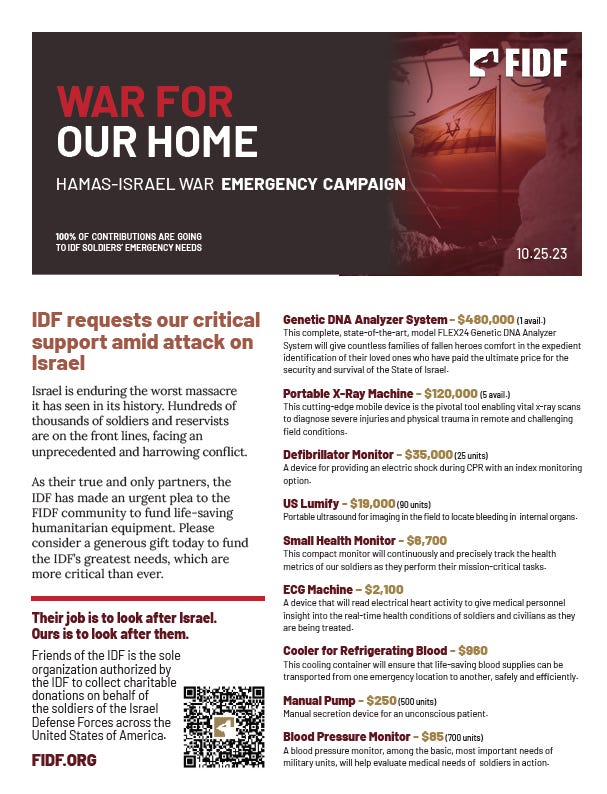
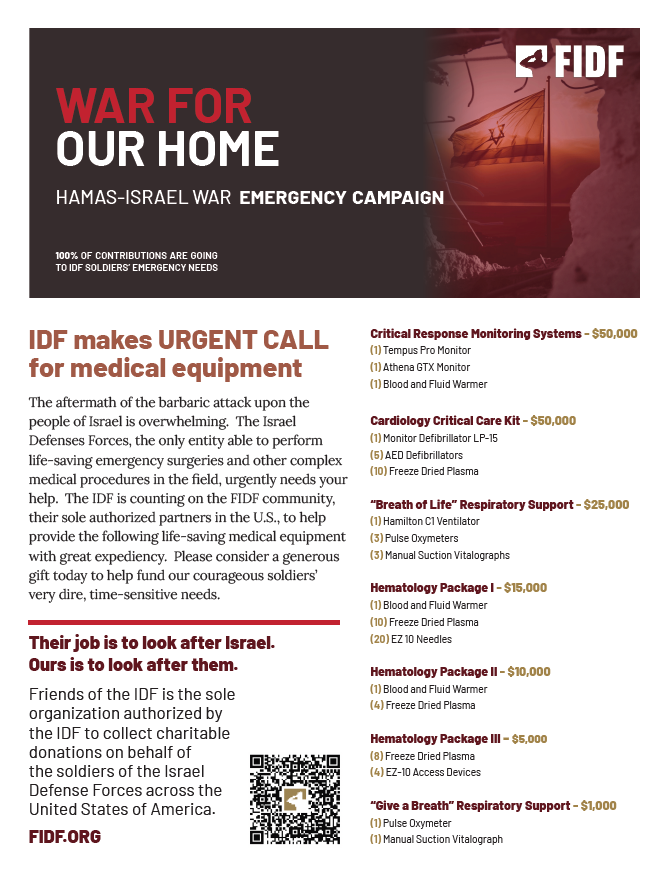
Nadav Padan’s statement that “FIDF cannot in any way sponsor military equipment of any kind or assist with military activity” collapses under the weight of the organization’s own wartime fundraising campaigns and the example set by Spirit of America (EIN: 20-1687786). FIDF’s emergency appeals in the weeks following October 7 were filled with urgent pleas for field trauma kits, ventilators, defibrillators, and other frontline equipment. These are tools meant not for post-war comfort, but for survival in combat.
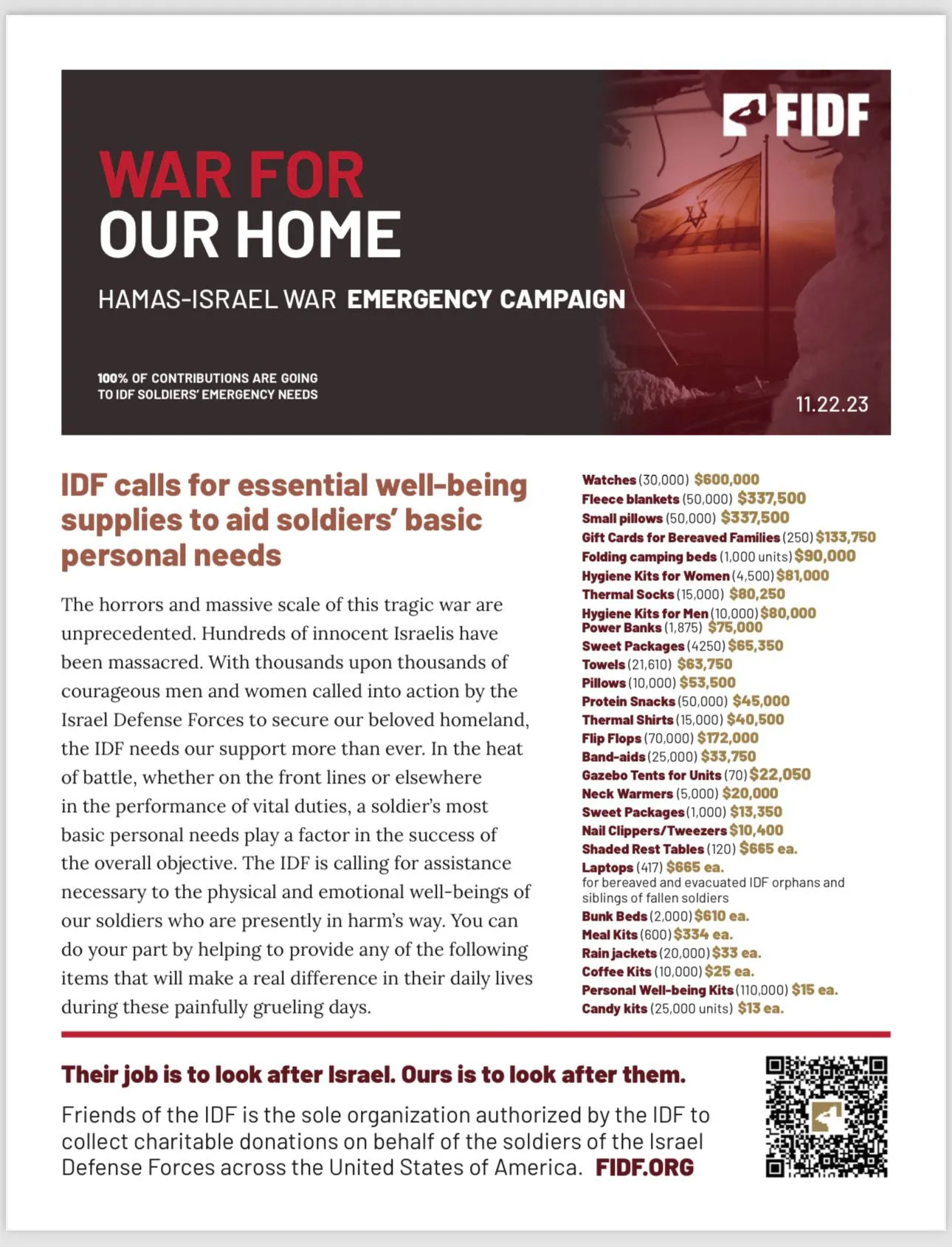
In a flyer dated October 25, 2023, FIDF calls on donors to fund a Genetic DNA Analyzer System, portable x-ray machines, defibrillator monitors, manual suction devices, and coolers for blood refrigeration. Another campaign document urgently seeks ventilators, freeze-dried plasma, monitor defibrillators, and pulse oximeters. All of this was promoted under the claim that the IDF “urgently needs your help” to perform “life-saving emergency surgeries and other complex medical procedures in the field”. The November 22 appeal goes further, offering donors a detailed list of tactical supplies such as thermal shirts, rain jackets, shaded rest tables, and hygiene kits, all described as critical to the well-being of soldiers in active combat. It states that “100% of contributions are going to IDF soldiers’ emergency needs.”
This is not abstract well-being. This is wartime logistics.
So how can Padan claim that FIDF is legally barred from providing anything remotely operational? If the organization truly believes it cannot cross that line, then its own marketing materials are wildly out of step with that legal boundary. You do not publish itemized battlefield medical lists under headlines like “War for Our Home” if you are not aligning yourself with the war effort.
Even more telling is the comparison to Spirit of America, a U.S.-based 501(c)(3) nonprofit that has legally delivered over 63 million dollars in non-lethal military-grade aid to Ukraine. Their aid includes ballistic helmets, bulletproof vests, trauma kits, encrypted radios, and surveillance drones. All of this was coordinated with the Department of Defense and remains fully compliant with U.S. law.
Spirit of America’s aid is not only legal but also tax-deductible. Its leadership includes retired generals, national security advisors, and former cabinet-level officials. Unlike FIDF, Spirit of America did not hide behind legal explanations to avoid action. It prioritized mission-critical needs.
If Spirit of America can deliver helmets and medical kits to Ukrainian soldiers and remain fully compliant with American law, then FIDF’s claims about being legally prohibited from similar aid are not just inaccurate. They are misleading. What FIDF presents as a legal barrier is actually a policy decision that has been disguised as a legal requirement.
This is not a debate between comfort and combat. It is a question of priorities. Flip-flops and sweet packages may have value, but not when soldiers are still lacking gear that could save their lives. If helmets are missing, candy is not a serious substitute. If trauma kits are needed, fundraising for challah is not strategic. It is evasive.
The truth is simple. FIDF made a choice. When the war began, it positioned itself as if it were on the front lines. It used the language and imagery of crisis and sacrifice. But when questioned, it retreated behind legal disclaimers. Spirit of America showed what was possible. FIDF chose what was convenient. And the soldiers paid the price.