


Criticism of the Israel Defense Forces (IDF) leadership and government, particularly during times of conflict, can significantly impact the morale of its soldiers. The IDF operates under extreme conditions, relying on unity, discipline, and trust in leadership. When public figures, media, or even civilians openly question the decisions of military and governmental leaders, it can create doubt, confusion, and demoralization among the troops on the ground. Soldiers must believe in their mission and the competence of those commanding them; otherwise, hesitation and uncertainty can set in, weakening their effectiveness and resolve.
Furthermore, negative rhetoric can be exploited by enemies to fuel propaganda, sow discord, and erode national resilience. While constructive criticism is necessary in a democracy, timing and context are crucial. Supporting the IDF’s leadership and the government—especially during crises—ensures that fighters remain focused, motivated, and confident in the justness of their cause and the protection of their homeland.
This is a basic summary of the principles many wise voices have promoted since October 7, 2023: No matter how inadequate the equipment provided to soldiers may be, maintaining a positive outlook and avoiding public criticism is paramount—even when their lives are at risk due to unsafe gear. Unity and togetherness, we are told, must come first.
The hypocrisy about what is and what is not permissible speech is staggering.
Sending soldiers into battle with broken helmets and expired ceramic plates is not just negligent—it’s a betrayal of those who risk their lives to defend the country. Protective gear exists for a reason: to give soldiers the best possible chance of survival in life-threatening situations. When helmets are cracked and ceramic plates fail to stop bullets, lives are lost. Tragically, some soldiers have already paid the ultimate price because of this failure.
Yet, instead of demanding accountability, we’re told to stay silent—for the sake of Israel’s image on the world stage. We are expected to prioritize optics over the safety of the very people who stand between us and destruction. This forced silence only enables incompetence, allowing the same mistakes to be repeated.
Why should the perception of strength take precedence over actual battlefield readiness? Why is it acceptable to send soldiers into combat with subpar gear, yet unacceptable to speak out against it? A strong army isn’t just about military victories; it’s about ensuring that those who serve are properly equipped and protected. Silence doesn’t save lives—it costs them. And until this changes, more soldiers will continue to pay the price for the failures of those in power.
I’ve decided to compile an ongoing record of some of the most egregious statements that have been made - and are socially acceptable - since March 2025. Stay tuned—there’s plenty to unpack. Keep in mind that we are expected to watch our collective speech so as not to harm the morale of the fighting forces.
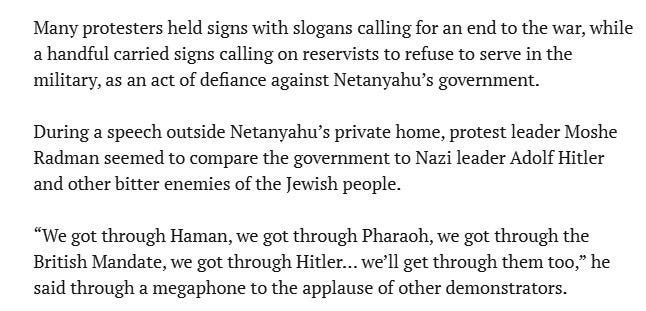
Protestors in Jerusalem likened the current Israeli government to the Nazis (Times of Israel, 3/19/25)
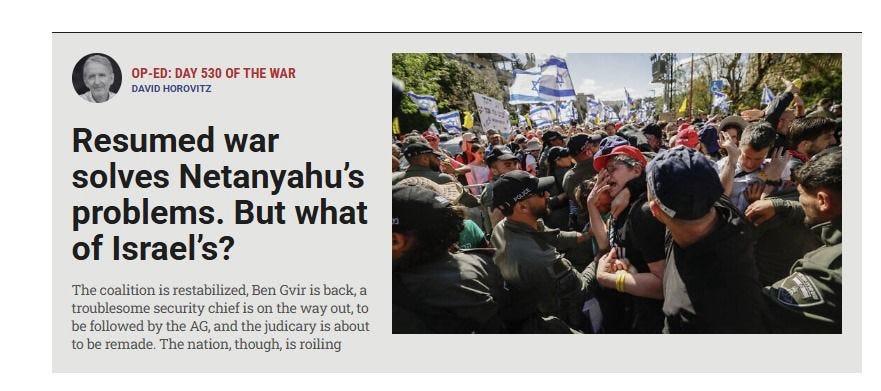
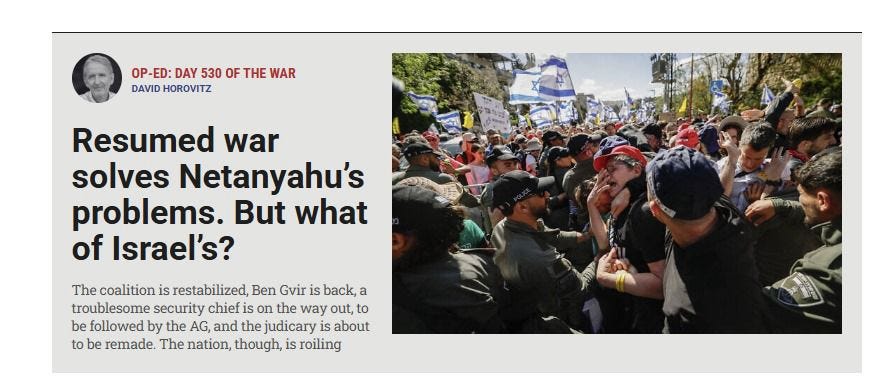
David Horovitz, the founding editor of the Times of Israel, says that the resumption of war against Hamas serves Bibi’s interests but not Israel’s interests (3/19/25).
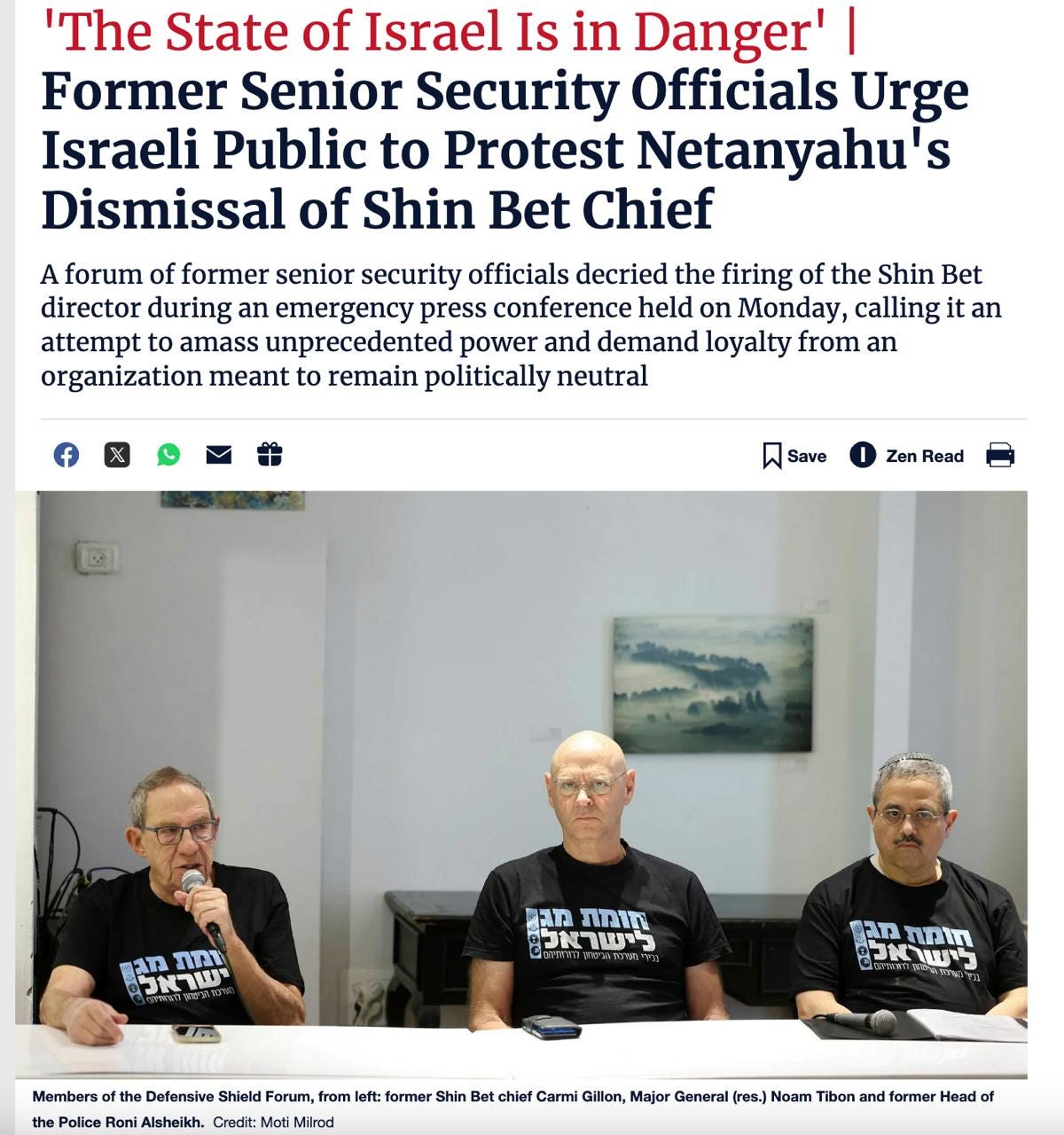
Major General (res) Noam Tibon says that “the State of Israel is in danger” because Netanyahu announced he would like to fire the head of the Shin Bet Ronen Bar. (3/18/25)
Former Prime Minister Yair Lapid encourages Israelis to take to the streets to protest the current government of Israel (3/19/25):

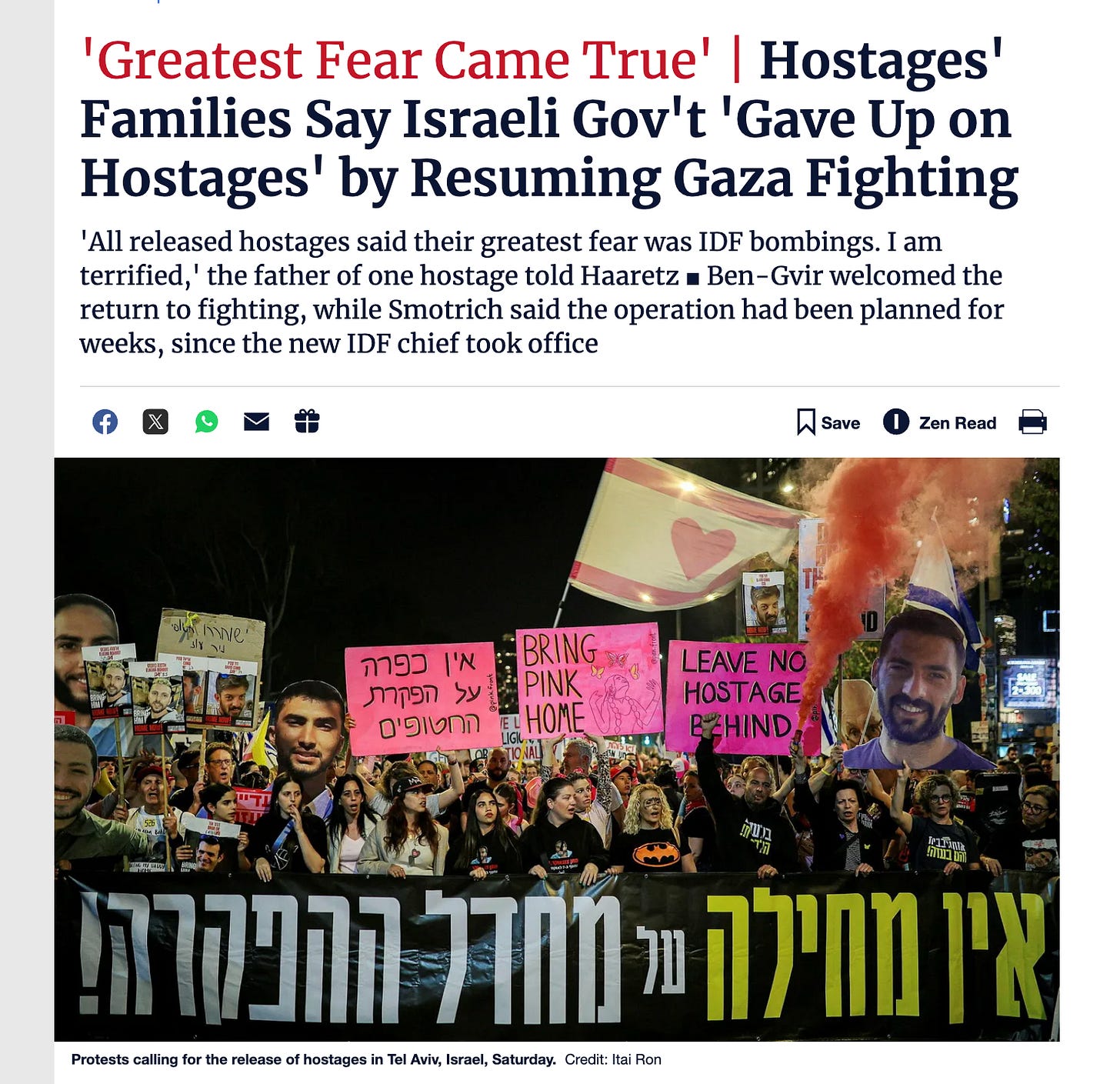
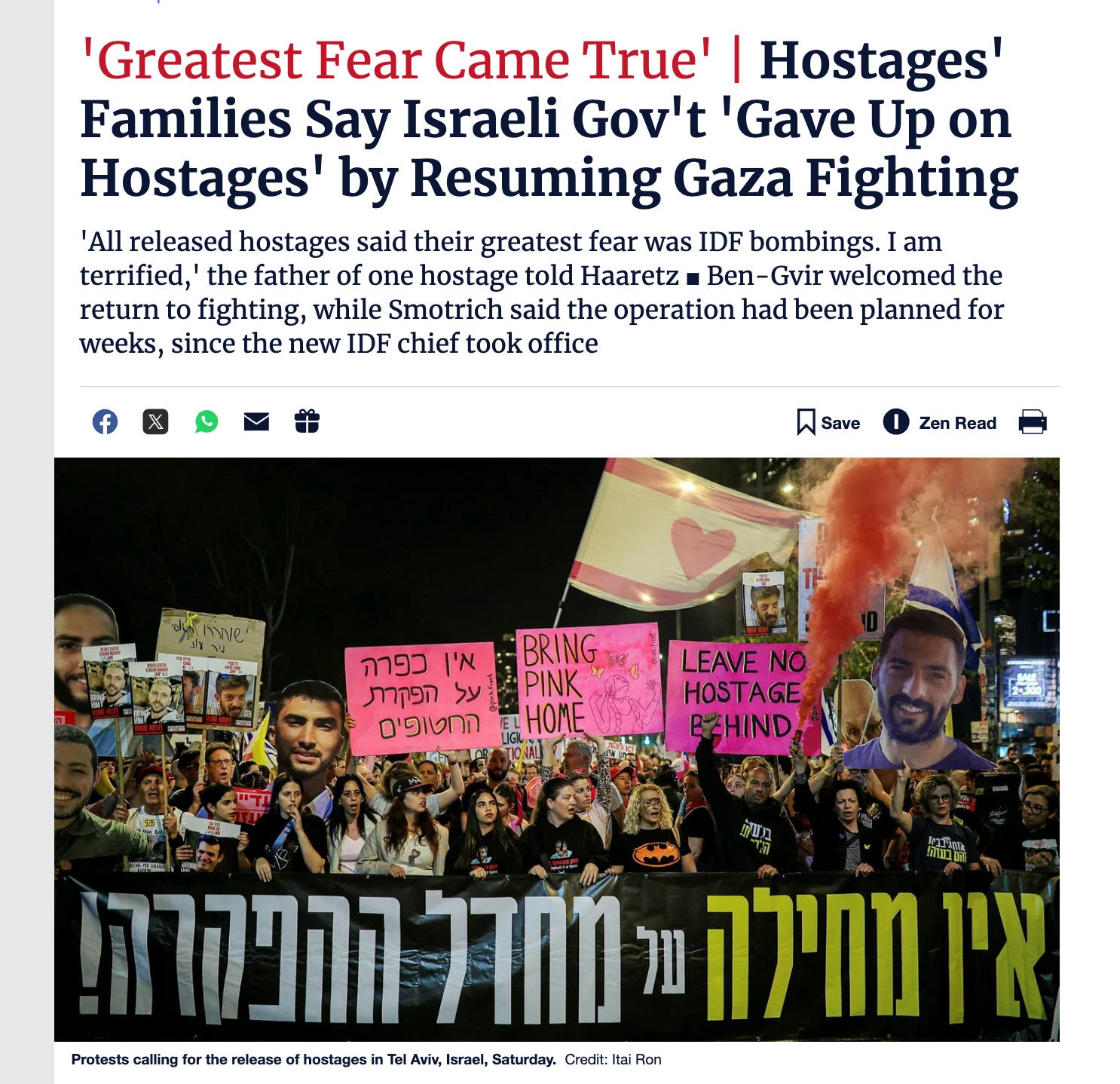
The Hostage and Missing Families Forum states that Israel “gave up on” the hostages by attacking Hamas following stalled negotiations. (3/18/25).

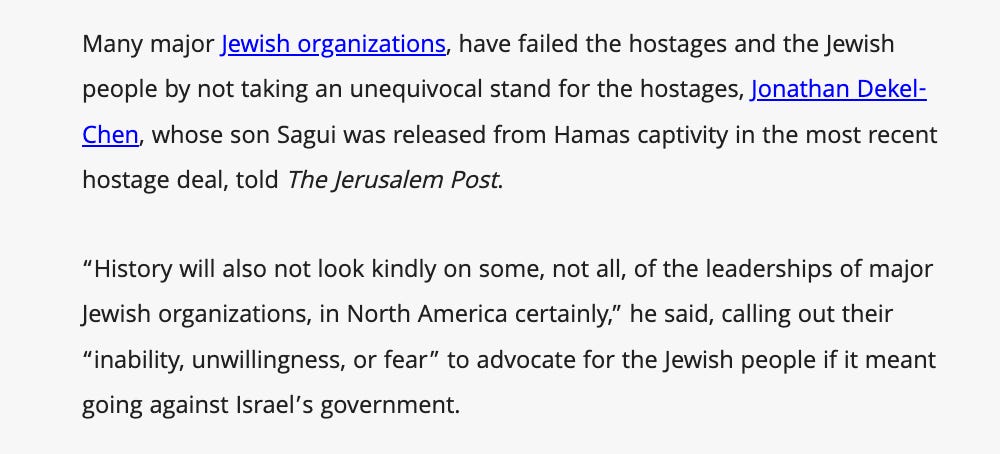
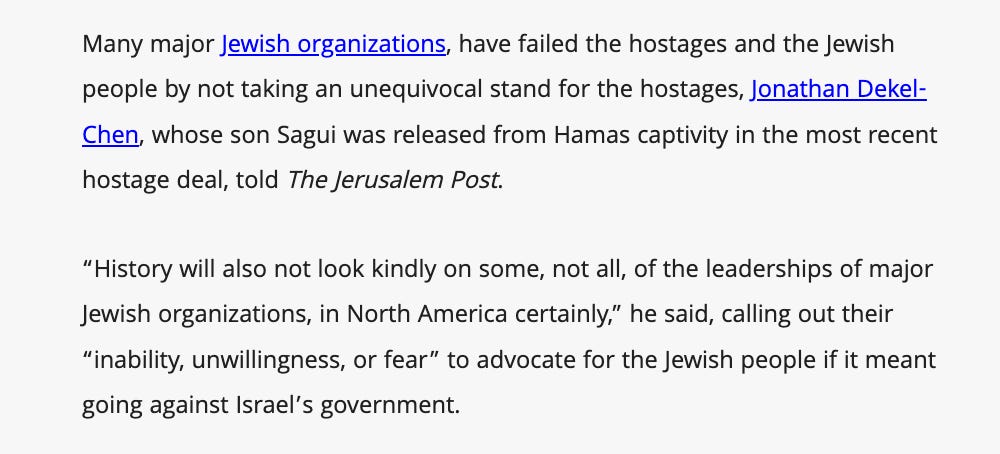
Jonathan Dekel-Chen, father of released hostage Sagui Dekel-Chen, says that major Jewish organizations failed the hostages because they did not openly and loudly break from and condemn the Israeli government during the war. (3/9/25)
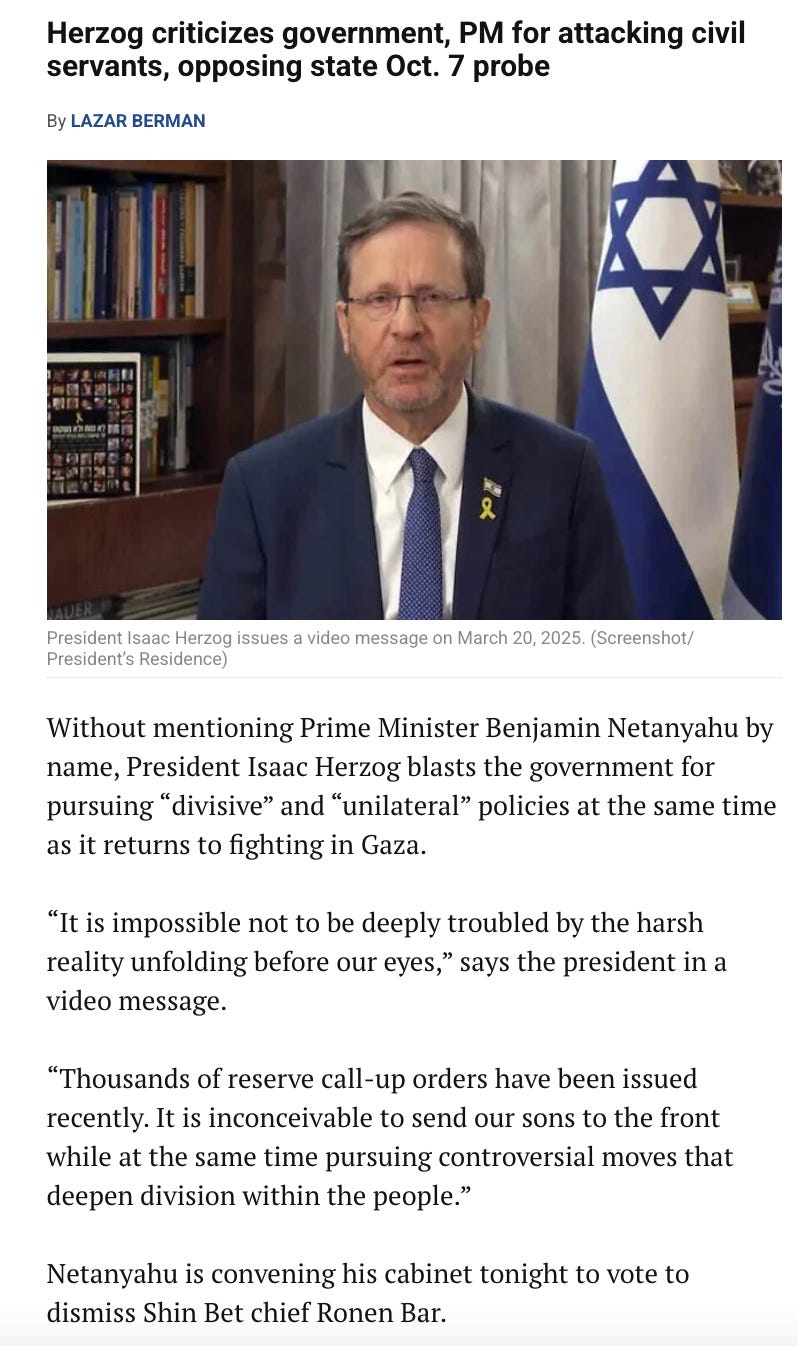
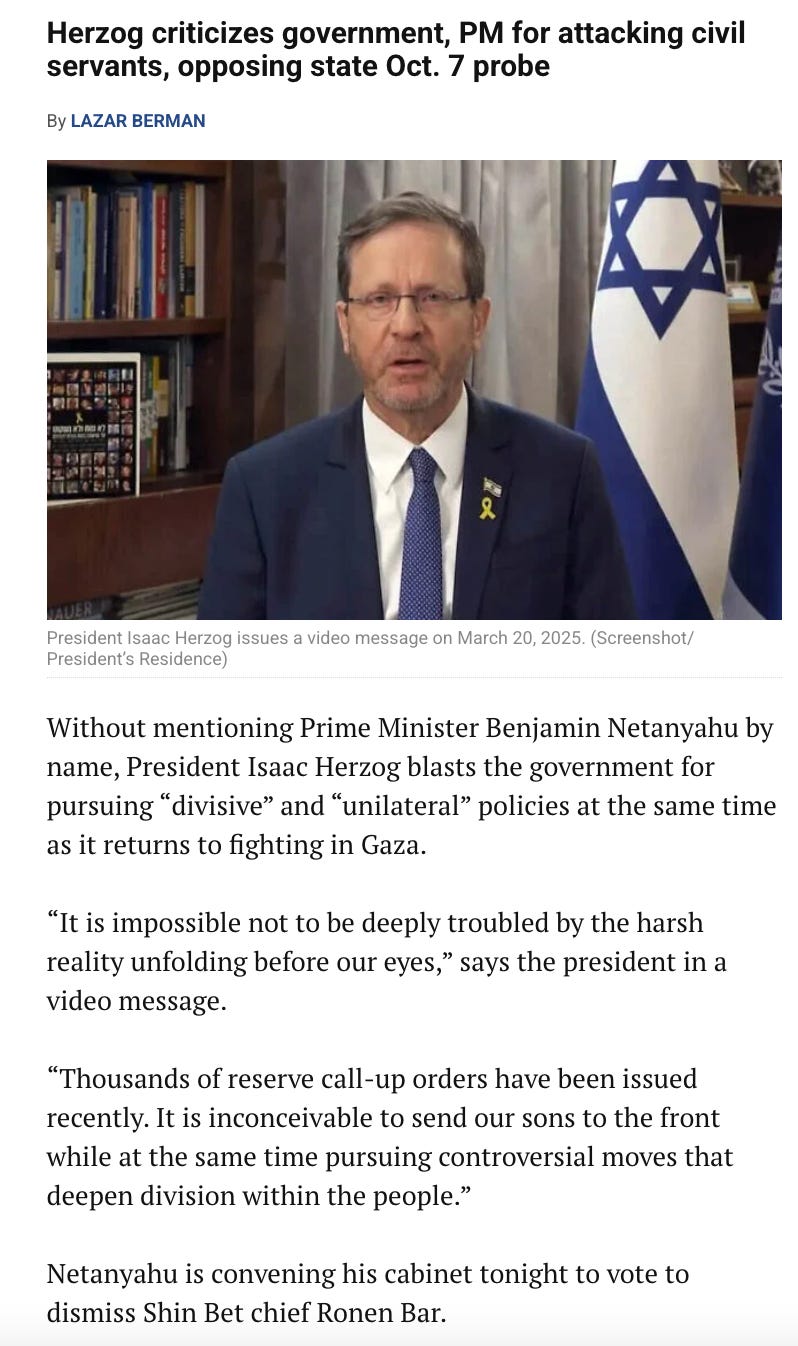
President Isaac Herzog blasts the democratically elected government for pursuing policies it deems suit the interests of the State. (Times of Israel, 3/20/25)
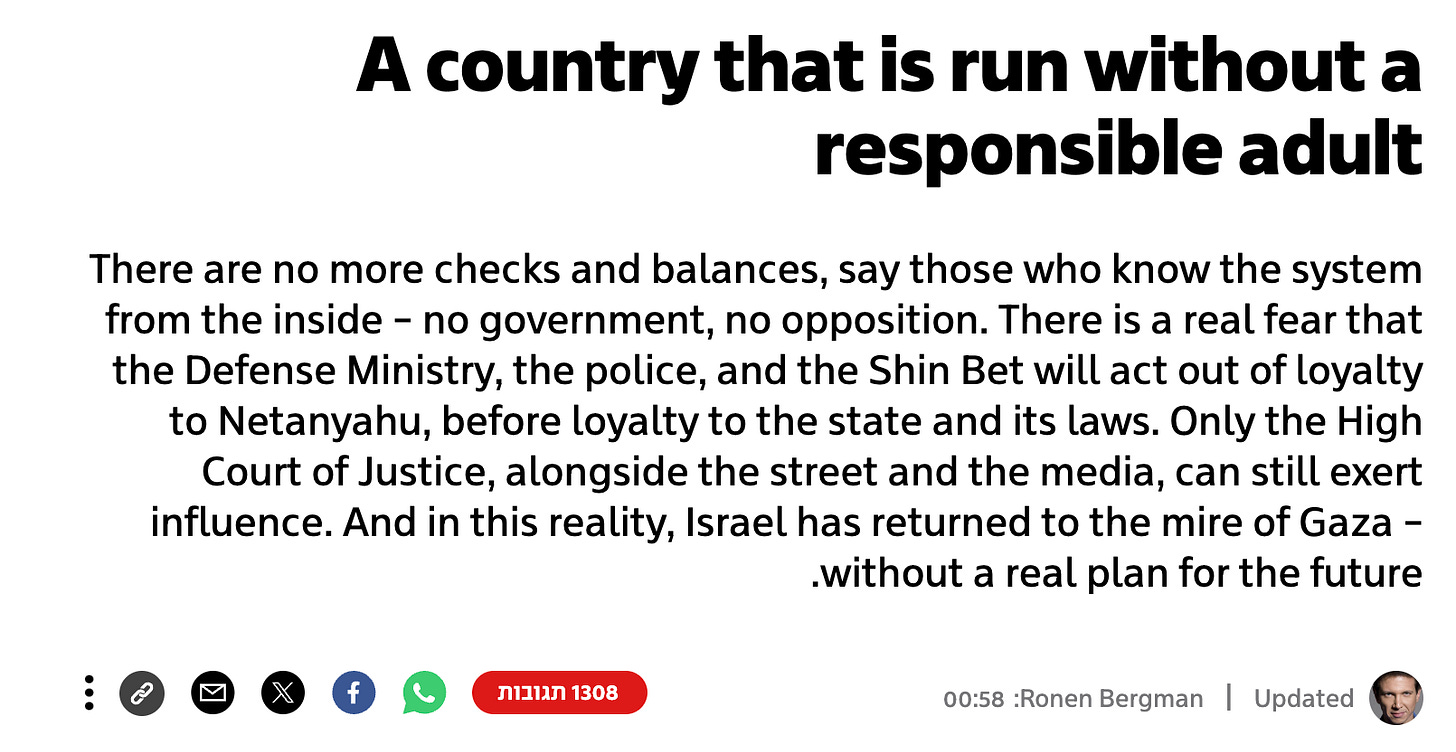
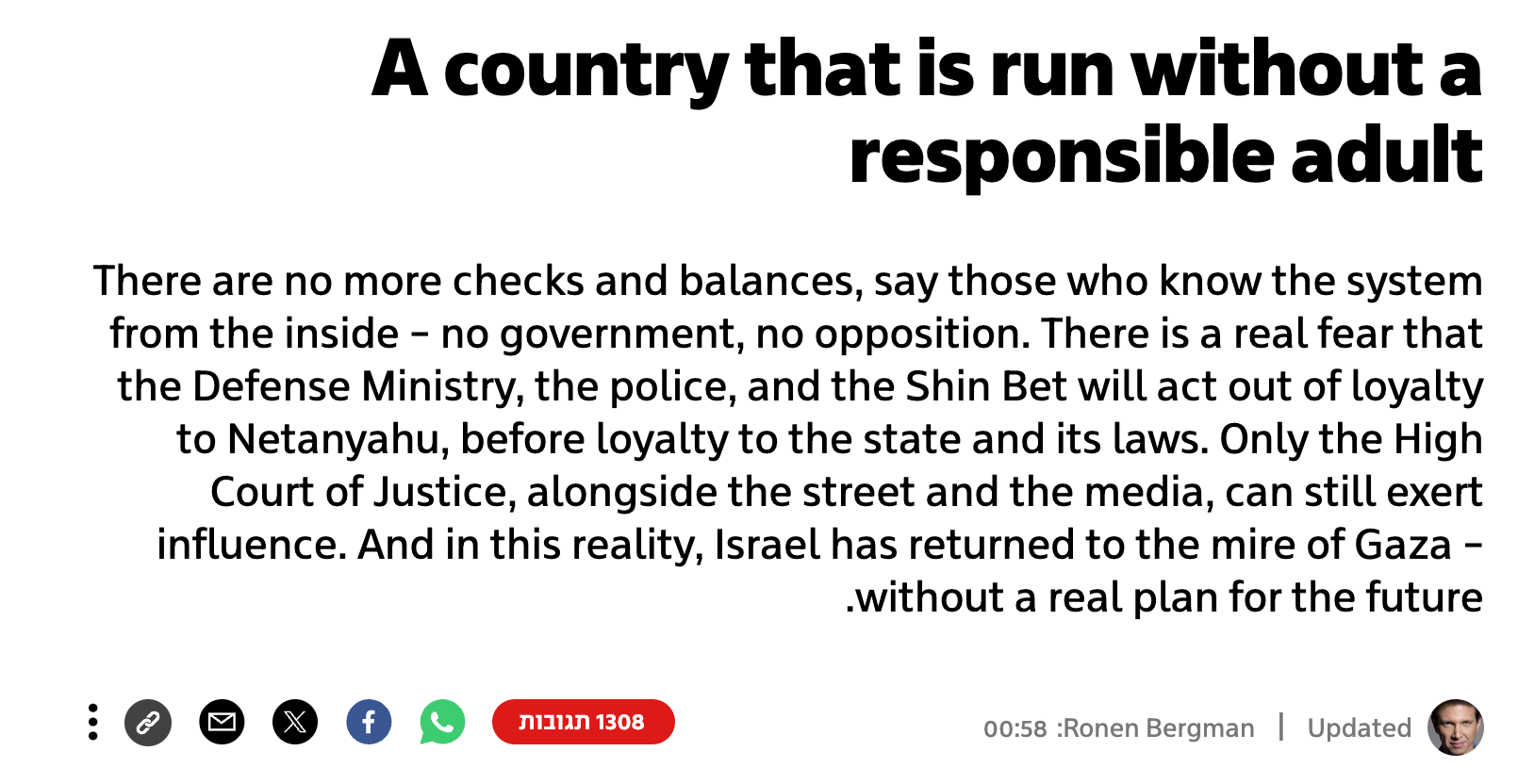
Journalist Ronen Bergman says that Israel “is run without a responsible adult.” (3/20/25).
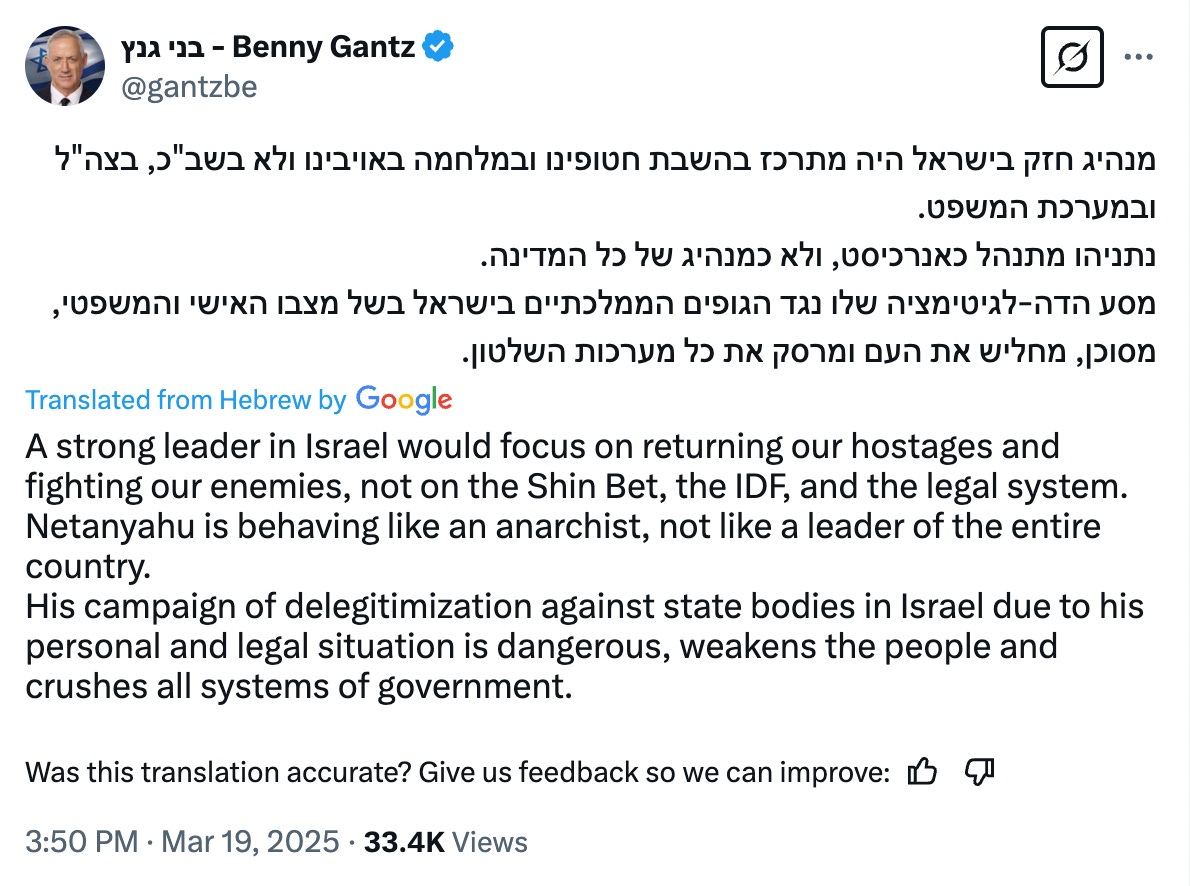
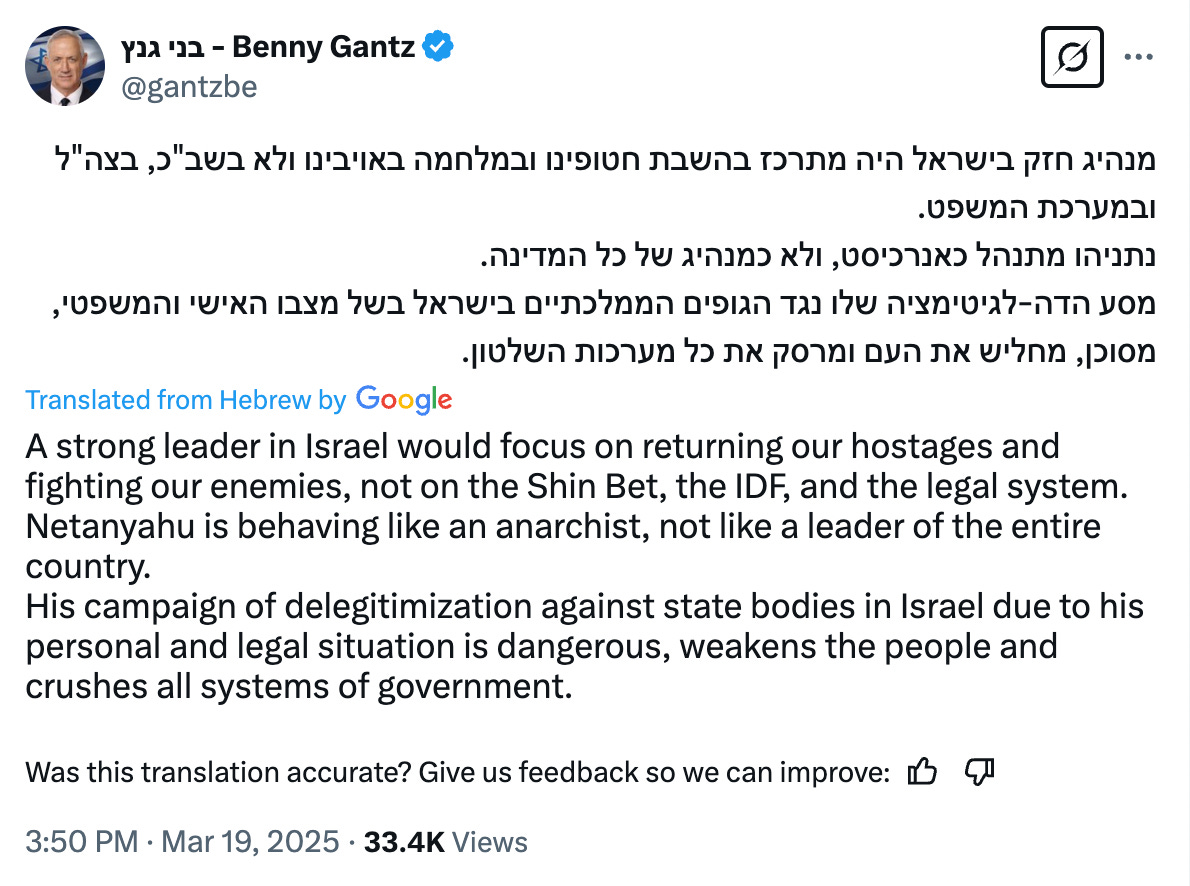
Former IDF Chief of the General Staff turned politician Benny Gantz says that Netanyahu is behaving like an anarchist who is only interested in his personal well-being. (X, 3/20/25)
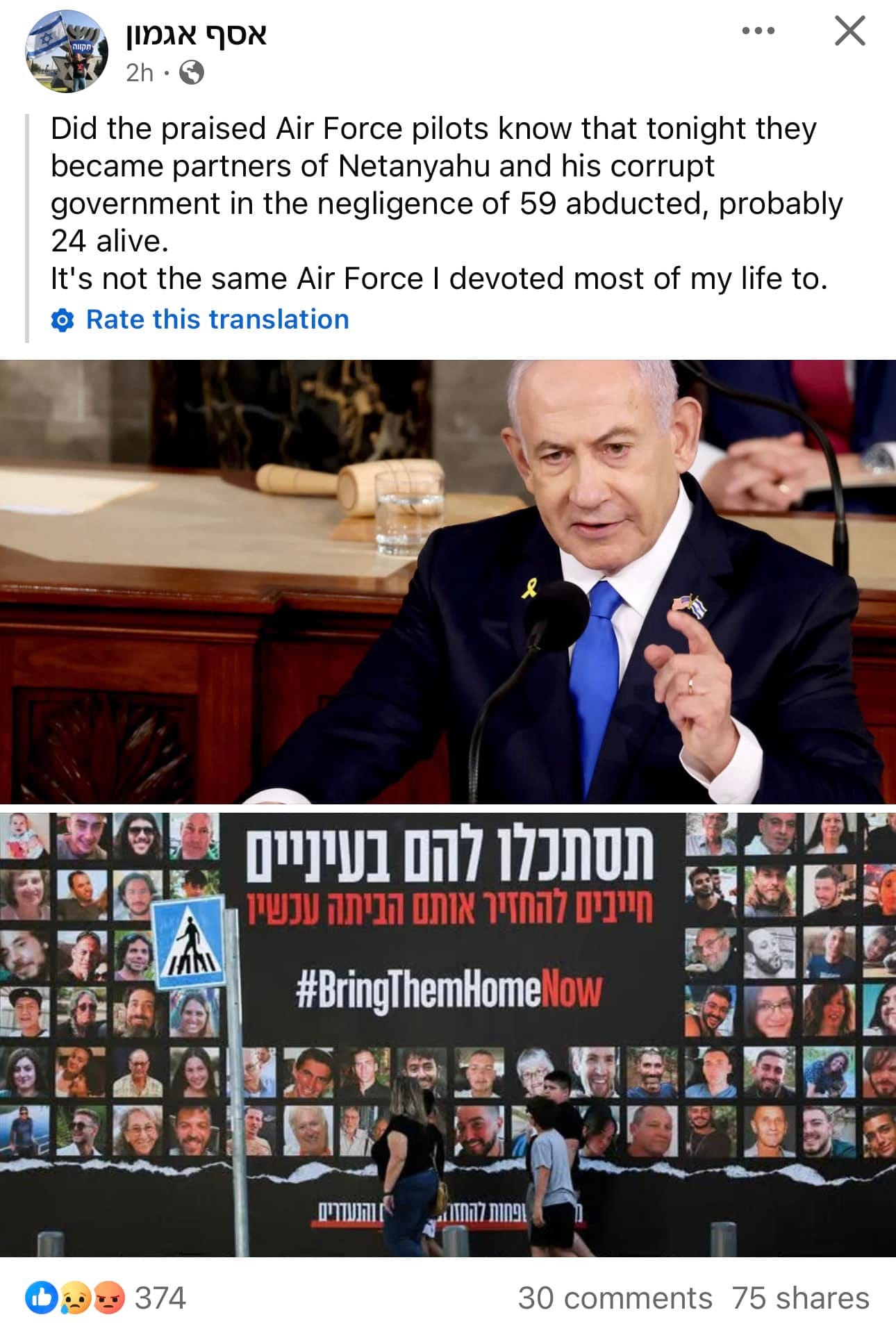
Former Air Force Commander and loud Kaplan protestor Assaf Agmon implies that the Israeli Air Force should have refused orders from Netanyahu and the IDF leadership. (Facebook, 3/16/25)

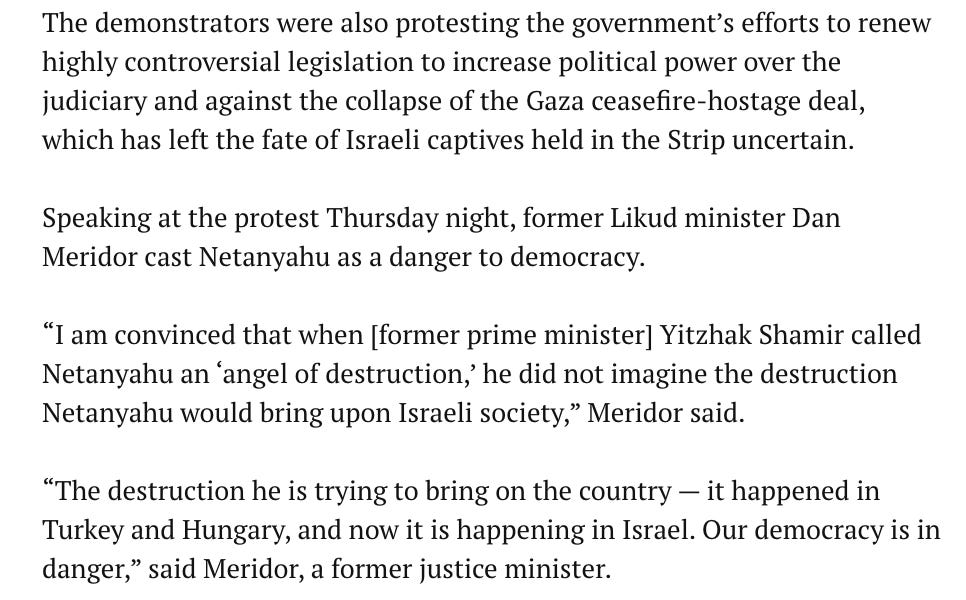
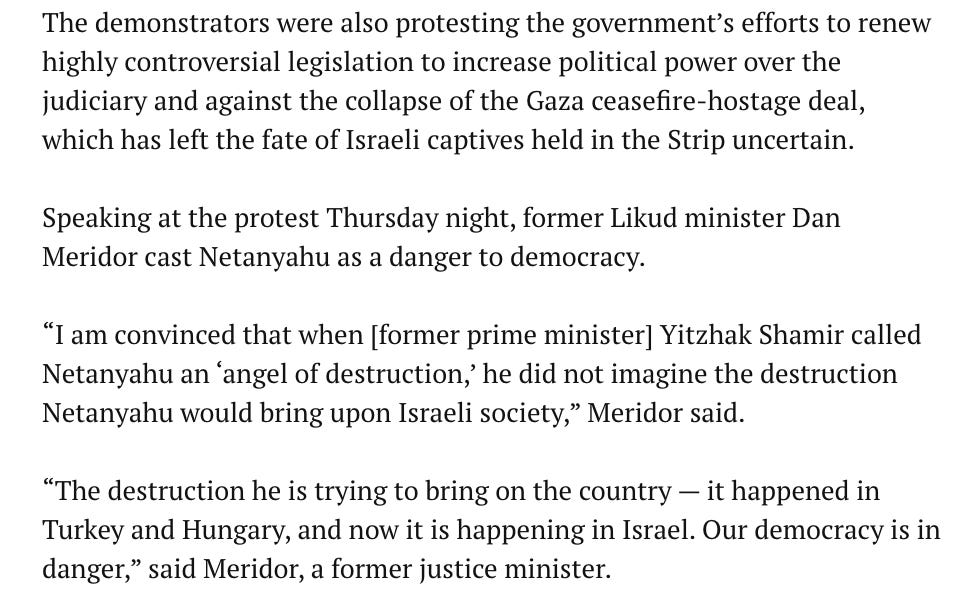
Former Likud Minister Dan Meridor said that Netanyahu is trying to bring “destruction” to Israel and that Israeli democracy is in danger. (Times of Israel, 3/20/25).
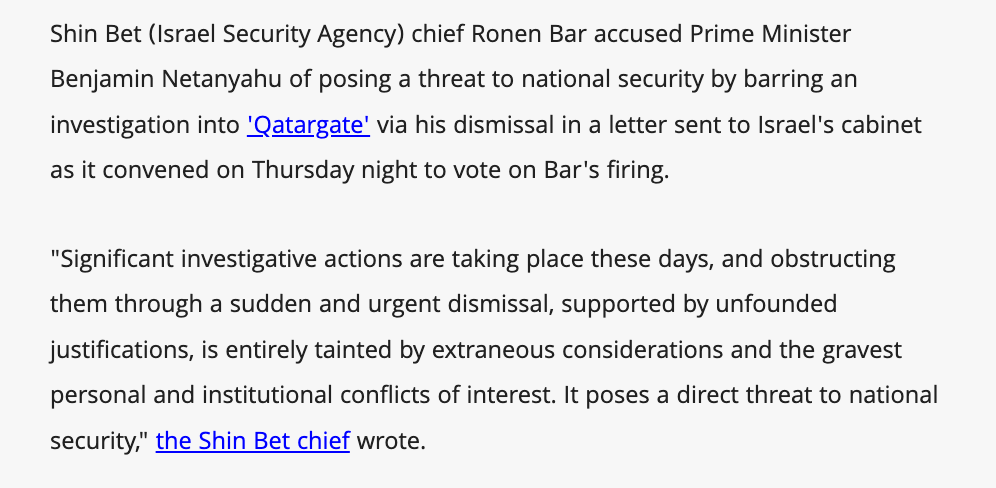
Shin Bet chief Ronen Bar accused Netanyahu of being a threat to national security.
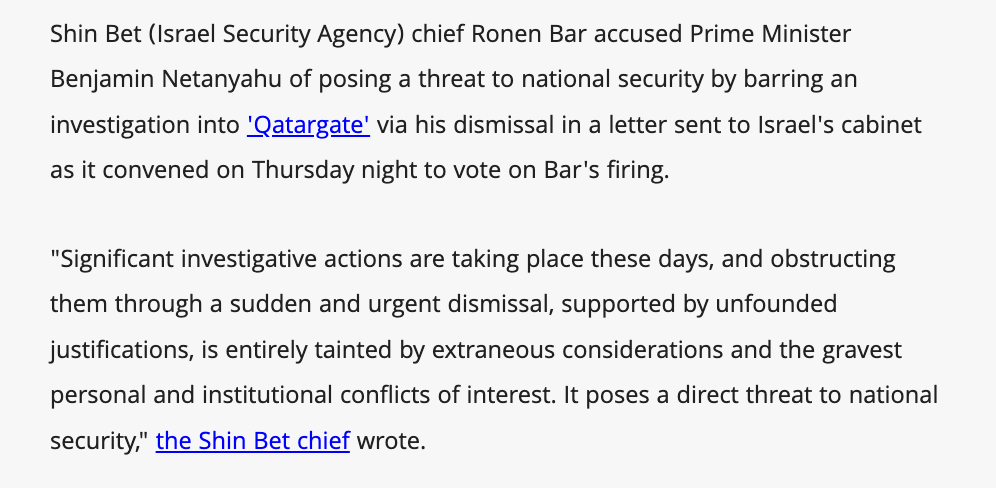
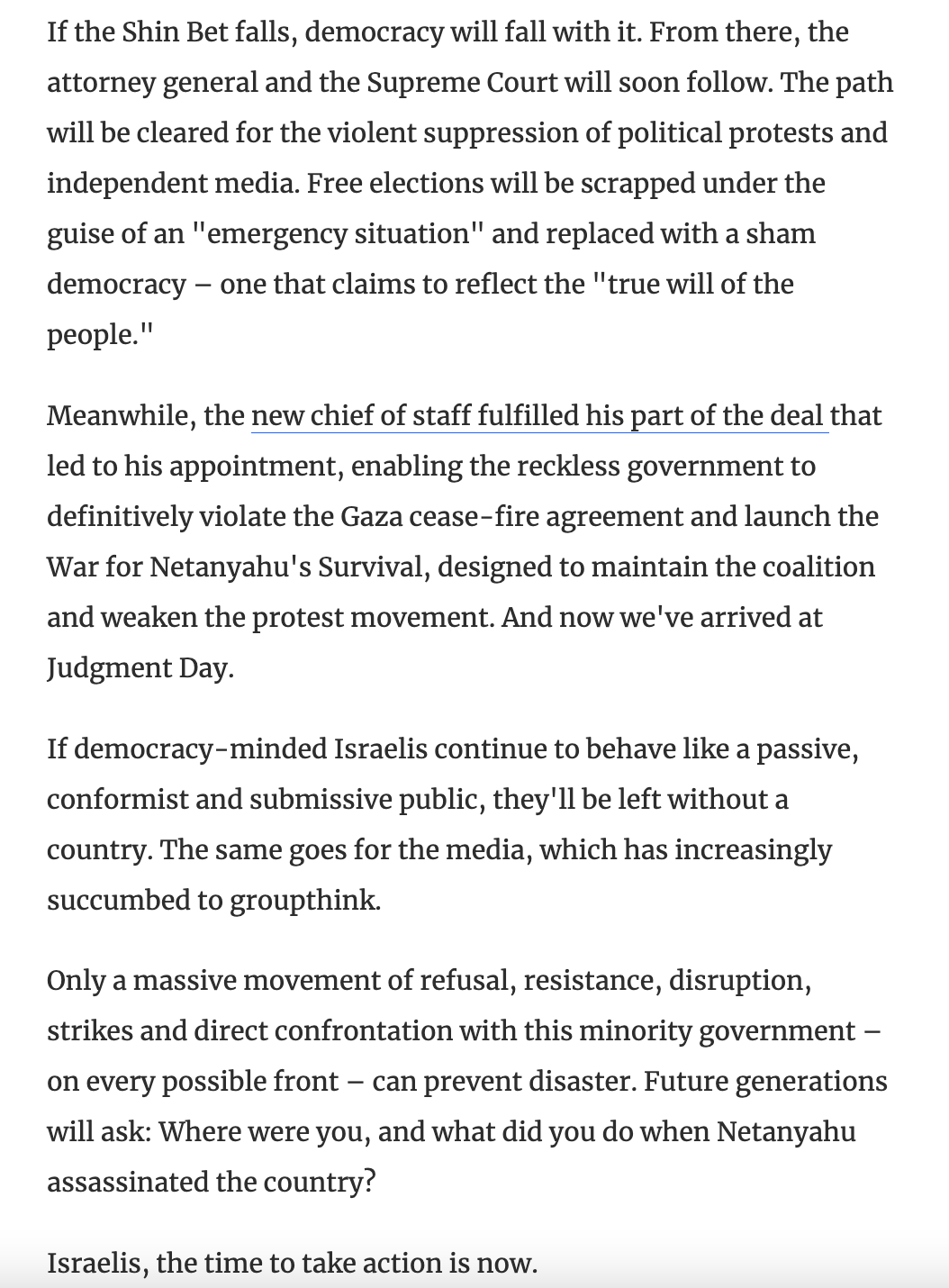
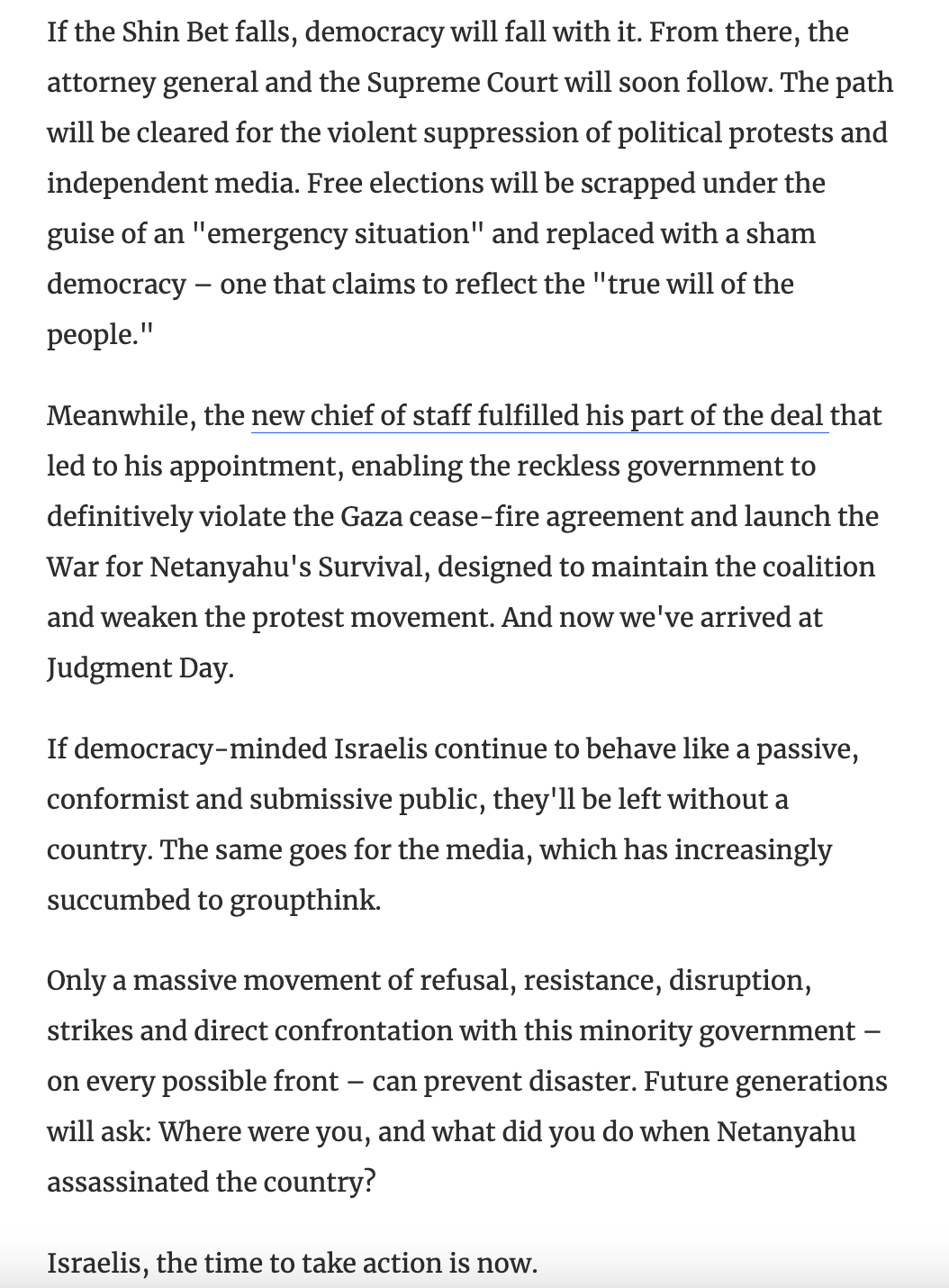
Uri Misgav of Haaretz called for “direct confrontation” against the IDF and the government. (3/20/25)
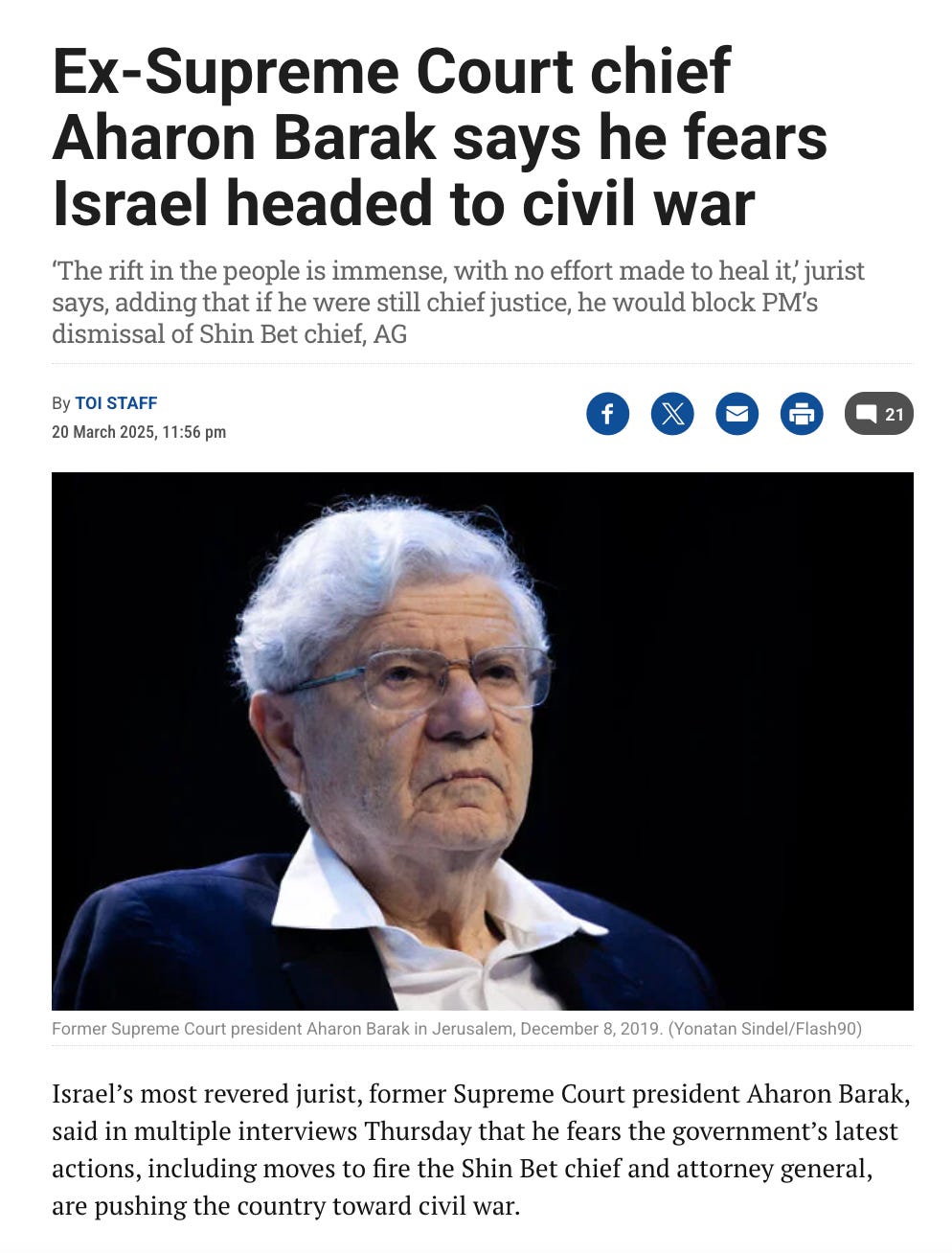
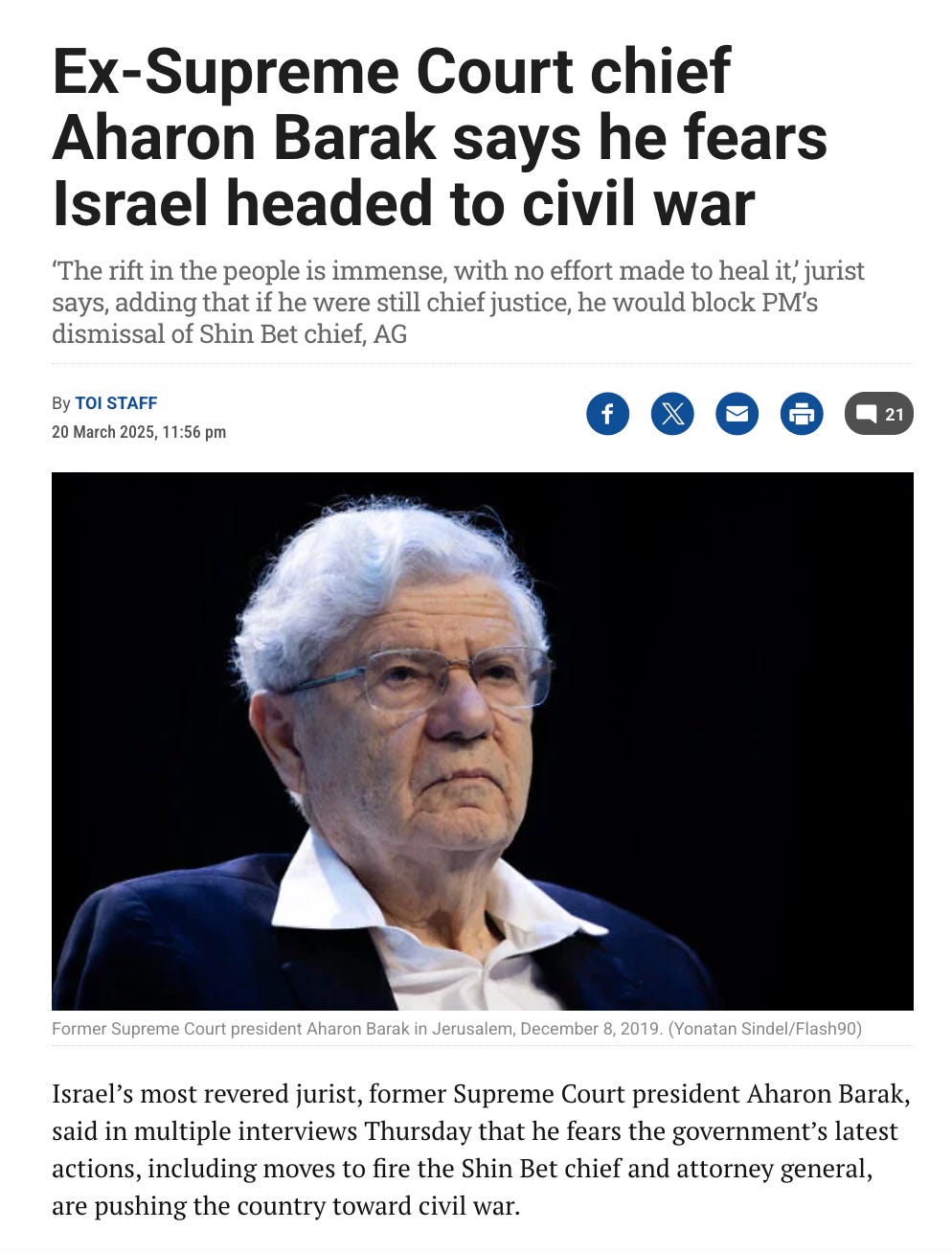
Former Supreme Court Chief Aharon Barak said that Netanyahu is pushing Israel into a civil war. (Times of Israel, 3/20/25).
Can someone please explain to me why none of these individuals could stand up and discuss the lack of equipment within the IDF or why it is a bad thing to discuss the equipment issues in the public square? Asking for tens of thousands of friends.
More updates to follow in the coming days. If I missed anything, please send it my way or drop it in the comments below.
Some of the protests are really painful to watch. The only ones reported here are anti Netanyahu, all by the anti Israel mob. The only voices getting through are self hating Jews. G-d bless the work you do.