


Friends of the IDF recently stated, "While the internal investigation found no fraud, misappropriation of funds, theft, or kickbacks involving former Chairman Morey Levovitz, any employee, National Board Member, or lay leader, it made several recommendations actions that could be taken to improve the culture and morale to support the FIDF’s mission." However, broader questions remain regarding FIDF’s transparency, specifically related to its fundraising and expenditures on ambulances.
On October 30, 2023, FIDF publicly claimed it had already donated 70 operational ambulances as part of an emergency fundraising initiative following the October 7 attacks, which tragically killed over 1,200 Israelis. This raises questions about whether these ambulances were funded by donor contributions or were part of previously arranged government procurement.
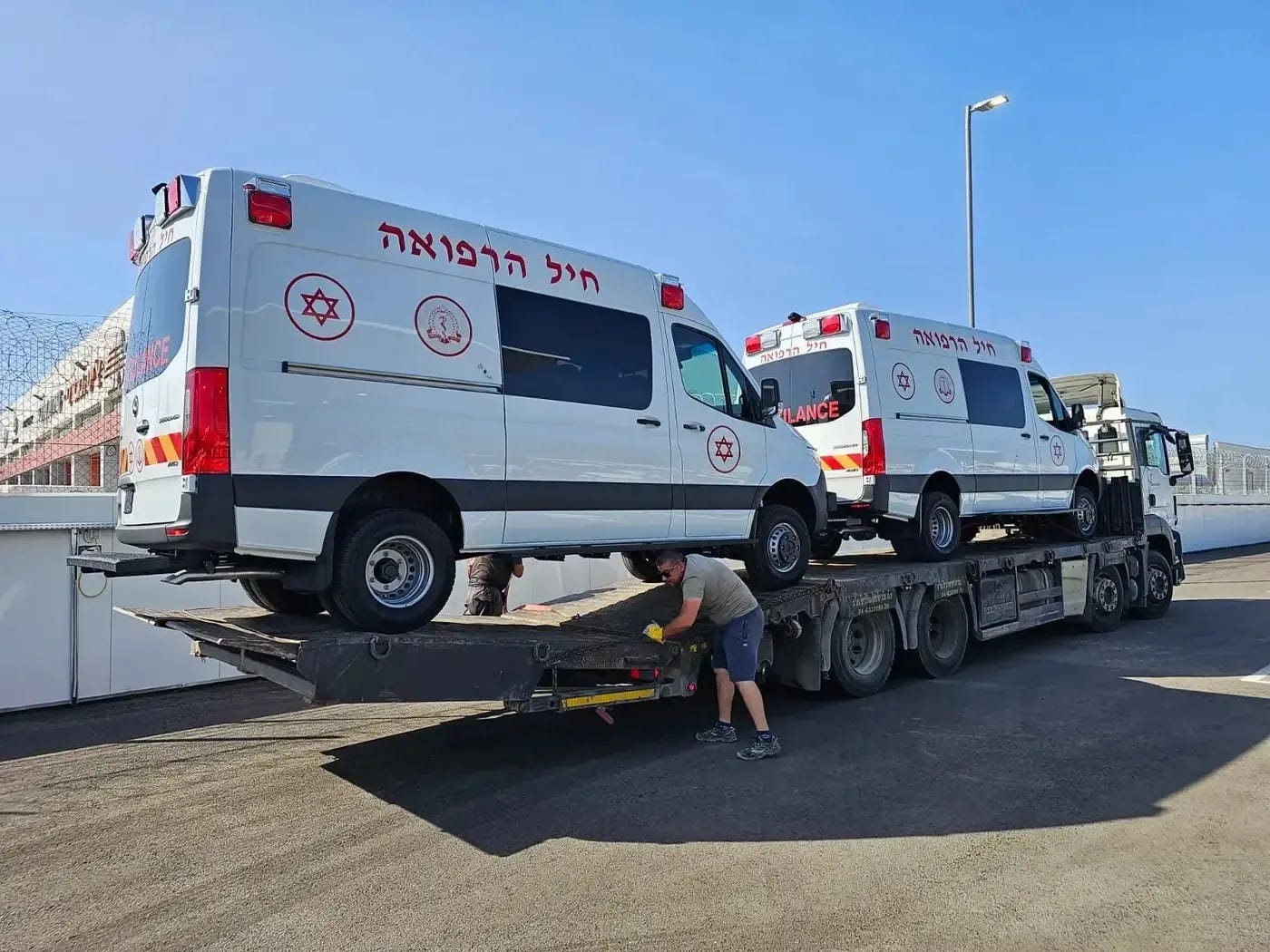
According to a Jerusalem Post report dated November 29, 2023, "the Defense Ministry has flown in around 30 Mercedes Sprinter 4x4 ambulances from the US. These ambulances were secured through the ministry's tender process two years ago. Since they are manufactured in the US, they can be purchased using the US defense aid budget, unlike the trucks that are bought using the ministry's budget."
Calcalist published a report in May 2024 revealing substantial spending by the Defense Ministry on ambulances purchased from the U.S. military, totaling 139 million shekels (approximately $38 million USD). Another related contract included a procurement worth 1.19 billion shekels for various military needs, including spare parts.
In addition to ammunition and weaponry, the Defense Ministry also purchased armored vehicles following the war. The report shows a deal worth 267 million shekels with an American company for the purchase of light armored vehicles.
Visual comparisons further complicate this issue. Ambulances photographed upon delivery from the US lack explicit donor acknowledgment, whereas others clearly bear markings indicating sponsorship by FIDF's Philadelphia branch from October 2023. This discrepancy raises questions about whether these are separate procurements or possibly the same ambulances documented differently at varying stages or contexts.
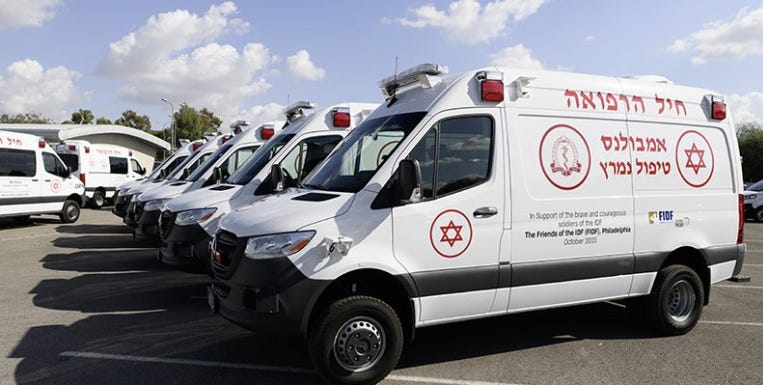
Further complicating this issue, FIDF utilized hostage deals to promote its fundraising efforts for ambulances. A social media post explicitly stated, "FIDF is honored to have donated the ambulances that helped bring our hostages home. Home is where they belong. And your donations will continue to support those who make it possible. As the only official U.S. nonprofit working closely with IDF leadership, FIDF is dedicated to providing critical support for the health, well-being, and education of Israeli soldiers."
FIDF explicitly states in its disclosures that donor funds directly covered ambulance procurement, prominently featuring "intensive care ambulances" as a prime example. However, the Defense Ministry’s procurement timeline and funding sources potentially contradict this narrative.
One must question the alignment between FIDF's fundraising claims and the ambulances' actual funding sources. Were these ambulances genuinely financed privately through donor appeals, or were they part of a fully funded governmental transaction completed nearly two years prior? If a US government-sponsored initiative covered these ambulances, FIDF could have easily contacted donors to discuss reallocating raised funds. Whether such consultation occurred remains unclear.
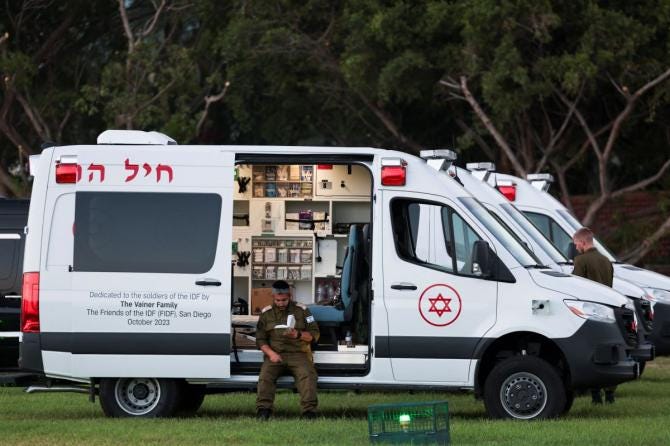
The implications are significant, as donor trust depends on accuracy and honesty. By potentially claiming to finance ambulances already budgeted by the government, FIDF risks misleading donors and undermining public confidence.
Nonprofits must avoid even the perception of duplicity. FIDF should clarify precisely how ambulance expenditures align with government procurement records. If donor funds were used for items already secured officially, the organization owes its supporters a thorough explanation. Misleading solicitations, intentional or not, severely damage nonprofit integrity. This situation requires an external audit to establish the facts and ensure accountability.
In a time when institutional trust faces significant skepticism, clarity and honesty must prevail. FIDF has an ethical obligation to address this potential discrepancy promptly. Donors and soldiers served by these ambulances deserve complete transparency and accountability.
Are the ambulances traceable by VIN # ?