


How many Israeli soldiers were injured—or killed—because they had to enter a building without a drone? Because there weren’t enough UAVs to scout ahead? Because no one in the right position moved fast enough to get them what they actually needed?
We may never know the true number. But the question lingers—and the consequences are real.
Now, in a stunning display of selective memory and donor-driven optics, Morey Levovitz, Chairman of the Board of Friends of the IDF (FIDF), and Nadav Padan, FIDF’s Executive Director in the U.S., are reportedly taking potential donors on “briefing tours” to showcase drones.
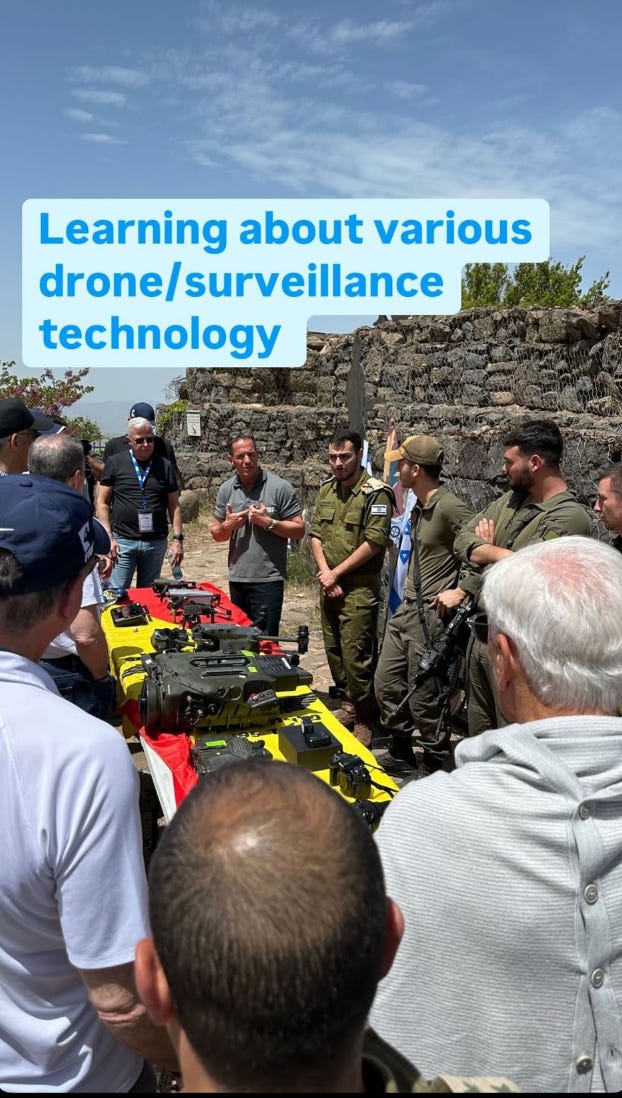
Yes—many of the very drones that didn’t arrive in time when soldiers were begging for them.
Let’s be clear: when the war broke out and tactical drone requests flooded in from the field, FIDF leadership said plainly, “We did not engage.” That wasn’t just bureaucratic language—it was a conscious choice. A decision made while soldiers on the ground were storming buildings blind, exposed to IEDs and snipers without any aerial surveillance to guide them.
Now those same drones—too late for some—are being used as set pieces in a donor marketing campaign.
Even worse, when challenged about the lack of support, Padan had the audacity to claim that what FIDF did provide was “better” than what soldiers were actually requesting. Better than ceramic plates that weren’t expired? Better than basic body armor? Better than a drone that might have saved a life?
The reservists buying their own helmets? The units relying on grassroots initiatives like Unit 11741 just to get essential gear?
Ignored. Forgotten. Dismissed.
Here’s the kicker: the drone that recently spotted Hamas leader Yahya Sinwar? It wasn’t military issue. It was donated. In one of the most critical intelligence breakthroughs of the war, it wasn’t FIDF procurement or government supply that enabled it—it was private citizens stepping in to fill the vacuum that these organizations left behind. That one drone might reshape the trajectory of the war. But it had to come from outside the system.
But now that the warzone is a stage and the donors are in the audience, suddenly the gear matters. Suddenly there’s time for photo ops and “educational briefings.”
This is what happens when public relations replaces moral responsibility—when the people trusted to support our fighters are more concerned with optics than outcomes.
If FIDF truly wants to support IDF soldiers, it can start by facing the hard truth: its failure to act when it mattered impacted countless lives.
Until they do, this isn’t leadership. It’s exploitation—with a drone on display.