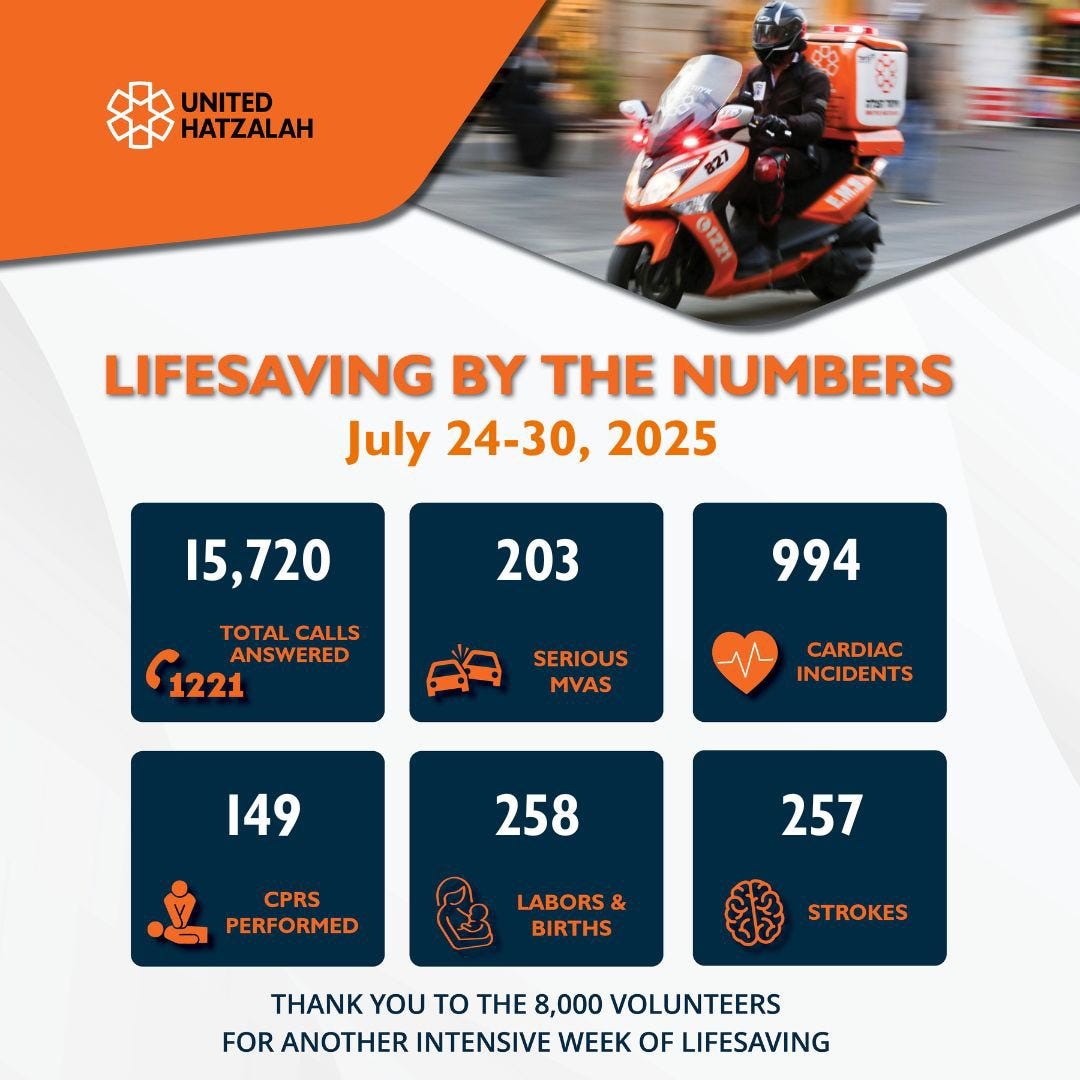
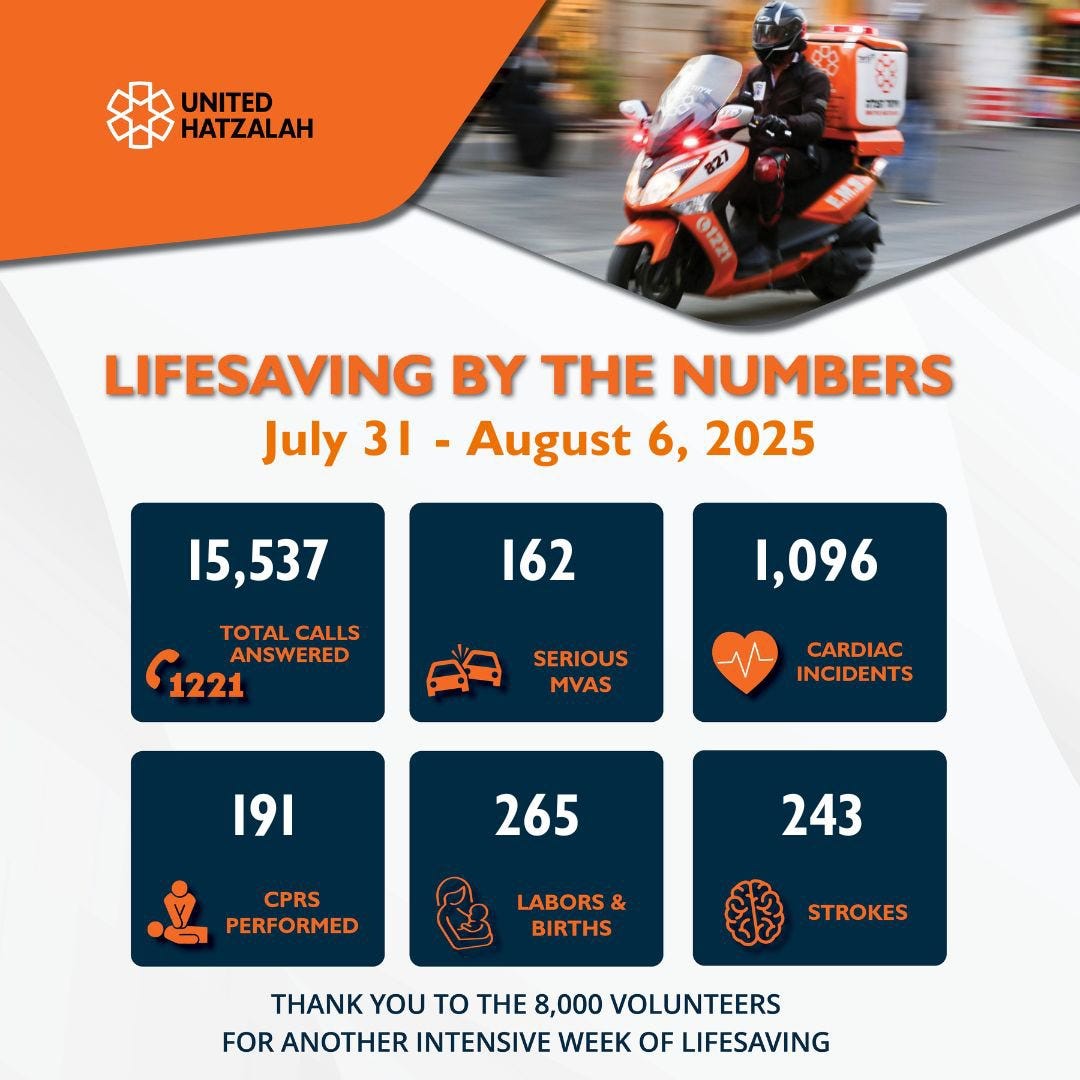
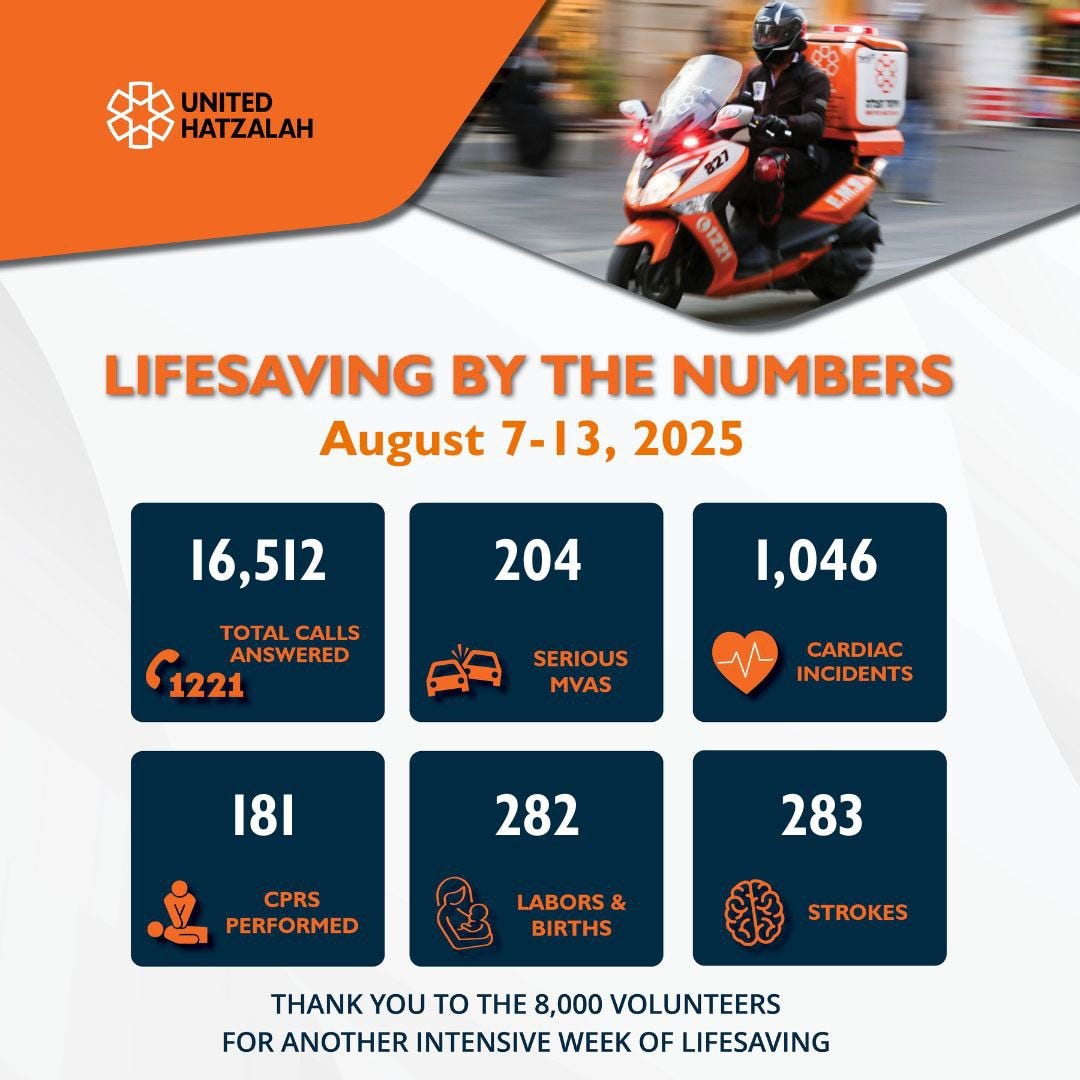
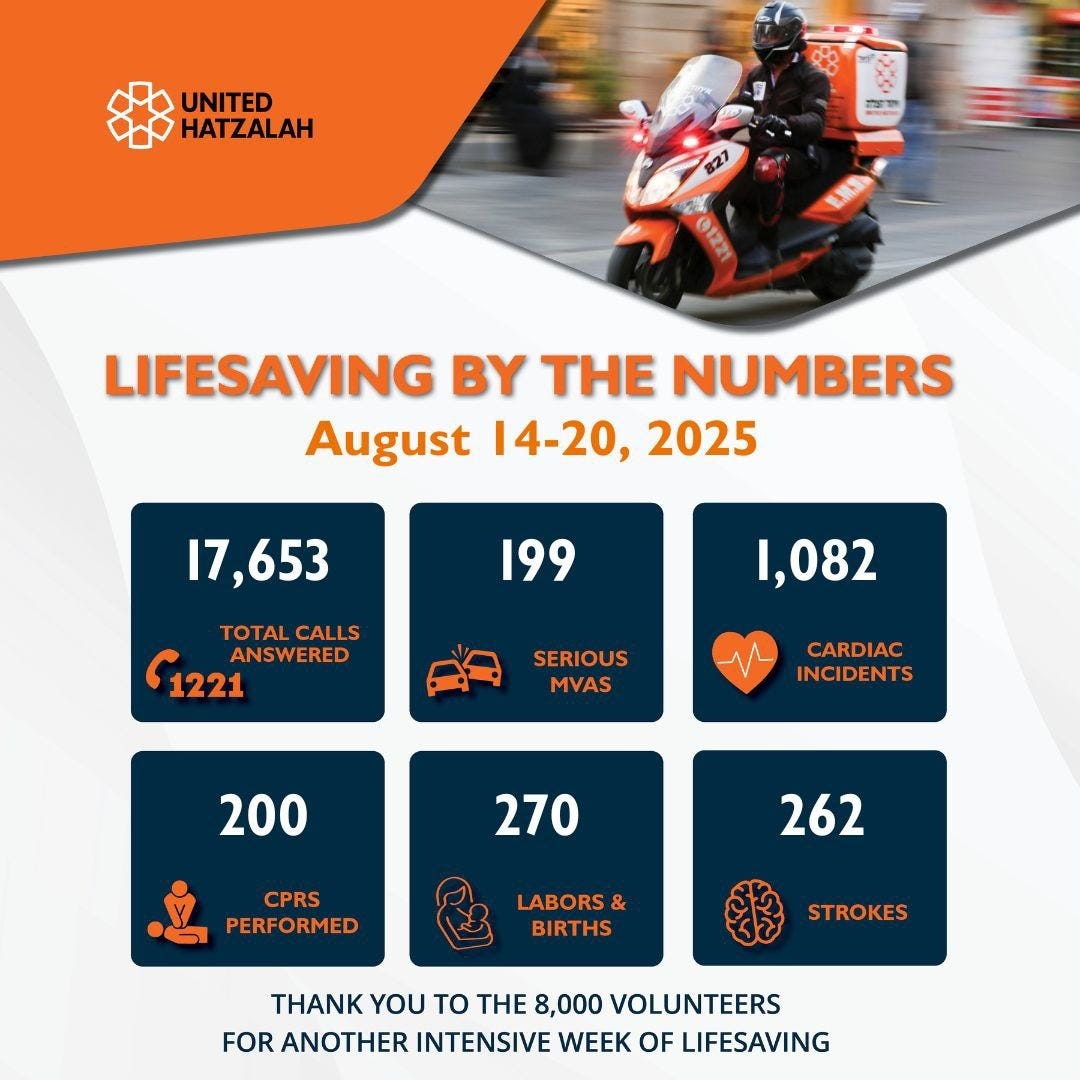
For four straight weeks this summer, United Hatzalah has released glossy infographics boasting of its “lifesaving by the numbers.” Each is designed to dazzle donors with statistics that look heroic at first glance. Look closer, however, and a different story emerges. The numbers are not impressive. They are impossible.
Between July 24 and August 20, United Hatzalah claimed to have answered between 15,500 and 17,600 emergency calls each week, handled more than 1,000 cardiac incidents weekly, performed 149 to 200 CPRs, assisted at 258 to 282 “Labors and Births,” and treated hundreds of strokes and serious car accidents. Taken at face value, these figures suggest UH plays an outsized role in Israel’s emergency system. When compared to the official statistics of Magen David Adom (MDA), Israel’s recognized national EMS provider, those claims do not align.
MDA reported handling 3,644,612 calls in 2024, averaging about 70,000 calls per week. United Hatzalah, by contrast, reported more than 17,000 calls in a single week. That figure, however, raises questions because MDA is the primary and legally mandated emergency response network in Israel. With MDA handling the overwhelming majority of emergency calls through the national 101 system, it is difficult to reconcile UH’s reported totals with the structure of the country’s emergency services.
The most striking discrepancy is in the category of “Labors and Births.” According to MDA’s published data, its teams assisted in 1,156 deliveries in all of 2024, or about 22 per week. United Hatzalah, however, claims to be involved in more than 250 such cases per week. That would mean its volunteers assisted in more births in a single month than MDA did in an entire year. Israel averages roughly 3,480 births weekly, nearly all in hospitals under medical supervision. The claim that UH is present at nearly 8 percent of these births raises serious questions about accuracy.
Similar issues appear in other categories. Israel averages fewer than 200 out-of-hospital cardiac arrests weekly, yet UH reports more than 1,000 “cardiac incidents.” Nationally, about 115 CPR attempts occur weekly, yet UH reports performing nearly double that. Israel averages about 350 strokes per week, while UH claims to treat three-quarters of them. Serious traffic accidents average around 75 weekly, while UH reports more than twice that number.
This cannot be explained as a minor reporting error. The figures, released over multiple weeks, consistently appear to exceed national totals. The effect is not greater public health transparency but promotional material aimed at donors.
None of this denies that United Hatzalah’s volunteers make valuable contributions. They do. But credibility is essential in emergency medicine. Inflated statistics risk corroding trust, misleading donors, and confusing the public about the structure of Israel’s emergency system.
United Hatzalah should be judged on its real contributions. Real lifesaving does not need numbers that stretch beyond what the country itself records.