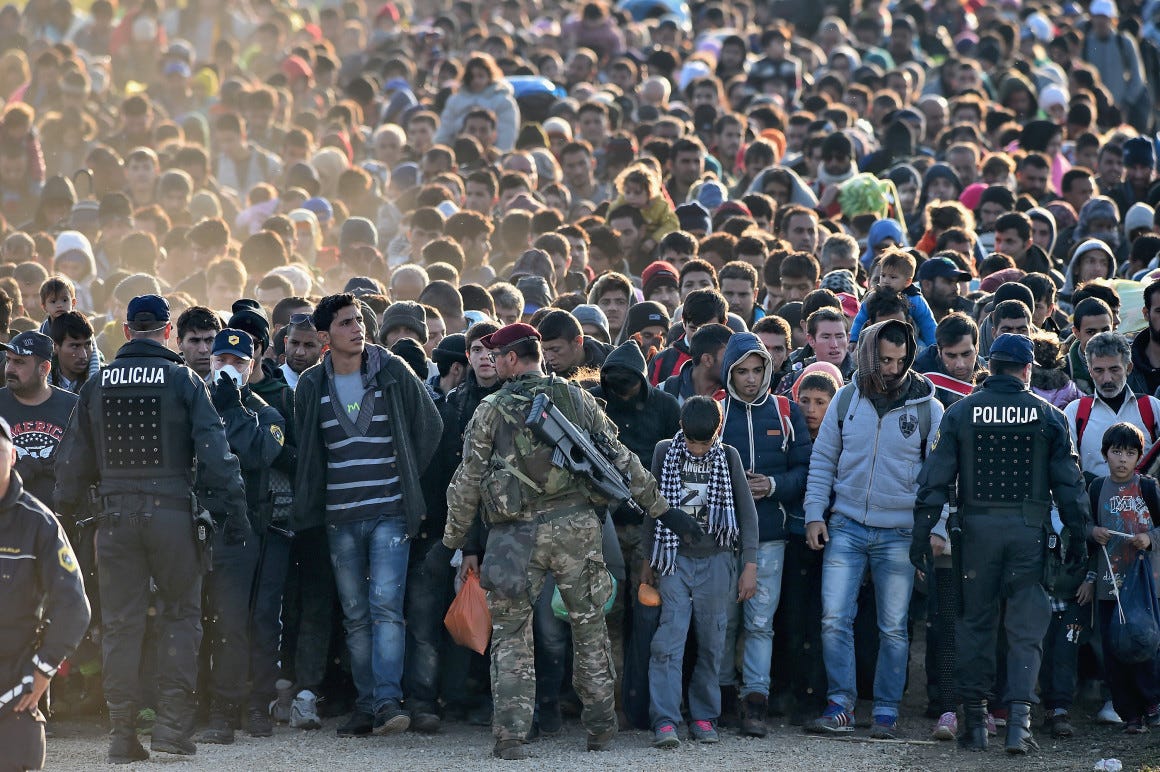
At the World Economic Forum in Davos, amid panels on democratic resilience and global stability, Rabbi Pinchas Goldschmidt offered a familiar explanation for Europe’s antisemitism problem. Antisemitism, he suggested, should be understood in part as a reaction to social anxiety among “old Europeans” unsettled by mass migration.
That explanation is wrong. And Europe knows it.
Antisemitism in Europe is no longer a debate. It is a routine. Jewish schools operate behind armed guards. Synagogues are hardened targets. Jewish students learn early when to hide who they are. Antisemitic incidents spike on cue after events thousands of miles away, regardless of whether local Jews have anything to do with them. None of this is accidental. None of it is misunderstood.
More than a third of European Jews report experiencing antisemitic harassment in a single year. Some are physically attacked. Most conceal their Jewish identity at least some of the time. Many avoid Jewish spaces altogether because they do not feel safe.
At some point, this stops being complicated.
When a minority must calculate visibility in order to move through daily life, the failure is no longer social. It is governmental. No democracy should accept this as a permanent condition of Jewish existence.
National figures confirm what daily life already shows. Britain has recorded one of the highest totals of antisemitic incidents in its history. France has seen numbers not recorded in decades. Germany has reported thousands of antisemitic offenses in a single year, rising sharply. These are not outliers. They repeat. Repetition is not confusion. It is neglect.
This is why explanations matter. When antisemitism is framed primarily as a reaction to cultural unease, responsibility dissolves. The conversation drifts from stopping antisemitic acts to interpreting the emotions around them. Jews absorb the cost of that drift every day.
One official has been notably unwilling to indulge this evasion. Rabbi Yehuda Kaploun, the U.S. Special Envoy to Monitor and Combat Antisemitism, rejected the effort to blame “old Europe” for the current surge. His judgment was blunt: “Blaming ‘old Europe’ for the present surge in antisemitism is disgraceful.”
That was not rhetorical heat. It was correction.
Kaploun went further. “Mass migration is a huge driver of antisemitism,” he said. It “creates dramatic social changes and threatens the safety of all citizens.” His conclusion was unmistakable: “Mass migration itself threatens the safety of Jews and all communities.”
This should not be controversial. Since 2015, Europe has absorbed tens of millions of new residents through asylum systems, temporary protection regimes, and secondary migration. In several Western European countries, foreign-born populations now approach a quarter of the total, with far higher concentrations in major cities. This is among the fastest demographic transformations in Europe’s modern history.
Scale matters. Norms do not dissolve on contact. Beliefs do not vanish at the border. When large numbers arrive from regions where antisemitism is socially normalized and openly taught, host societies have a choice. They can confront that reality or pretend it will resolve itself.
Pretending is not tolerance. It is abdication.
Language has also become an obstacle. Vocabulary meant to preserve harmony is now used to shut down scrutiny of radical ideology and to silence those who identify sources of antisemitic incitement. When criticism of extremist ideas is ruled illegitimate by definition, institutions hesitate. Enforcement weakens. Antisemitism adjusts.
Paralysis then passes for sensitivity.
Equally damaging is the insistence on treating antisemitism as merely one prejudice among many. It is not. Antisemitism is conspiratorial by nature. It travels easily. It has a long history of escalating from rhetoric to violence. It does not merely exclude Jews. It casts them as existential enemies. Policies that ignore this distinction fail precisely where Jews are most exposed.
Dialogue has value. Dialogue without enforcement is theater. Conferences do not stop assaults. Statements do not secure schools. Jewish communities cannot live on reassurances.
A line has already been crossed. When a government requires Jews to live behind permanent armed security as a condition of citizenship, integration has failed. Deterrence has failed. Denial has failed.
Governments exist to protect their citizens. When antisemitism is treated as a cultural misunderstanding rather than as a failure of law, policy, and enforcement, that duty is quietly abandoned. History leaves no doubt about where that abandonment leads.
Europe is not confused about antisemitism. It is conflicted about confronting it. And every day that conflict persists, Jewish life is asked to adapt to danger instead of governments being asked to eliminate it.
When fear becomes routine for Jews, failure has already been institutionalized.