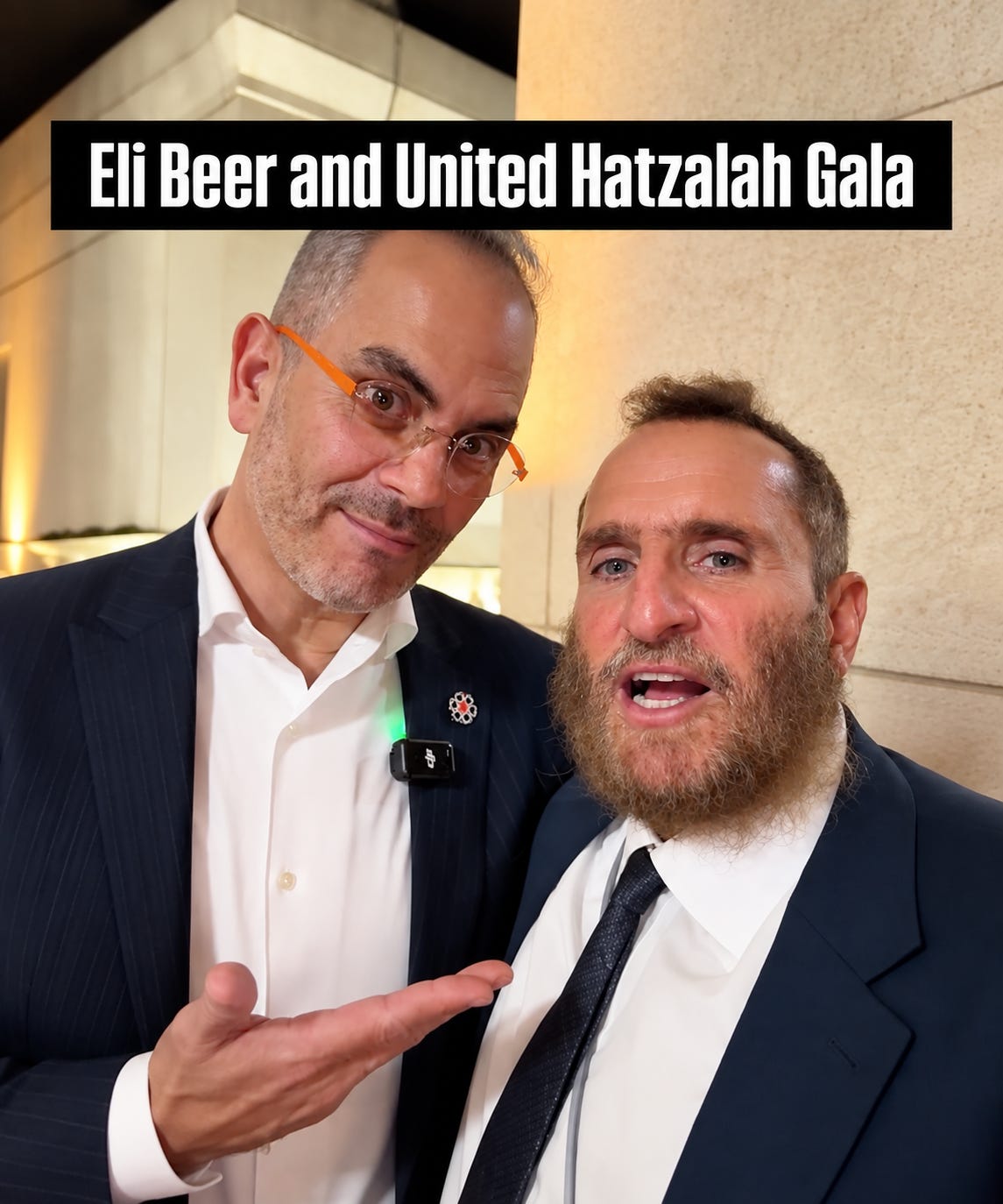
For nineteen months, Shmuley Boteach ran his defamation case the way he runs his social media accounts. On Wednesday a federal judge decided he’d seen enough.
U.S. District Judge K. Michael Moore struck Boteach’s answer and all of his affirmative defenses, threw out his civil rights counterclaims with prejudice, and entered default judgment against him on liability in the suit brought by the Fontainebleau Miami Beach. There will be a trial in February 2027, but it won’t be about whether Boteach did anything wrong. That question is settled. The jury’s only job now is to put a number on it.
The 23-page order, which refers to Boteach by his legal name, Jacob Shmuel Botach, reads less like a legal ruling than a running tally of a man’s worst decisions. Moore wrote that Boteach showed “zero indicia of someone who plans to comply with Court orders.” He referred to Boteach’s “record of misrepresentations.” At one point he described Boteach “feigning incredulity” that anyone could accuse him of breaking the rules.
Some context is owed here, because the beginning of this matters. In December 2024 a guest named Faiz Akbar walked up to Boteach in the hotel lobby, called him a “baby killer,” and used other language that even the Fontainebleau, in its own complaint, concedes was “easily interpreted as antisemitic.” Akbar is not the good guy in this story. Boteach had a real grievance and a real reason to be angry.
He just didn’t stop there. According to the hotel, he shouted “Allahu Akbar? Are you going to blow yourself up or something?” at the man. And then he took what should have been a bad night and turned it into a year and a half of conduct a federal judge eventually found to be dishonest, harassing and beyond the court’s ability to control.
A short list. Boteach asked for a protective order, got it, and posted surveillance footage the next day anyway. He posted it again a few months later and got hit with a $15,000 fee sanction. He told the court his back was too bad to sit for a deposition, then posted videos of himself ice skating, kayaking and riding a bike. One of his lawyers sent the other side what Moore called “a three-page non-sensical rant” demanding $100 million and got referred to the grievance committee for it. Boteach also tried to serve a third-party defendant at an address he knew was the man’s child’s.
So in February, Moore ordered him to “cease such harassing conduct and social media references to Plaintiff and its counsel.” The judge’s own account of what came next: “Perhaps unsurprisingly, Defendant continued to post.”
Ten different days. Posts calling the hotel antisemitic. Posts saying its billionaire owner, Jeffrey Soffer, who is Jewish, was using his money to rig the case. And the ugliest of them, a series of posts tying the hotel’s lawyer, Sean Burstyn, to the Jeffrey Epstein files and asking what role lawyers like him played in pushing Virginia Giuffre toward suicide.
Boteach’s defense of that one was that his assistant had accidentally republished an old draft while setting up a new phone. Both of them swore to it. Moore didn’t buy it. The declarations were “not credible,” he wrote, pointing out that the post sat up for weeks and went out within hours of a separate violation. Read plainly, the court found that two sworn statements filed on Boteach’s behalf were false.
Then, somehow, it got worse. On June 11 and 12, after the hotel had already filed its motion for case-ending sanctions and while Boteach’s own lawyers were writing his response to it, he posted that Burstyn had committed extortion, intimidation and witness tampering and should “stop billing hours and start interviewing criminal defense lawyers.” Moore wrote that the “temerity” of doing this mid-briefing “would strain credulity” if he weren’t already so familiar with how Boteach operates.
Boteach’s objections went nowhere. He said the February order violated the First Amendment. Moore pointed out that court orders have to be followed “regardless of the ultimate validity of the order,” and that if you think an order is wrong, you appeal it. You don’t ignore it. He said the order only covered harassing posts. Moore said fine, the Epstein posts and the extortion posts were harassment under any definition. He said nobody warned him his pleadings could be struck. Moore cited two written warnings that said exactly that. He said his fight against antisemitism justified what he did. Moore wrote that it does “not give him a license to disregard” the court.
Then the line that will stick: “The Court has tried the carrot. Now, faced with a party who is ‘repeatedly and stubbornly defiant’... the Court must try the stick.”
Moore also noted something Boteach’s followers might want to sit with. Online, Boteach presents himself as a Jew being bullied into silence by a powerful hotel. The man making that claim, the judge observed, had posted a photo of the opposing lawyer’s wife and accused the lawyer of complicity in a woman’s death.
None of this will surprise anyone who has watched Boteach’s career. The man who calls himself “the most famous rabbi in America” has built that fame in large part by picking fights, and he is not selective about whom he fights. In this case alone, according to his own posts quoted in the order, he went after a Jewish hotel owner, a Jewish attorney, a Jewish influencer and a Jewish media outlet, all while casting himself as antisemitism’s lonely defender. That is the pattern. He makes enemies inside the Jewish community as easily as outside it, treats every critic as a traitor or a bigot, and has done it for years without paying any real price.
Akbar said something vile. Boteach answered by spending nineteen months proving to a federal court that he could not obey an order, could not be trusted in an affidavit, and could not put the phone down. When the history of this era of American Jewish life is written, he will be remembered as one of its most damaging figures, a man who turned the fight against antisemitism into a personal brand and burned through allies, institutions and credibility along the way, always with seeming impunity.
On Wednesday, for the first time, the impunity ran out.