


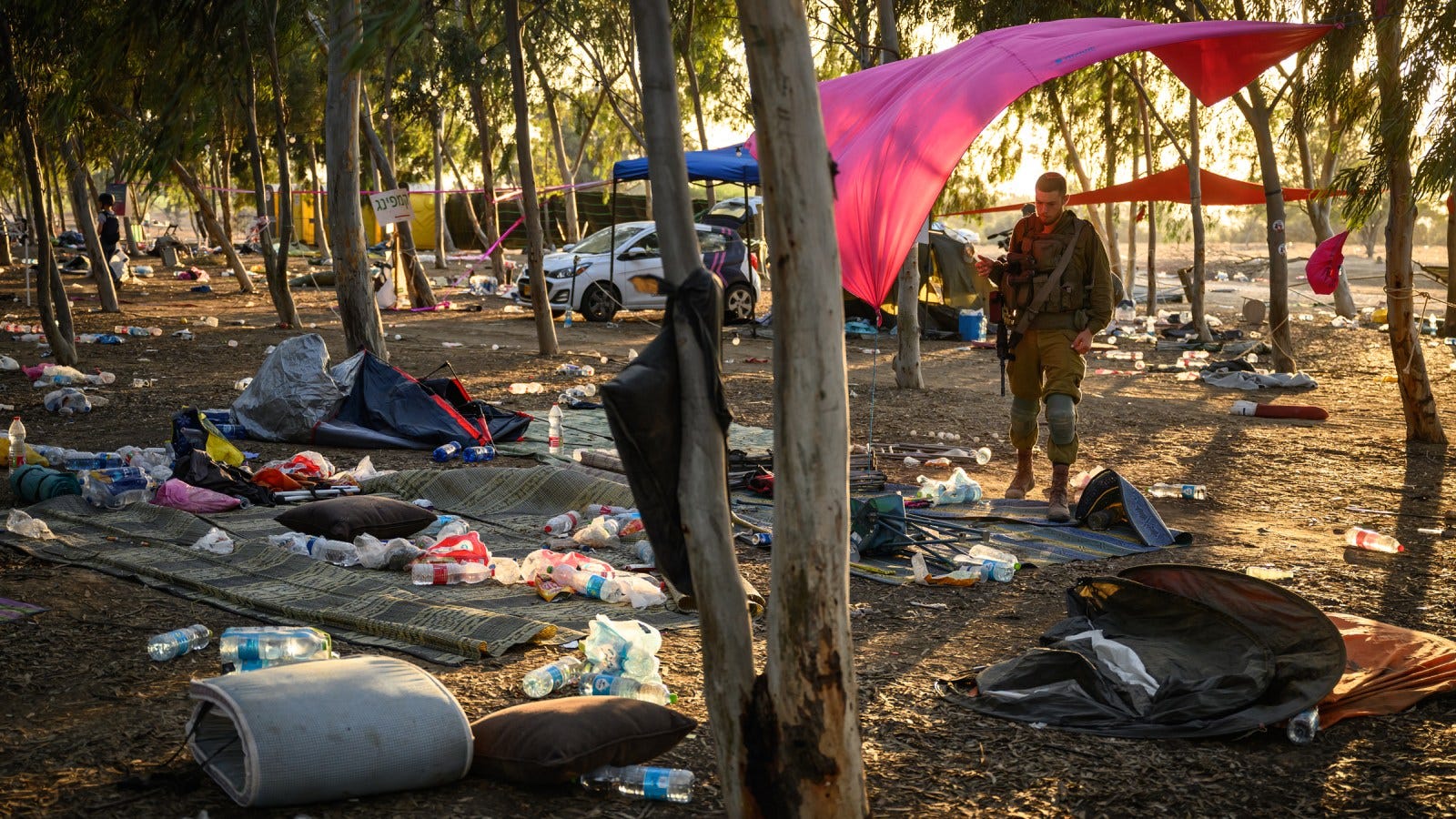
The massacre at the Nova music festival on October 7 remains one of the darkest chapters in Israel’s history. Three hundred seventy-eight people were murdered and forty-four taken hostage near Re’im. Hamas bears full responsibility for the killings. But almost two years later, it is staggering how little clarity exists about why the festival was even allowed to take place under such circumstances. That uncertainty, that refusal to give the public straight answers, has become its own disgrace.
A new report from Haaretz shows just how many warnings were ignored. In September 2023, Negev District commander Nachshon Nagler ordered that “events and parties should not be permitted near the Gaza border in light of security concerns.” He had judged the escalating protests along the fence to be a serious threat. Then he left the force, and the district was left without a permanent commander. Despite his directive, the Ofakim police later signed off on the Nova festival once they got the green light from the IDF, which formally oversaw security in the Re’im area.
The organizers had already been turned away elsewhere. Police in Sderot and Netivot refused to approve the event, citing safety and a lack of manpower. But the producers kept pushing. They found a different station willing to say yes. Officials in Ofakim decided thirty officers would be enough. That decision now looks almost surreal.
Here lies the uncomfortable cultural truth. Israelis are famous for persistence. If there is no immediate yes, try another angle until you get one. Chutzpah is celebrated, and in many areas it has served the country well. It has built companies, fueled daring innovation, and given Israel a reputation for never taking no for an answer. But in this case, that same instinct proved deadly. The organizers would not accept no from Sderot or Netivot. They pressed Ofakim. They leaned on the army. They even threatened to petition the High Court when their request to extend the festival past October 6 was blocked. Eventually, approval came. Senior officers warned that troops were stretched thin because of the Simchat Torah holiday. Their objections were overruled. The festival went ahead.
The morning of the massacre exposed how fragile the setup was. The officers on site had pistols. There was no IDF presence. At 6:31 a.m. sirens went off. Four minutes later, the local commander told everyone to run. An IDF probe later praised that call as “life-saving.” But by then terrorists were already there. Hundreds were trapped in what should have been a field of music and joy, turned instead into a killing ground.
Since then, institutions have pointed fingers. The police insisted that because the area was under IDF jurisdiction, “full responsibility for the event’s security approval lies strictly on the IDF.” Their own role, they said, was limited to traffic and public order. That statement does not erase the fact that other stations had already refused, or that thirty lightly armed officers were all that stood between revelers and terrorists.
What emerges is not a single mistake but a cascade. Warnings were brushed aside. Assessments were watered down. Pressure carried the day. The broader lesson is stark: persistence, the national instinct to push until a door opens, is a virtue in many areas of life. In security, it can be fatal.
Almost two years later, the country has yet to face this honestly. The comptroller’s report remains unpublished. Critical details are locked away. Families of the victims still ask the simplest questions: who made the calls, why were the risks ignored, and how did “no” turn into “yes” on the eve of disaster?
Israel has built much of its success on chutzpah. But some doors should stay closed. There must be a line where security concerns are final. No court petition, no creative workaround, no backdoor approval. Until that lesson is absorbed, the wounds of October 7 will remain unhealed. They will remain open, not only because of what Hamas did, but because of what Israel’s leaders failed to prevent.
Daniel, do you really think there needs to be an "official inquiry?" In Israel, that is just another name for cover up. We all know what happened. We all know what could have happened: https://www.pisgahsite.com/p/it-could-have-been-worse