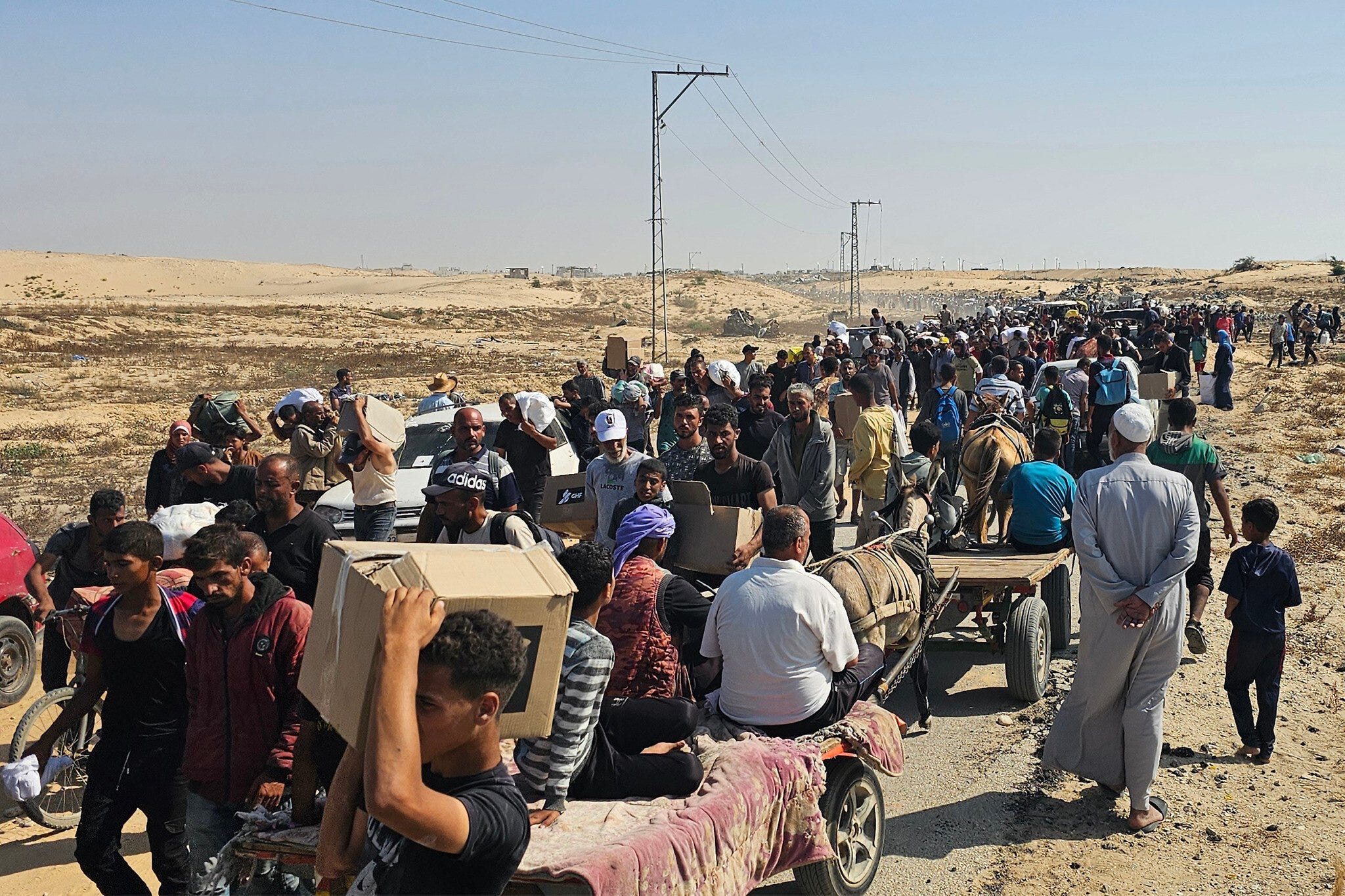
In its recent exposé, Haaretz presents a grim portrayal of IDF soldiers deliberately targeting unarmed Gazans at humanitarian aid sites—a narrative as provocative as it is deeply flawed. Such a serious indictment demands unimpeachable evidence, yet what Haaretz offers instead is an assortment of anonymous accusations, selectively presented accounts, and a reckless disregard for critical context.
The piece hinges primarily upon the testimonies of unnamed soldiers who describe seemingly arbitrary violence perpetrated against Palestinian civilians. "It's a killing field," one soldier dramatically states, without clear corroboration. Anonymous sources are notoriously unreliable in conflict journalism, their claims often colored by personal agendas or misinterpretation of fragmented events. Haaretz provides no concrete verification of these explosive allegations, no independent forensic analysis, and no official documentation from the IDF to confirm these incidents. It is strikingly deficient in credible evidence, relying heavily instead on sensational quotes.
Notably, the only individual explicitly named in Haaretz's report is Brigadier General Yehuda Vach, commander of the Israel Defense Forces' (IDF) 252nd Division. Haaretz’s fixation on Vach, who is openly right-wing and proudly religious, suggests a clear bias. Their characterization appears driven less by verified facts and more by an underlying hostility toward his ideological and religious identity, raising serious questions about the fairness and motivation behind their reporting.
Furthermore, the report minimizes the central role Hamas continues to play in Gaza’s ongoing humanitarian crisis. The IDF’s statement clearly articulates Hamas’s strategy of exploiting civilians, deliberately creating dangerous confrontations to erode Israel’s legitimacy. Yet Haaretz glosses over this manipulation entirely, preferring instead to depict the IDF as wanton aggressors rather than defenders forced into complex, often impossible operational situations by an enemy who readily uses civilians as human shields.
The presence of armed Palestinian militia elements, such as the Abu Shabab group, mentioned briefly and dismissively by Haaretz, significantly complicates the supposedly "peaceful" aid distribution scenes. By downplaying these militias' activities, Haaretz distorts reality, misleading readers into believing that IDF actions occur in a vacuum, absent of legitimate security threats. This incomplete portrayal fails to acknowledge that battlefield decisions, often split-second and fraught with life-and-death consequences, are influenced by a context deliberately engineered by Hamas.
Moreover, the article's presentation of the Gaza Humanitarian Foundation (GHF) as a vaguely sinister entity "set up by Israel in coordination with U.S. evangelicals" seeks to delegitimize genuine humanitarian efforts. Ironically, Haaretz implies wrongdoing where Israel has attempted to alleviate civilian suffering. Rather than acknowledging the inherent chaos of wartime aid distribution or the Hamas-driven environment of instability, the paper casts aspersions without substantive justification.
When Prime Minister Netanyahu and Defense Minister Katz denounce these claims as "blood libels," it reflects their rightful outrage at allegations unsupported by meticulous scrutiny or robust evidence. This harsh rebuttal is not mere hyperbole; it is an appropriate response to accusations that carry echoes of historic anti-Semitic tropes depicting Jews as indiscriminate killers.
Ultimately, Haaretz's exposé fails the test of rigorous journalism. It offers not a sober analysis but an emotionally charged accusation, serving to further inflame rather than inform. The Israeli perspective rightly demands fairness, precision, and comprehensive reporting—none of which are adequately present here. In their rush to judgment, Haaretz not only damages Israel’s international standing but also undermines the very principles of journalistic integrity it claims to uphold.