


There is a peculiar kind of cruelty that masquerades as religious conviction. We saw it on full display recently when Shaiel Ben-Ephraim, an Israeli commentator who often postures as a guardian of Jewish authenticity, lashed out online at Kassy Akiva—a Jewish convert and political reporter—telling her to “f*ck off back to church.” The moment might have passed as another bout of internet vitriol, but it struck a deeper nerve.
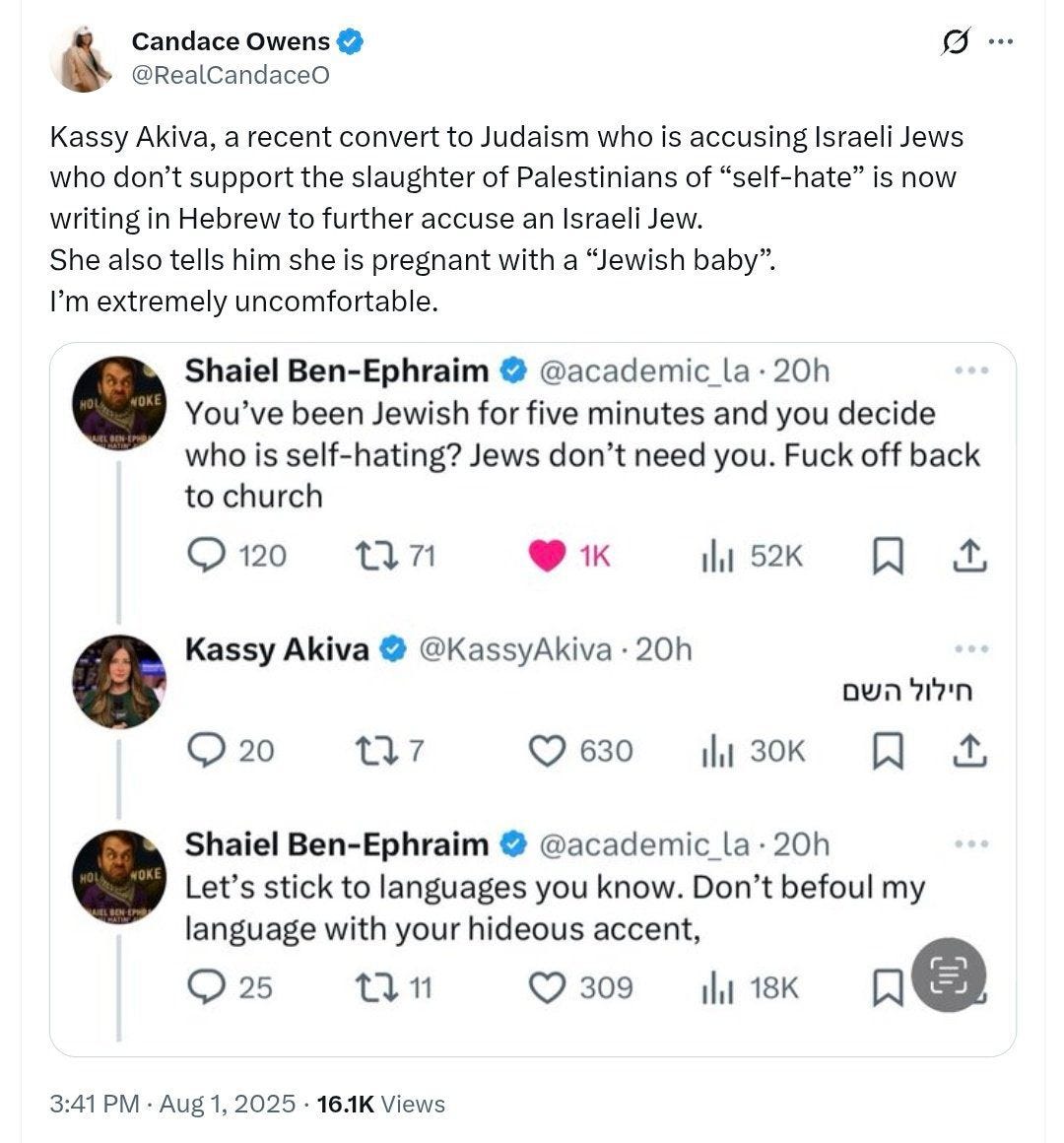
In a tradition that has long defined itself by its reverence for those who choose to join it, such words are more than offensive. They are a betrayal.
For millennia, Jewish law has held converts in extraordinary esteem. The Torah repeats—again and again—the injunction not to wrong the convert. “You shall not oppress a convert,” it commands, “for you were strangers in the land of Egypt.” The message is both historical and moral: a people forged in the crucible of exile must never reproduce the exclusion they once endured.
This is not marginal doctrine. Rabbinic literature warns strongly against reminding converts of their past or suggesting that their Jewish identity is anything less than complete. Many streams of Jewish thought see converts not as outsiders granted entry, but as souls who were always part of the Jewish people—only now coming home.
That’s what makes Ben-Ephraim’s outburst so jarring. To belittle a woman who chose Judaism not by accident of birth but through conviction and commitment is to trample one of our tradition’s most sacred values. It wounds not only the individual, but the moral heart of Judaism itself.
The irony is stark. In posturing as a defender of Jewish identity, Ben-Ephraim violated the very principles that give that identity meaning. His sneering remarks about Akiva’s Hebrew and the brevity of her Jewish journey are not acts of spiritual rigor—they are the telltale signs of insecurity dressed up as zeal.
It’s easy to forget, in our age of online provocation and ideological policing, that tradition is not just about who belongs—it’s about how we treat those who choose to belong. Converts demonstrate a rare form of spiritual clarity. They didn’t inherit Judaism—they sought it out, studied it, and embraced it with open eyes. That kind of courage should inspire reverence, not ridicule.
Judaism doesn’t need more cultural gatekeepers. It needs moral ones—people willing to protect those who join our community, not humiliate them. Converts enter with humility. They choose a story that many of us inherited passively. If we can’t honor that choice, then what exactly are we claiming to preserve?
What Ben-Ephraim revealed with his attack wasn’t just bad manners—it was a fundamental misalignment with the values he claims to uphold. No one who mocks a convert’s sincerity or weaponizes their past has any serious claim to represent Jewish tradition. He showed us who he is. The question is whether we care enough to say so.
And we must. This isn’t about a single tweet or one man’s behavior. It’s about whether we still recognize the core of what Judaism demands. There is, in fact, a global coalition of Jews opposed to shaming converts. It’s called basic Torah Judaism. It existed before Ben-Ephraim logged on, and it will outlast him.

Ben Efraim had transgressed numerous commandments with B respect to Ahavas Gerim