


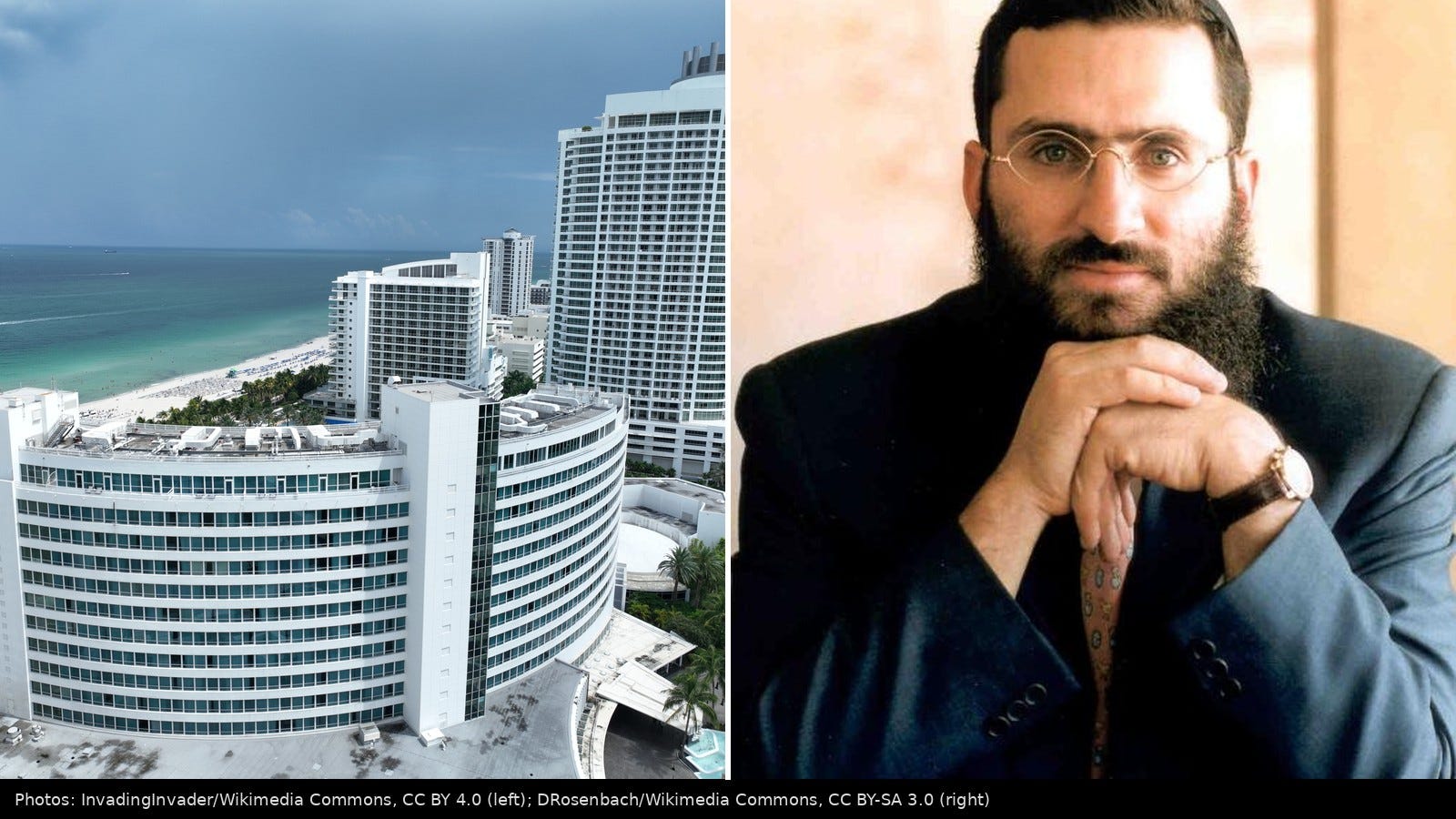
A federal magistrate judge in Miami has ruled that the Fontainebleau Miami Beach may subpoena four artificial intelligence providers for Shmuley Boteach's chatbot conversations about the hotel, its lawyers and its staff. The ruling comes as the hotel pursues uncapped punitive damages that, by its own calculation, could exceed $20 million.
In a 25-page order entered October 21, U.S. Magistrate Judge Marty Fulgueira Elfenbein overruled Boteach's blanket objections to the requests in part. She held that the work-product doctrine "Does Not Categorically Protect" his AI communications. The hotel may serve subpoenas on the four AI service providers, but only for communications since December 3, 2024, "concerning or relating to (a) the Fontainebleau Hotel; (b) counsel for Plaintiff; or (c) any employee, owner, or representative of the Fontainebleau Hotel."
A day later, U.S. District Judge Jeffrey T. Kuntz denied Boteach's motion to reconsider two earlier sanctions orders. Kuntz wrote that "both orders are based on Defendant's social media posts."
The case, Fontainebleau Florida Hotel, LLC v. Botach, No. 1:25-cv-20251, is a defamation suit in the Southern District of Florida. Court papers name the defendant as Jacob Shmuel Botach, also known as "Shmuley Boteach."
The order did not give the hotel everything it wanted. Elfenbein sustained Boteach's objections to requests for his AI chats about the litigation itself and about the judges, among others. She also denied the hotel's motion to compel Boteach to sign consents authorizing the providers to release his records. Any subpoenas, she wrote, "remain subject to Federal Rule of Civil Procedure 45," and nothing in the order "compels a nonparty provider to produce information or resolves objections that may be raised by a subpoena recipient." Boteach may withhold materials he claims as work product if he provides a privilege log. The order does not name the four providers.
The stakes are high. Boteach is already in default on liability after the court struck his answer as a sanction for repeated violations of a social media gag order, according to court filings and Law360. What remains is damages.
In a supplemental brief filed October 12, the hotel said it "is seeking uncapped punitive damages" against Boteach, whom it described as "a very wealthy person and trust fund beneficiary." Citing an Eleventh Circuit decision upholding a punitive-to-compensatory ratio of 9.2 to 1, the hotel argued that such a ratio "would permit the Fontainebleau to obtain a damages award against Botach in excess of $20 million." That figure is the hotel's projection, not a finding by the court.
Florida normally caps punitive damages. Under section 768.73(1)(c) of the Florida Statutes, the cap does not apply where the factfinder determines the defendant had "a specific intent to harm the claimant" and did in fact harm the claimant. The hotel argues that Boteach's AI prompts, revisions and related communications "may reveal his intent, motive, and efforts to continue or amplify the alleged harm," as Elfenbein summarized its position.
Elfenbein agreed that some of that material is relevant. She wrote that Boteach's culpability and his alleged specific intent to injure the hotel "are not collateral matters" in the damages phase. She added that her ruling does not establish malice or specific intent. It determines only that the communications bear a sufficient relationship to the remaining damages issues.
Kuntz's ruling on reconsideration was procedural. He denied the motion "without prejudice for lack of jurisdiction pending the disposition of the Defendant's interlocutory appeal." Boteach filed the motion on October 19, the same day he appealed a September 18 order that revised the gag order restricting his social media references to the hotel and its counsel. Because the two sanctions orders "build on one another," Kuntz wrote, ruling on either would alter the status of the issue now before the Eleventh Circuit.
Elfenbein said the pending appeal does not stop damages discovery, which concerns issues distinct from the appeal. She directed the parties to meet and confer on how the providers should handle potential work-product objections. A follow-up discovery hearing is tentatively set for October 26.
A jury trial on damages is scheduled for February 2027.