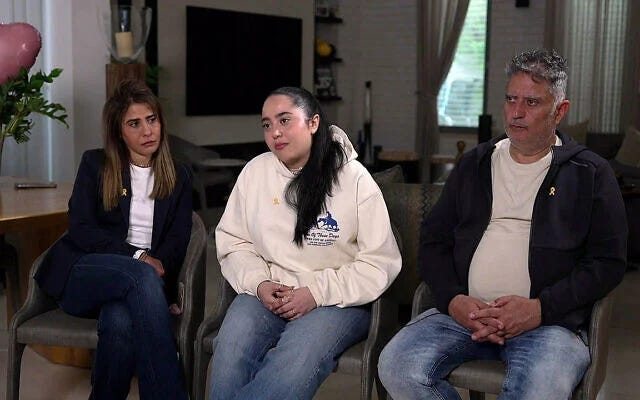
A recent promotional clip aired by Israel’s public broadcaster Kan teased an upcoming interview with Liri Albag, a young woman kidnapped by Hamas on October 7 and later released. In the promo, Albag sharply criticized Prime Minister Benjamin Netanyahu for his role in the security and intelligence failures that led to the attacks. The teaser alone sparked a flood of backlash online, mostly from Netanyahu supporters, leading Albag’s family to request its removal from Kan’s platforms—a request the broadcaster honored. The incident highlights how deeply politicized the hostage crisis has become, with even brief glimpses of testimony generating intense partisan reaction.
While Netanyahu has become the lightning rod for public anger, what’s notable is how consistently freed hostages and their families focus their outrage on him, often to the exclusion of others. This is not to say that the IDF leadership has escaped scrutiny—figures like Chief of Staff Herzi Halevi and Southern Command head Yaron Finkelman have certainly been subjects of broader national debate. Yet within the highly emotional narratives told by hostages and amplified by their advocates, criticism of military commanders who were reportedly unreachable or hiding during the chaos of October 7 is often absent. The result is a heavily concentrated narrative in which the prime minister is the sole target, allowing deeper institutional failures to be underexamined.
This disproportionate focus stems in large part from the political machinery around the hostages—family spokespeople, NGOs, media strategists—who have, understandably driven by grief and rage, helped turn their trauma into a pointed political message. That message, however, has made it difficult to have honest, productive conversations about the full scope of accountability.
Most troubling is the uncomfortable fact that while victims like Albag absolutely have the right to speak freely, express outrage, and share their perspective, the moment their comments drift into political or policy territory, it becomes nearly impossible to engage critically. When survivors offer opinions about government leadership, military policy, or diplomatic strategy, the weight of their trauma can unintentionally shield their ideas from healthy scrutiny. Challenging or even questioning those views risks being seen as heartless.
That said, the personal attacks aimed at Liri Albag in the aftermath of the promo are completely over the line and morally reprehensible. People need to learn to disagree on the merits, without resorting to vitriol—let alone wishing that former hostages be sent back to Gaza. That kind of response is both inhumane and indicative of how toxic the public square has become. While I believe Albag was wrong to address the Prime Minister in such a personal and accusatory way in the context of October 7th, that criticism should be met with argument, not abuse. This isn’t to excuse Netanyahu’s role or responsibility—but it is to say that what happened was a catastrophic system failure that extends far beyond one individual. If we want a future grounded in truth and accountability, we have to be able to hold multiple truths at once—and argue them with decency.