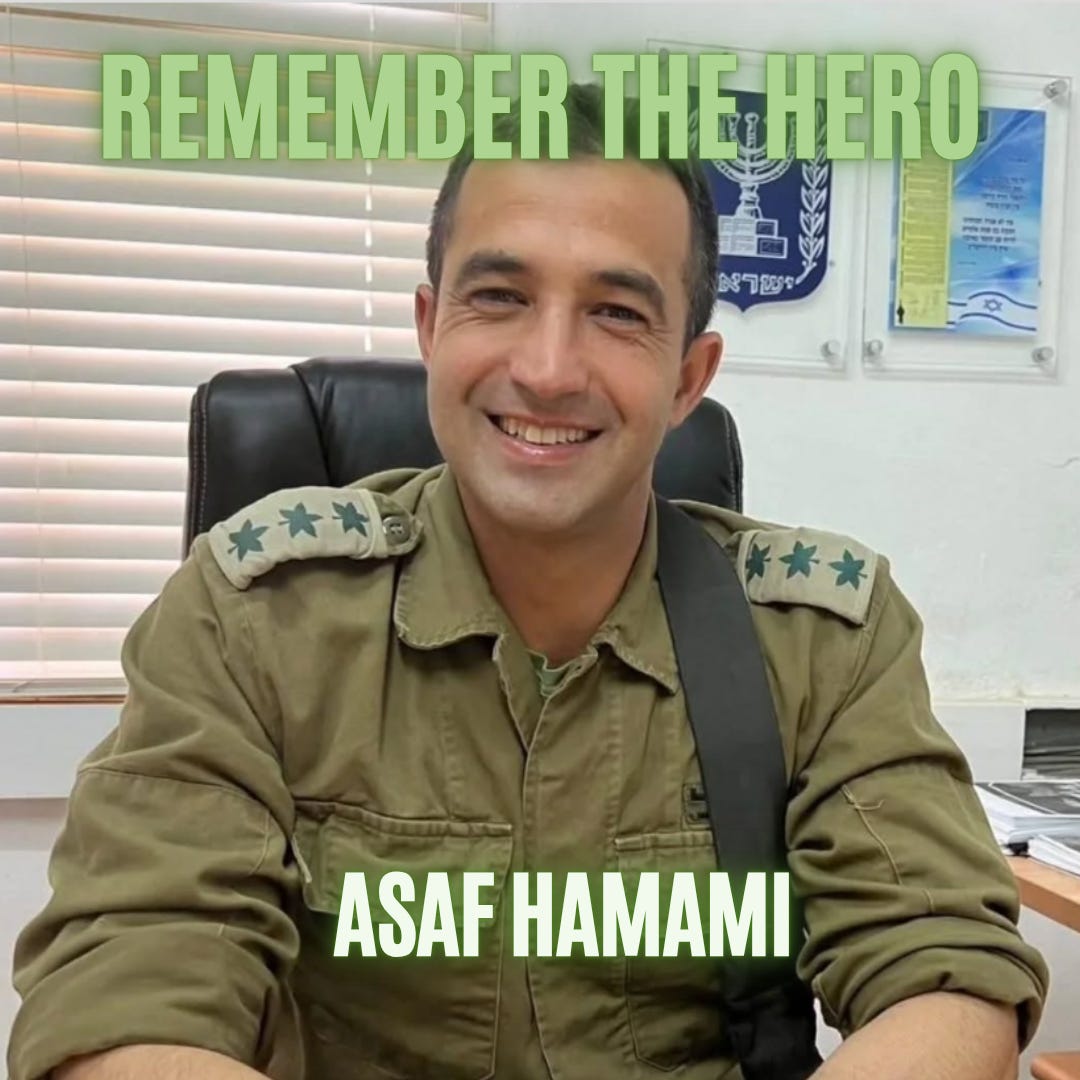
Colonel Asaf Hamami, a decorated Israeli military officer who had spent years warning his superiors about the growing threat from Hamas militants in Gaza, was killed on Oct. 7, 2023, while leading the defense of Kibbutz Nirim during the surprise attack that launched the Gaza War. He was 40.
His death was confirmed by the Israeli military in December 2023, though his body remained in Gaza throughout the conflict. Colonel Hamami was among the most senior Israeli officers killed in the attack that claimed more than 1,200 lives.
On the morning of the assault, Colonel Hamami had been on his military base with his 6-year-old son, Alon, celebrating Simchat Torah. When reports came in of the first breach in the Gaza border fence, he kissed his son's head, handed him to female officers, and became the first commander to leave the base for battle.
At 6:44 a.m., he declared a state of war on his own initiative, announcing: "This is commander, declaring war." He opened the gates of Kibbutz Nirim and led a fierce battle against Hamas's elite Nukhba Force alongside soldiers Tomer Ahimas and Kirill Brodsky. All three were killed, and their bodies were taken to Gaza.
Hamas fighters had been given his photograph with instructions to locate "the most senior officer." "Terrorists specifically targeted him," his mother, Clara Hamami, told Ynet in 2025. "We were told they entered the division with Asaf's picture in their pockets."
The loss marked the third generation of military sacrifice in his family. His father, Ilan Hamami, was already a bereaved brother, having lost his own brother in a military training accident.
Born on Dec. 2, 1982, in Rosh HaAyin, Asaf Hamami enlisted in the Israel Defense Forces in 2001, beginning a distinguished 22-year career. He rose through the ranks from the Givati Brigade's reconnaissance battalion to command positions in elite units, receiving the Chief of Staff's Citation in 2010. In May 2022, he was appointed commander of the Southern Brigade in the Gaza Division.
Those who served under him described a commander who combined exacting standards with genuine care. He called soldiers' wives every Friday to wish them Shabbat Shalom. But he was also demanding, requiring daily "dawn alert" exercises and maintaining constant readiness.
"He constantly warned of Hamas raids," recalled Lieutenant Colonel Guy Madar, wounded in the October 7 attack. "He drove us crazy as if at any moment Hamas was planning to penetrate the Gaza border." Those warnings proved tragically prescient.
His philosophy was uncompromising. In an interview after the 2006 kidnapping of soldier Gilad Shalit, he told journalist Alon Ben-David: "There's no scenario where a soldier is taken alive." Defense Minister Yoav Gallant later said: "Assaf did not hesitate, he was there, ready to charge the enemy."
Colonel Hamami was guided by the motto "Never give up." His mother said this advice became their lifeline after his death. Rather than joining public protests, the family channeled their grief into constructive action, establishing a scholarship fund and working to create the Reservists' House in his name.
The family's wait for confirmation was agonizing. On October 16, 2023, they were told there was a high probability he was dead. Only on November 27 did the Shin Bet obtain a Hamas video that conclusively confirmed his death.
"This circle will never truly close. I still haven't come to terms with his death," Clara Hamami told Ynet in 2025.
He is survived by his wife, Sapir; his children, Arbel, Alon, and Ella; his parents, Ilan and Clara; his brother; and his grandmother, Shoshana Hamami.
Colonel Hamami's death marked not only a personal tragedy but a turning point in a conflict that would define a generation, validating the warnings of a commander who gave his life defending the communities he had sworn to protect.