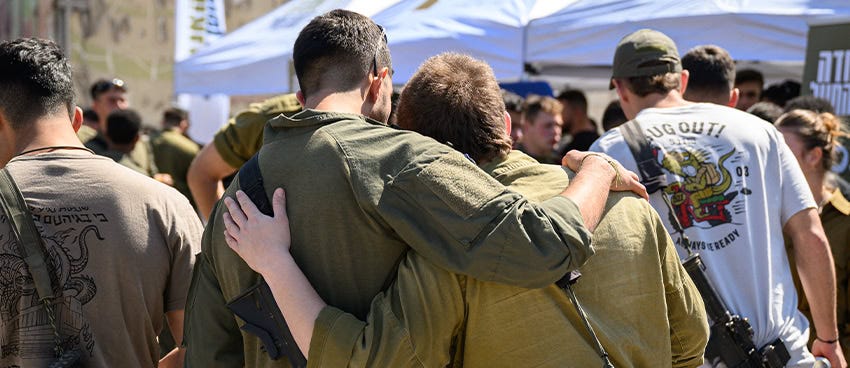
There is a reason Friends of the IDF was the first target of scrutiny. In a world full of noise, slogans, and self-congratulation, the greatest harm is not abstract—it is specific. It is the frontline soldier entering Rafah without a functioning plate carrier. It is the widow left to navigate grief alone after promised support evaporates. It is the wounded veteran battling for dignity, only to be treated as a fundraising backdrop. These are not abstractions. They are the human cost of deception, of organizations saying one thing and doing another. That is why they came first.
This moment in Jewish history demands triage. When your house is on fire, you don't hold a symposium on smoke. You grab a hose. And when your soldiers are in harm’s way, undersupplied and under-supported, you expose the rot in the system diverting help from them. Friends of the IDF, by virtue of its name, its brand, and its fundraising promises, positioned itself as the central artery of support. But when that artery is clogged with self-dealing, opacity, and spin, it is not just mismanagement. It is betrayal.
But let us not pretend they are alone. There are other nonprofits, legacy institutions, and boutique charities that have learned all the wrong lessons. Branding over battlefield. Optics over outcomes. They move money, but not necessarily toward those in greatest need. They speak of “supporting Israel” but treat the suffering of actual Israelis as a line item, not a moral obligation. This is not merely inefficiency. It is a disservice wrapped in a flag.
The beauty of this platform lies in its independence. We are not raising advertising dollars or throwing galas funded by the very charities we are supposed to cover. There is no glossy brochure to protect, no VIP table to fill. That is what makes this effort different—and necessary. Our loyalty is not to access or reputation, but to truth. And that truth must be spoken, especially when the lives and dignity of soldiers, widows, and the wounded hang in the balance.
To those with information—staff, soldiers, donors—reach out. The purpose here is not vengeance but clarity. We owe it to the fallen, to the maimed, and to those still in uniform to ensure that the vast river of goodwill flowing from the Diaspora reaches its intended destination. Anything less is a betrayal not just of mission, but of meaning.
There is nobility in giving. But there must be integrity in how that giving is channeled. We welcome the good. We expose the false. And we will continue to do both, relentlessly.