


Earlier this week, Uvda aired an emotional and widely discussed interview with Col. (res.) Yoav Yarom, addressing the tragic incident in which soldier Gur Keheti lost his life. In response, Yotam Jacobson shared a powerful and thought-provoking post on Facebook—offering a deeply informed and critical perspective on the interview, its framing, and the broader questions it raises about military leadership, accountability, and the narratives we accept.
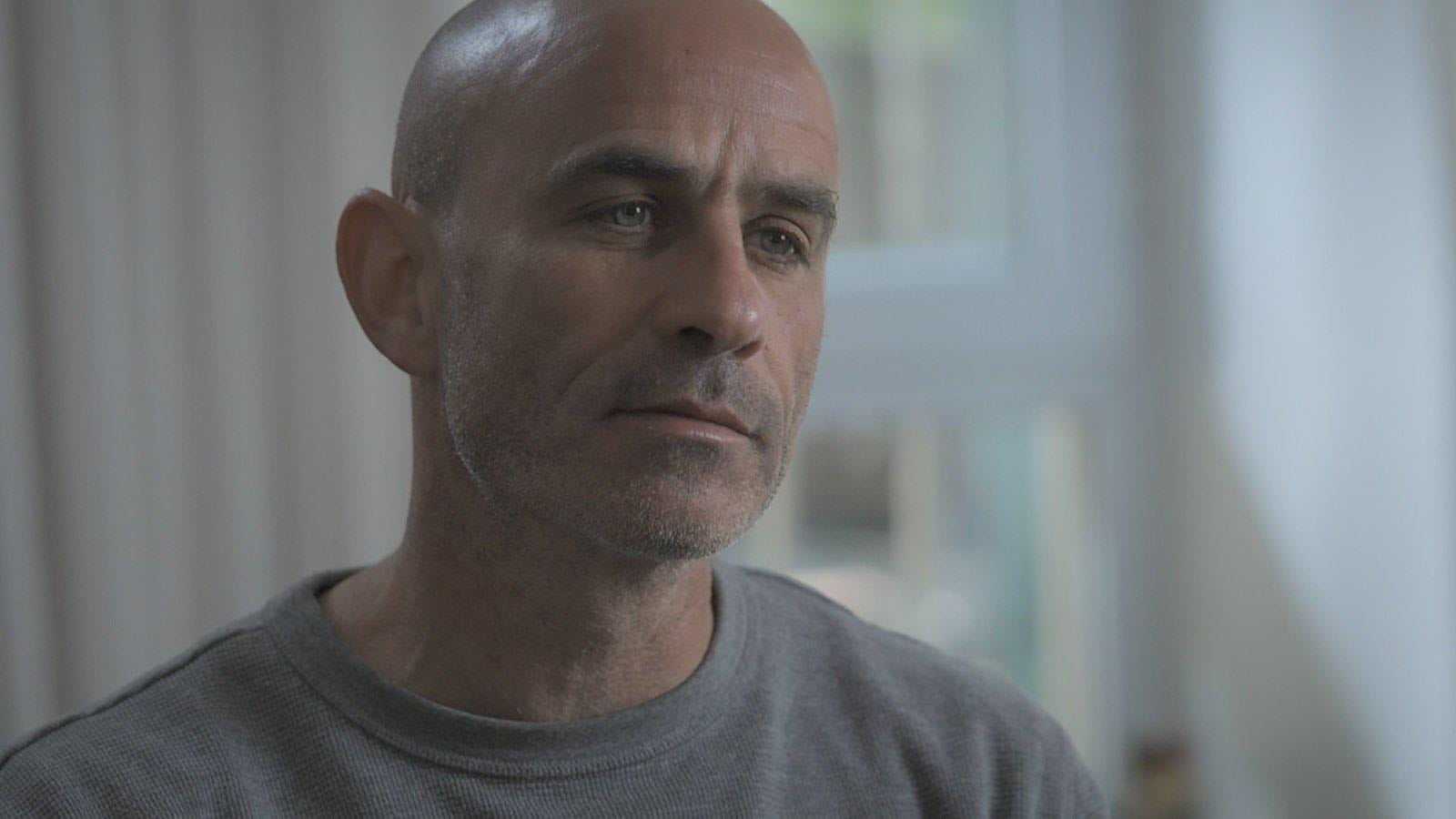
Below is the full translation of Jacobson's post:
I too watched the interview with Col. (res.) Yoav Yarom on the program Uvda. The very fact that we are talking about a decorated officer with numerous merits, who is now being accused of serious charges, creates a fundamental dissonance: How can he be accused? Does accusing him erase his merits? Who are we, the viewers, to judge a man to whom we owe so much? Especially when he, seemingly, chokes back tears and with a trembling voice admits guilt and takes full responsibility for the incident. But that’s not exactly the case.
The interview with Yarom is presented as a closed story. Although here and there the interviewer cites fragments of testimonies from soldiers who were present at the event, only a small part of their accounts is shared, and Yarom pushes back against their claims. There is no military (IDF) response in the interview, not a single official comment. The investigation does not address the massive gaps—east to west—between what senior officers told the parents of the late Gur Keheti and what the soldiers who were at the event testified when they visited the Keheti family home only after the seven-day mourning period, having returned from the field. It is worth noting that to this day, no official IDF investigation has been conducted on the incident, and no findings have been published. Silence over an abyss.
In response to the interviewer’s question of why the brigade operations officer (RAMAT) was not at headquarters but at the front, Yarom explained that as long as it is not a brigade-wide attack, there is no reason for him to be at headquarters. He also says later that he doesn’t know how to command people without being the first on the ground, leading the troops. With these words, he essentially dismisses the very reason for having a headquarters presence. Is there a clear definition of his role as RAMAT? Did Yarom act according to the parameters of his role?
Yarom claims that the Sham’a fortress is a top strategic location. I won’t argue. But from my experience, when it comes to top strategic locations—you seize and hold them. You stay there with perimeter security and camouflage. If that was truly the case with this place, how come, as the RAMAT, Yarom didn’t order a permanent presence there (especially when, ironically, the place had no shortage of shelter—shelters that were unfortunately used by the enemy forces)?
In the interview, Yarom clarified that it was a "cleared area." Let’s remember: this "cleared area" saw combat just five days prior, a soldier was killed there, and a Hezbollah fighter was spotted fleeing the area with no clarity as to where he went or whether he had actually left.
If it was a "cleared area," why did Yarom and his guest Zabo need armed escort from soldiers? Why didn’t they go alone? If there was concern that the "cleared" area wasn’t fully secure, why weren’t more soldiers taken along? Why didn’t they proceed in a much more operational and secure manner?
Yarom himself explains his sudden turn to the left—from the alley leading to the mosque into the fortress—as a desire to investigate a threatening point—two large, dark openings in the sealed structure.
But… if the "cleared area" was truly clear—what was there to investigate? If it wasn’t—how could the approach be so casual? The interviewer herself, likely not a combat veteran, rightly notes: if the enemy fled from there, he could return from there too.
How is it possible that in the face of such a threat, Zabo, Yarom’s guest, climbed onto one of the exposed roofs? How could the advance into the fortress be carried out without operational procedure—no bounding, no security, no observation? Why didn’t they first send in a drone or other surveillance tools? After all, military technology has advanced tremendously since the Lebanon War.
Yarom himself emphasizes in the interview that his sharp instincts didn’t deceive him—and indeed, there were Hezbollah operatives there. But if his instincts were so sharp, why didn’t he pause to brief the accompanying soldiers (who were only told they were heading to scout the nearby mosque—not the fortress)?
How did he continue leading the group, with his guest, without letting the unit commanders take point? How did he think he could command under fire soldiers whose names he didn’t even know?
Furthermore, Yarom describes himself as a “field animal,” “scratched” (his term), a seasoned officer with extensive encounter experience who knows Lebanon inside and out. He also stated that unlike ever-evolving technology, the ability to read the terrain is a constant skill, deeply ingrained in him. If so, what did he hope to gain from Zabo’s visit—a knowledgeable man who neither knew the Sham’a-Skandalyon fortress (yes, Skandalyon is the Crusader name of the fortress where the disaster occurred—coincidence?) nor, in any way, is an expert in Crusader architecture?
It’s possible to continue breaking down Yarom’s testimony further, but I’ll suffice with these points. Considering his claim that the best investigation is one a person conducts with himself, it’s fair to accuse him—rightfully—of arrogance. Indeed, self-reflection is always necessary, but there are many things a person is blind to when it comes to himself. “I made a misjudgment. I should have done the same thing, but differently,” says Yarom as he beats his chest, yet he is not asked—nor does he explain—what he would have done differently, and how, in hindsight, he should have acted. If this question arises for the viewer, it simply dissolves.
Beyond all I’ve written so far, the publicity of this interview seems to cement the event in Yarom’s words. But anyone who listens closely, with knowledge of the field and the army—and both—knows that his words have more cracks than facts. The way the story is presented leaves us with a clear normalization of what occurred: a military tragedy happened, but it would have been better if it hadn’t. A bummer.
But it doesn’t end there. The whole interview is steeped in the fact that we are talking about an Israeli hero, a veteran and dedicated fighter who gave 33 years of his life to the Golani Brigade, the IDF, and the country. An officer for whom the brigade’s emblem is, in practice, tattooed onto his veins—a central part of his life.
Yarom describes the late Gur Keheti as a hero. But before we define Gur Keheti as a hero—it’s important to clarify that he was a loyal and devoted friend, a soldier and medic who did his job. He indeed did it heroically, but heroism is an expression of other qualities that fade and are forgotten in the shadow of that term. That may be the overwhelming scent of this interview—the scent of heroism that clings to many walking among us: military men addicted to the field, to combat, to the adrenaline released in moments of danger, and perhaps even to the smell of blood. Heroes whose many worthy deeds render them seemingly untouchable. Heroes who, in many ways, run our lives here—under whose shadow a young soldier who died before he had a chance to take off his uniform and start his life is forgotten. These heroes go on to become senior military officers and then leap easily into the top of the political world. Officers whose way is power, and whose solution, if anything goes wrong, is more power. The public stands behind them, salutes, justifies, cheers.
Yarom says he isn’t trying to shirk responsibility, but he describes several times that what he did, and how he acted, is part of the IDF’s normative conduct. For example, he refers to the visit of the Northern Command General to the Skandalyon-Sham’a fortress just two days before the incident, and to the many patrols that have occurred—and still occur—in Roun al-Ras and the Syrian Hermon.
Having served seven months under the Brown Brigade (and another seven under the Green Brigade), and having interacted with many of its commanders and soldiers—I can back up Yarom’s words. The operational norms are disgraceful! Field commanders are either unaware of the dangers or disregard them. Higher-ranking officers are detached from the field or visit it for their own purposes. I don’t know whether it’s arrogance, fatigue, or incompetence—probably a bit of everything—which creates a general state of negligence. It’s a miracle the cost hasn’t been even higher.