


On July 7, Shmuley Boteach, under his legal name Jacob Shmuel Botach, sued a ghostwriter named Dan Williams in Bergen County Superior Court. Williams had spent years trying to get a memoir deal with Miriam Adelson. Boteach says he was owed 25 percent of whatever Williams made from it, and he wants a judge to make Williams turn over “every Adelson-related contract, invoice, payment, advance, royalty, consulting fee, writing fee, editing fee, ghostwriting fee, travel reimbursement, expense reimbursement, or other remuneration” so the cut can be calculated.
Fine. People sue over commissions all the time. What makes this one worth your attention is that to claim the commission, Boteach has to explain what he was selling. And he’s very clear about it.
The arrangement, according to his own complaint, was that “Plaintiff would use his unique personal relationship and influence, his publishing expertise, his reputation, his access to the Adelson family, and his efforts to help Defendant obtain and monetize Miriam Adelson-related work.” He calls himself a “relationship broker.” He says there was a “mutual understanding that Plaintiff was not expected to provide introductions, relationship access, publishing advice, and closing assistance for free.”
Not for free. That’s Shmuley’s position, in a pleading his lawyers signed.
Some context for anyone who hasn’t followed this. Boteach runs a 501(c)(3) called the World Values Network. For years its biggest donors, by a good margin, were Sheldon and Miriam Adelson. In 2017 they gave $750,000, which was close to forty percent of everything the organization took in. Boteach has written about them the way you write about family. Sheldon was warm and charming and one of the smartest men he’d met. Miriam was a dear friend. Those weren’t fundraising relationships in his telling. They were the real thing.
And maybe they were. But the complaint shows what else was going on. It says Boteach and Williams “already had a course of dealing in which Plaintiff would use his contacts, publishing experience, public stature, and relationship capital to help Defendant obtain writing or ghostwriting opportunities, with Plaintiff receiving a percentage or fee.” He quotes a message he sent Williams in 2012 about an earlier book: “If I pull off this deal, I’m going to take a 15 percent agency fee.”
Then the Adelsons. In 2013 Williams wrote Boteach a to-do list for a Sheldon Adelson autobiography. One item: “Report to Sheldon on the above, so he understands that this book would be a valuable project.” Another: get a “curtain-raiser” story into Israel Hayom, the paper the Adelsons own. In 2014 Williams asked him to “revive the book idea with the Adelsons - but with the book being a memoir by MIRIAM, rather than Sheldon.” Boteach says he did that too. Williams pitched Miriam directly at $750,000, for a book that would carry “only her name as author,” and promised he “would not disclose his involvement.”
Nowhere in 24 pages does the complaint say the Adelsons knew their friend had a 25 percent stake in the writer’s fee. I don’t think that’s an oversight. I think nobody involved thought it mattered.
Here’s why it matters to me. When someone funds your organization at that level, they’re not just buying a table at the gala. They’re letting you in. They take your calls, they read what you send them, they trust that when you say “you should meet this person” you mean it. That trust is theirs. It came from them. The idea that the executive director of the charity they’re funding was quietly charging a ghostwriter for the privilege of being walked through that door, and asking to be paid a quarter of the fee for it, is about as slimy a thing as I can imagine a nonprofit leader doing to a donor. It’s not a gray area. You don’t sell access to your friends.
And then there’s how the money was supposed to move. The complaint says the fee was to be “given to him or his Israel-based children as beneficiaries.” Williams at one point proposed “that he deposit money directly in Chana’s Israeli bank account.” Boteach’s lawyers even hedge that if the 25 percent was “owed to Chana separately,” he’s still the “equitable owner” of it.
The complaint says “Dr. Adelson is not accused of wrongdoing.” No, she isn’t. She was the thing being sold. The Adelson’s are arguably the greatest philanthropists in the history of the Jewish people and Boteach stooped so low as to sell access to their trust.
If you give serious money to an organization built around one person, this is the filing to keep in your desk drawer. Ask yourself what else you’re handing over when you write the check.
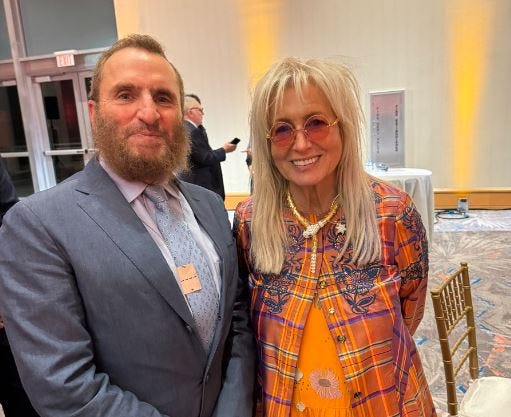
Thank you for this post. The below is added as research, not as a claim that anyone did anything illegal, but I think it’s important for people to realize the significance of this particular angle.
If Shmuley Boteach was asking for money in return for getting people access to Miriam Adelson, that could raise legal questions.
It matters more because Adelson was a major pro-Trump donor, including the widely reported $100 million gift to the pro-Trump super PAC Preserve America in 2024.
A few things investigators would look at for Boteach:
Selling something he couldn't deliver: If he told people "pay me and I'll get you a meeting with Adelson" but couldn't actually do that, that could be fraud.
Selling access without permission: As you mention, even if he could arrange a meeting, did Adelson give him permission to sell or arrange access to her?
Hiding political money: If a payment was really meant to support Trump, a campaign, or a super PAC but was described as a consulting fee, donation, or personal gift, that could create campaign-finance problems. Federal law also bars hiding the true source of a political contribution.
Money sent to family in Israel: Asking people to send money to relatives, family businesses, or charities in Israel is not automatically illegal. Investigators would ask why it was sent there, who really benefited, and whether it was for real work or a way to hide payment for access or influence.
Foreign influence work: Israelis have every right to seek a meeting with Adelson. A meeting with a wealthy donor isn't illegal by itself. The questions start if Israeli individuals or groups paid Boteach or related entities to get that meeting, or if Boteach was being paid to help a foreign person or company influence US politics without registering and reporting that work. Being Israeli, Jewish, pro-Israel, or friendly with Adelson does not itself trigger a violation.
A deal for government action: The most serious issue would be a clear bargain — money in return for a specific government decision, like "pay this and Trump will take this exact action." That's the kind of quid pro quo that can become bribery.
For Trump, the issue would be who controlled access to him — a chain like:
Person seeking influence -> Boteach -> Trump.
That can look like wealthy donors and their friends act as private gatekeepers, which raises appearance problems about money buying a place in line and about whether a donor's foreign-policy preferences carried special weight.
Of course, to prove criminal wrongdoing you'd need documents, not rumors: texts or emails saying money would buy access, bank transfers and invoices, proof of what the payer expected in return, evidence Adelson authorized meetings, calendars and visitor logs, and campaign and super PAC records showing money was reported correctly.
And sending money to Boteach's family in Israel, or Israelis seeking access to Adelson, would not automatically mean a crime happened.
But it would be reasonable to investigate whether it was really a hidden payment for access, a hidden political contribution, or payment to influence US policy.
Nothing hurts Jews more than gatekeeping. Three Israeli Americans are awaiting sentencing because of it