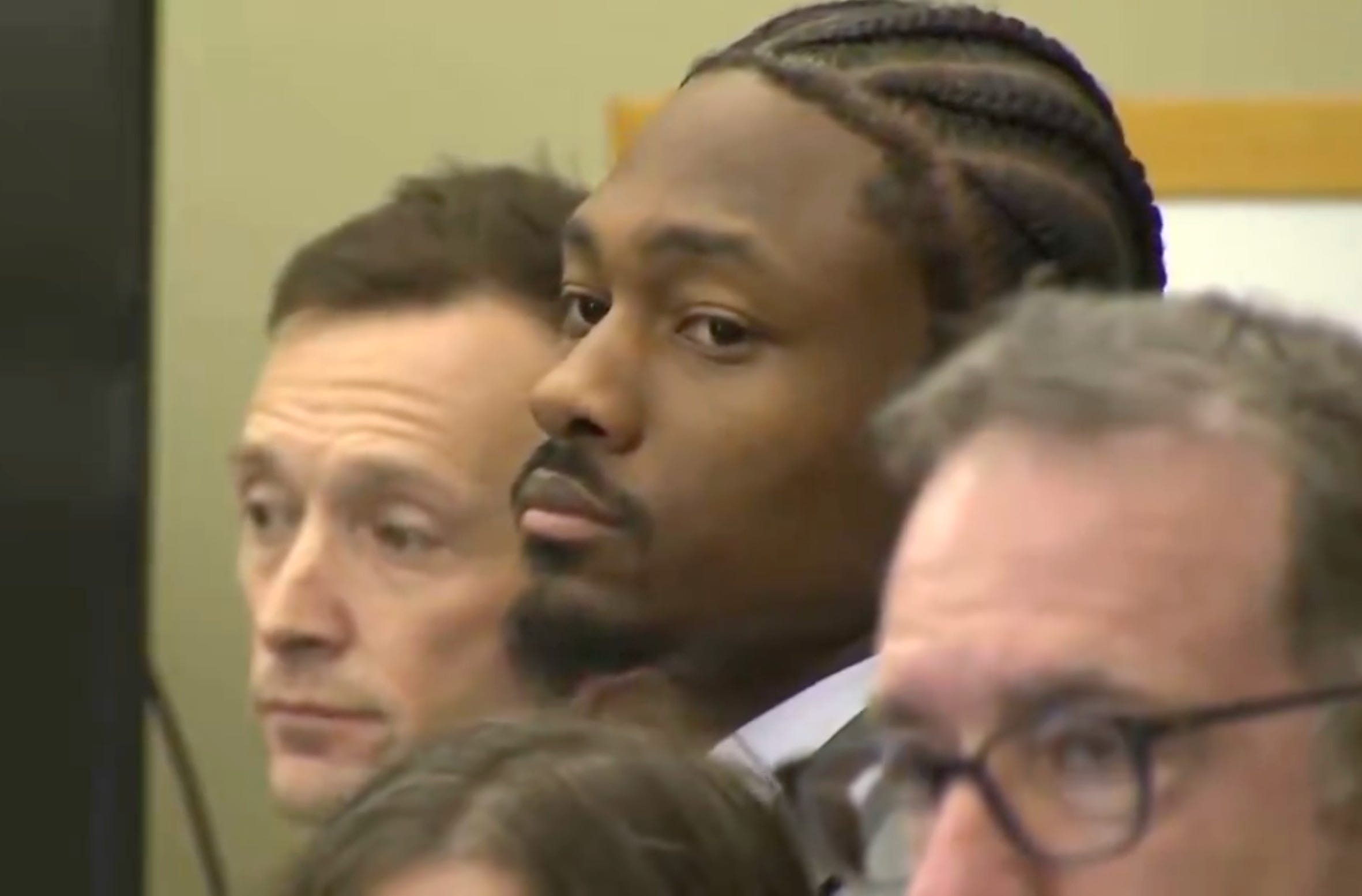
The jury required less than a day. On Tuesday afternoon, Stefon Diggs was found not guilty of assault and strangulation. The trial that began with a media circus ended in complete legal exoneration. The former New England Patriots wide receiver walked out of the courtroom a free man.
But he did not walk out whole.
Five months ago, the public did not wait for a jury. The internet convened its own tribunal. The police report, detailing claims from Diggs’ former private chef that he had struck and choked her over a salary dispute, was treated as gospel. Commentators demanded his suspension. Diggs was branded an abuser and a pariah.
Now we know what the jury saw when the actual evidence was presented.
The prosecution’s case unraveled immediately. The accuser admitted under oath to deleting text messages, including one stating her intention to ruin Diggs’ life. Video surfaced of her dancing shortly after she claimed she was strangled. The financial dispute at the center of the allegations collapsed when Diggs’ defense team produced receipts showing she had been wired $4,000.
The defense attorney summarized the absurdity in his closing argument. He pointed out that after the alleged strangulation, she cooked Diggs a hot dog for dinner and went to his room to give him birthday presents. She flew to New York, went dancing, and mentioned the assault to no one for days. “I would suggest to you that Ms. Adams made this accusation as a means of trying to leverage and humiliate and to punish Stefon Diggs,” he concluded.
Even the prosecutor admitted the accuser was an argumentative and difficult witness. The jury saw through the noise and delivered a swift acquittal.
In a just world, the exoneration would be as loud as the accusation. The commentators who demanded Diggs lose his livelihood would issue retractions. The social media mobs would acknowledge they were wrong.
But we do not live in that world.
The damage is done. Diggs is currently a free agent, his career interrupted and his reputation stained by allegations a jury just rejected. The headlines announcing his acquittal will never get the traction of the initial police report. The people who called him a monster will simply move on to the next outrage.
Following the verdict, Diggs’ defense attorney Mitch Schuster issued a statement to Lauren Conlin of LA Magazine. “People have to stop targeting professional athletes and trying to extract money,” Schuster said. “Allegations like this do a tremendous disservice to those who are really afflicted and impacted by causes like this.”
He is right. False allegations do not just destroy the accused. They make it harder for actual victims to be believed. When the public treats every accusation as undeniable fact, and those accusations later fall apart, the resulting cynicism hurts everyone.
We have built a culture that rewards instant reaction over patient observation. Waiting for facts is seen as a moral failure. We are incentivized to condemn first and ask questions later.
The Stefon Diggs case is a textbook example of why this approach is destructive. The public had a fraction of the story in December. They did not know about the deleted texts, the $4,000 wire transfer, or the dancing video. They only knew the initial report, and they decided that was enough.
It is never enough.
The legal system exists for a reason. It requires evidence. It allows for cross-examination. The court of public opinion requires none of these things. It operates on emotion and the thrill of the pile on.
Stefon Diggs was found not guilty. The legal system worked. The cultural system failed him completely.
We must learn to hold our fire. An accusation is the beginning of a process, not the end of it. Destroying lives before the facts are known is not justice. It is cruelty.
The jury has spoken. It is time for the public to accept that verdict, and to ask itself why it was so eager to deliver a different one.