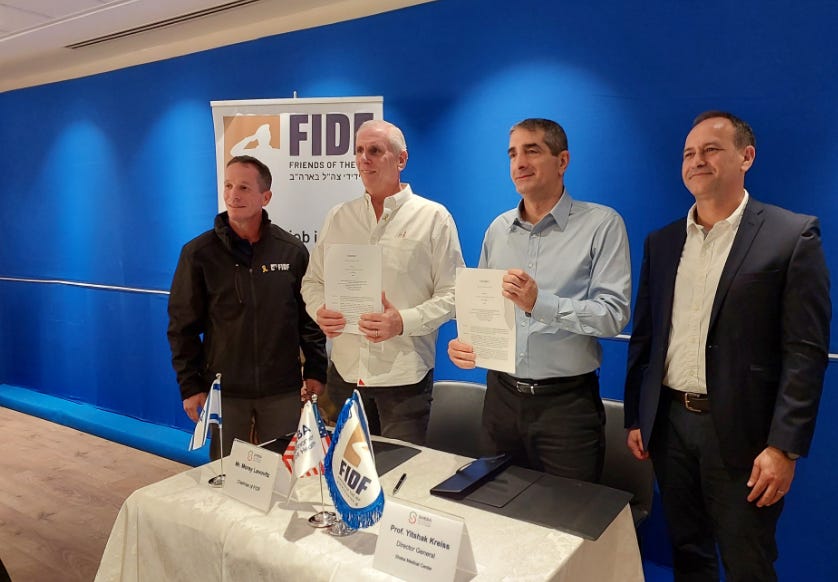
Friends of the IDF (FIDF) recently announced that Maj. Gen. (Res.) Nadav Padan has been “appointed to bolster internal operations, working in tandem with Steve Weil.” On paper, it sounds routine. But Padan was already the National Director. This is not a promotion. It is a quiet power shift that signals the sidelining of CEO Steven Weil amid growing public scrutiny.
The timing is no accident. FIDF has come under fire for its spending priorities, lack of transparency, and internal dysfunction. Elevating Padan gives the Executive Committee a cleaner face without forcing a reckoning. But in doing so, they have doubled down on a leader who has repeatedly dismissed the very people this organization claims to support.
Padan’s public comments throughout the war revealed a staggering level of detachment from the front lines. On October 18, 2023, as families scrambled to secure basic gear for their loved ones, he dismissed their efforts as mere “noise,” claiming that instead of helping, they were “disturbing” and “stealing the time that the leadership doesn't have.” He urged donors to ignore the chaos and simply “listen to the brief and to the list that’s been published by the FIDF.” Later, on December 27, he went further, mocking soldiers asking for updated helmets by comparing them to “a college son that asks for a new car,” while insisting that “almost 100% of the soldiers have the equipment that the IDF planned them.” In January 2024, he told donors that “spiritual support” was “better than any helmet, any drone or whatever.” This was a stunning statement given the documented lack of gear among combat units. Rather than advocate for those risking their lives, Padan downplayed their needs, insulted their credibility, and reassured donors with fiction.
This pattern continues today. FIDF claims to have raised $250 million for “emergency well-being,” yet most of it is tied up in long-term mental health initiatives, legacy camps, and infrastructure projects. Only $125 million has been disbursed so far, and $50 million will not arrive until 2028. That is not urgency. That is a delay dressed up as vision.
To justify this, FIDF leans heavily on its pristine audit record and top-tier charity ratings. It touts 11 consecutive 4-star ratings from Charity Navigator and “Top-Rated” designations from Charity Watch and Candid. But these honors measure compliance, not impact. The audits likely verify that funds were transferred from U.S. donors to Israeli recipients. They do not reflect whether those funds were used effectively, efficiently, or at all to meet the most urgent needs of IDF combat units.
The truth is simple: clean paperwork does not mean meaningful support. And spiritual slogans do not substitute for accountability.
Padan’s elevation is not reform. It is a distraction. FIDF is changing optics, not operations. The organization is supporting soldiers—but not with the urgency this moment demands. Not with the transparency donors expect. And not with the priorities the battlefield requires.
The difference between help and harm is often timing. Until FIDF aligns its actions with that reality, no audit badge, no title change, and no PR campaign will be enough.