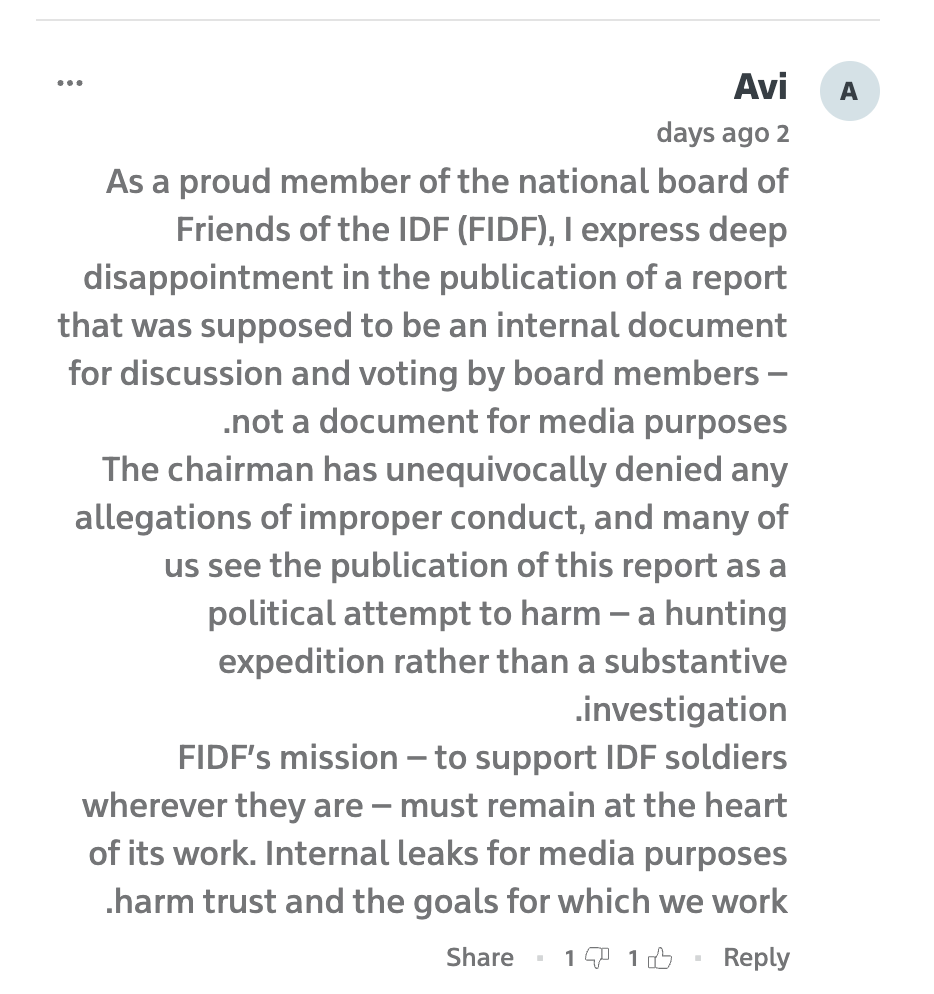
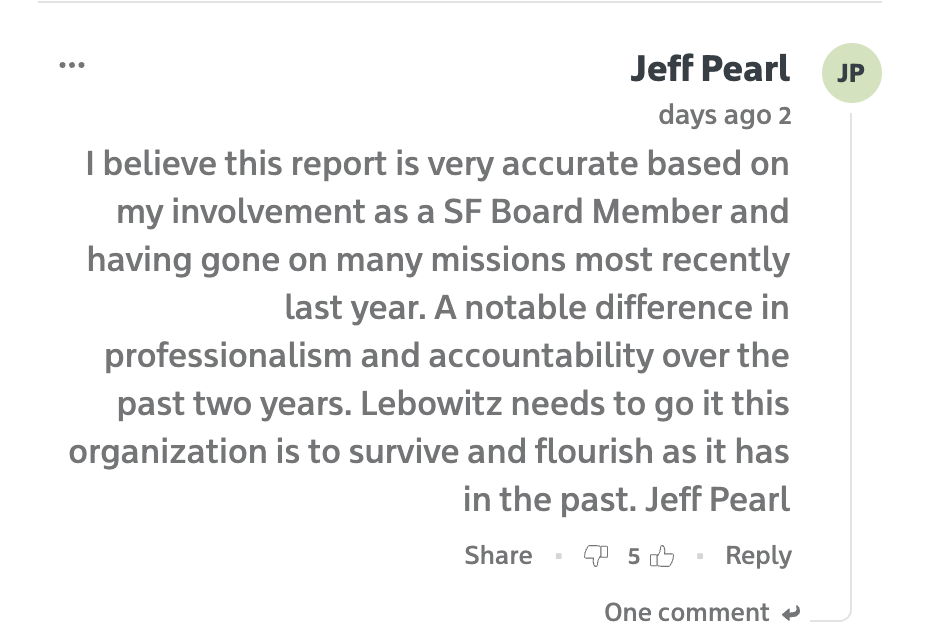
In the virtual trenches of YNET's comment section, a revealing confrontation unfolds between two members of Friends of the IDF (FIDF). On one flank stands Jeff Pearl, a seasoned chapter board member from San Francisco, whose voice carries the quiet authority of someone who’s seen a once-noble mission tarnished by leadership missteps. Pearl is unambiguous, declaring with measured candor: the YNET report is accurate, Levovitz’s leadership untenable, and the survival of FIDF dependent upon swift accountability.
Opposite Pearl, positioned defensively, is a commenter named Avi, if genuinely named Avi, the only Avi publicly listed on the National Board is Avi Kaner. Avi’s counterattack strikes a different note altogether, pivoting from organizational critique to condemning the breach itself. Rather than engaging directly with the substance of the allegations, Avi casts the disclosure as an internal betrayal, characterizing the leaked report as a political "hunting expedition," crafted to inflict harm rather than promote genuine reform. His strategic deflection invokes duty to the IDF soldiers as cover, implying that open-air scrutiny serves only to undermine the organization's fundamental mission.
The clash between Pearl’s call for transparency and Avi’s plea for internal discretion encapsulates the broader dilemma facing the embattled organization. One demands reckoning; the other, unity. Yet unity without accountability risks becoming complicity.
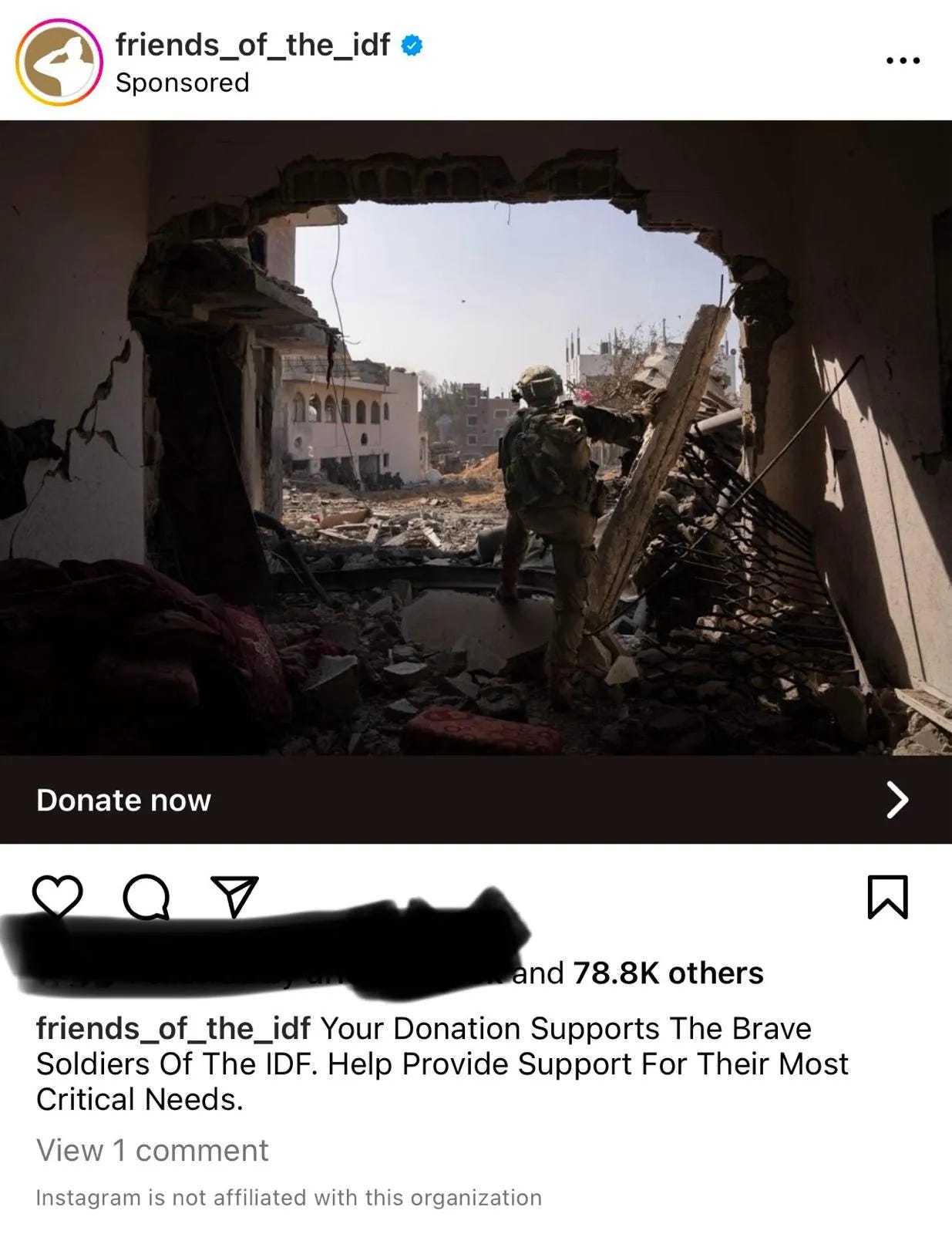
Given the severity of the allegations, an urgent question emerges: shouldn't all FIDF fundraising be immediately suspended until there's a clear, publicly released conclusion addressing whether funds were misallocated and whether current leadership can truly be trusted? Compounding these concerns is the issue of dishonest marketing, which remains inadequately addressed. Social media advertisements prominently asserted that donations were used for the most urgent and critical needs of soldiers. Yet now, Chairman Morey Levovitz stands accused of receiving reimbursements for lavish travel expenses and
has highlighted the delivery of trivial "sweet packages" to soldiers as a noteworthy success in donor updates, raising further questions about the organization's sincerity and priorities.
Avi may lament the "internal leaks," but Pearl’s stark acknowledgment suggests that the wound within FIDF runs deeper than mere whistleblowing. Pearl’s confidence in the YNET report’s accuracy starkly contrasts with Avi’s claims of political sabotage, laying bare the fissure within FIDF's own board. The battle playing out publicly underscores a harsh truth: leadership failures, left unchecked, inevitably erode trust,both externally and internally.
Thus, this digital duel between Pearl and Avi reveals more than competing narratives; it illuminates the existential challenge facing FIDF. At stake is not merely the leadership of one man, Levovitz, but the very integrity and future of an organization whose purpose remains noble even as its credibility teeters on the brink.