In contemporary discourse, accusation has become artillery: the more loaded the term, the more casually it is fired. Nowhere is this more obvious than in the claim that Israel’s campaign against Hamas constitutes “genocide.” To level such a charge is to cheapen the word, obscure real atrocities, and slander the only democracy in a region roiled by dictators and terrorist movements. The New York Times essay by Omer Bartov, allegedly a respected scholar of genocide, is a case study in how moral clarity is sacrificed for ideological fervor. Examining Bartov’s argument through the lens of fact, law and history, one finds not a sober analysis but a distorted indictment.
First, context. On October 7, 2023, Hamas militants stormed Israeli towns, murdering around 1,200 people and kidnapping about 250. It was the bloodiest day in Israel’s history; its intent, plainly stated in Hamas’s charter, was the destruction of Israel. Under international law, Israel had not just a right but an obligation to defend its citizens. To equate its military response with genocide requires an extraordinary leap: genocide is defined in the Convention on the Prevention and Punishment of the Crime of Genocide as the intent “to destroy, in whole or in part, a national, ethnical, racial or religious group.” Intent is central. Yet Israel’s stated intent is to destroy Hamas, a terrorist organization that cynically embeds its fighters among civilians, not the Palestinian people. As the Associated Press reported, Israel insisted at the International Court of Justice that it is doing “everything it could to protect the civilian population” and denied South Africa’s genocide accusations.
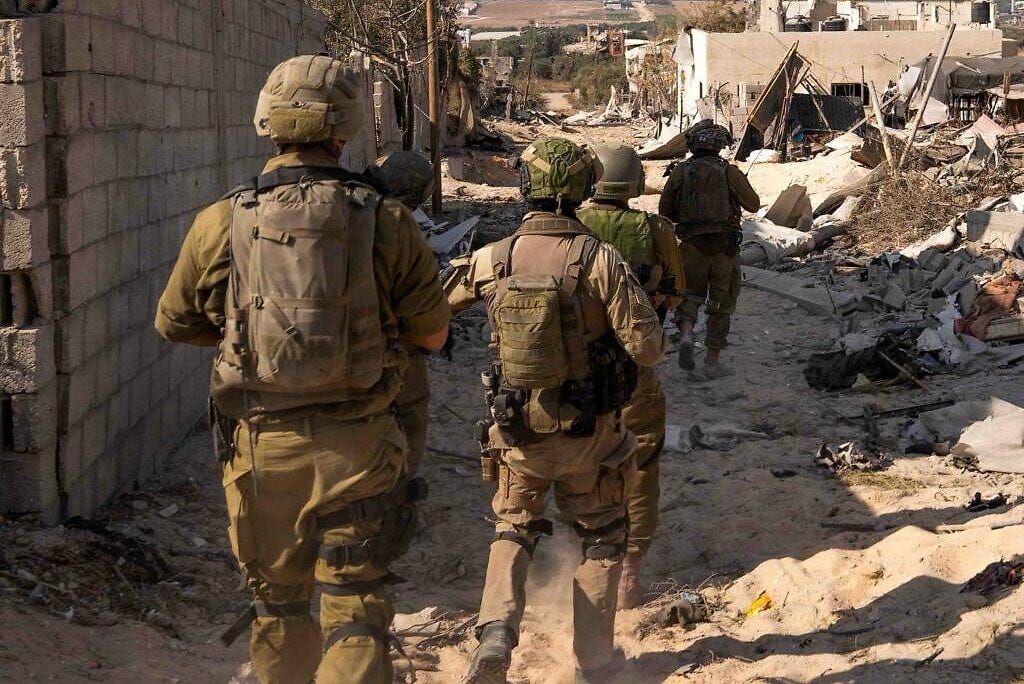
Bartov blurs this distinction by noting the tragic number of Palestinian casualties and displacement. War is always hellish; every civilian death is a tragedy. Yet casualties alone do not prove genocidal intent. Modern urban warfare against a foe that hides among apartment blocks inevitably produces collateral damage. Far from seeking extermination, the Israel Defense Forces (IDF) warn civilians before strikes, drop leaflets, send texts and phone calls, and even use “roof‑knocking” (small munitions dropped on buildings to encourage evacuation before a larger strike). Orly Goldschmidt, a spokesperson for Israel’s embassy in London, described how Israel makes “thousands of phone calls, sends texts, drops leaflets and provides clear and safe evacuation routes” to minimize harm. The IDF established control centers to monitor civilian locations and adjust operations accordingly. These are not the actions of a genocidal army but of a military constrained by both law and its own moral code. Even critics acknowledge that Israel’s war plans include unprecedented measures to warn civilians.
Consider the argument about proportionality. Bartov cites the high civilian death toll and suggests Israel could have fought Hamas differently. But proportionality in international law does not mean equal casualties on both sides; it refers to whether the anticipated military advantage of a strike outweighs expected civilian harm. Hamas’s headquarters are in tunnels under hospitals, schools and mosques. When an army confronts an enemy that deliberately uses human shields, civilian casualties rise because of Hamas’s tactics, not Israeli intent. This is why former U.S. Air Force intelligence chief David Deptula, after a visit to Gaza, wrote that Israel’s “IDF takes many precautions to reduce civilian casualties” and must defeat Hamas to prevent a repeat of October 7. To ignore Hamas’s use of human shields is to absolve the guilty and indict the wrong party.
Bartov invokes the specter of past genocides, including the Holocaust, to argue that academics have a duty to call genocide by its name. But it is obscene to draw a moral equivalence between the systematic, industrial murder of six million Jews and a defensive war against a terror statelet. The moral vocabulary of genocide was crafted after the Holocaust to describe acts like Rwanda, Bosnia and Darfur (systematic attempts to exterminate groups, often accompanied by state propaganda urging extermination). Israel, by contrast, is a state that prosecutes its soldiers for misconduct, debates military actions in open court, and holds elections even during war. Its operations are subject to judicial review; Israeli human rights organizations sue the government and sometimes win. None of this fits the pattern of genocide.
Even within Israel, there is fierce disagreement over how the war should be conducted and who should lead. Critics of Prime Minister Benjamin Netanyahu often come from Israel’s own security establishment. Former Defense Minister Moshe Ya'alon resigned in 2016, declaring he could no longer trust Netanyahu and citing “tough disputes over moral and professional issues.” According to the Washington Institute for Near East Policy, a slew of ex‑generals, including Ya'alon, Benny Gantz, Gabi Ashkenazi and former prime minister Ehud Barak, entered politics with the goal of “ousting corruption‑plagued Prime Minister Benjamin Netanyahu” and saving Israel’s democratic future. The institute notes that this “brass revolt” amounts to a “near total mobilization of Israel’s security establishment against him.” Indeed, nearly all retired IDF chiefs of staff since the mid‑1990s have run against Netanyahu. The Middle East Institute reports that during the Gaza war, ex‑generals in the war cabinet publicly challenged Netanyahu’s “dangerous” indecision and blamed him for strategic failures. These generals are hardly stooges of genocide; they are patriotic Israelis who believe Netanyahu’s politics jeopardize democracy. Their criticism underscores that Israel is not a monolith but a fractious, vibrant democracy where generals, spymasters and politicians openly debate strategy and morality.
Bartov’s essay also relies heavily on selective quotations from Israeli officials, citing inflammatory comments by fringe ministers. In any democracy, especially in a coalition government, some officials say reckless things. But fringe rhetoric does not translate into official policy. Israel’s policy documents, legal submissions and military conduct consistently emphasize that the goal is to dismantle Hamas and rescue hostages. At the International Court of Justice, Israel’s legal team underscored that it allowed fuel and medication into Gaza and takes “extraordinary measures” to minimize harm. Genocide is not only about casualties but about the intent to destroy a people. No credible evidence shows Israel intends to annihilate Palestinians; abundant evidence shows it is trying to defeat a terror group while mitigating harm.
The tragedy of Gaza is compounded by Hamas’s strategy. Hamas governs Gaza and is responsible for its civilians; yet it steals humanitarian aid, builds tunnels under hospitals, and fires rockets from school courtyards. It launched this war and could end it tomorrow by surrendering, releasing hostages and stopping rocket fire. Meanwhile, Israel has opened humanitarian corridors, coordinated with international agencies, and allowed aid convoys into Gaza despite rocket attacks on crossing points. The fact that many Palestinians are suffering does not prove genocide; it proves that Hamas’s stranglehold brings ruin.
Bartov is right about one thing: scholars must call out genocide when they see it. But accusing Israel of genocide when the legal threshold is nowhere near met cheapens the term and fuels a campaign of delegitimization that emboldens extremists. If everything is genocide, nothing is. To misuse the term against the world’s only Jewish state, created in the shadow of the Holocaust, is not only academically irresponsible; it is morally grotesque.
In a final flourish, one might recall the old Talmudic saying: “Whoever saves one life, it is as if he has saved the entire world.” Israel’s commanders and soldiers know this; they risk their lives to warn civilians, even as they fight terrorists who hide behind children. They operate under a military code that values human life. And as the debates in Israel demonstrate, they answer to a public and to generals who are unafraid to challenge their political leaders when they see moral danger. That, not genocide, is what is happening in Gaza.