In his recent piece, "Netanyahu Squanders His Moment to Halt the War," Patrick Kingsley of the New York Times offers a familiar diagnosis of the Gaza conflict: a diplomatic solution held up by political stubbornness. It’s a common perspective, but it misses the fundamental truth of Israel's situation by presenting a false choice. The decision Israel faces isn't between war and peace. It's between seeing this war through to the end, or guaranteeing that it will have to be fought again.
This isn't just pessimism; it's the logical conclusion when dealing with an organization whose foundational goal is not coexistence, but the destruction of Israel. A ceasefire that leaves such an entity in control is not peace; it is merely an intermission. It grants a strategic advantage to a group that has proven it will use any lull in the fighting to prepare for a more devastating future assault. Kingsley’s argument that Prime Minister Netanyahu squandered a "moment" to make "compromises" presupposes a viable partner for peace, a premise that October 7th shattered.
This framework recasts the entire debate. The "societal crisis" Kingsley identifies is not a simple clamor to end the fighting at any cost. It is an agonizing national conflict between two sacred goals: the moral imperative to bring the hostages home now, and the strategic imperative to ensure no more hostages can be taken later. When the choice is between war now or a more dangerous war later, the cost-benefit analysis of any deal shifts dramatically.
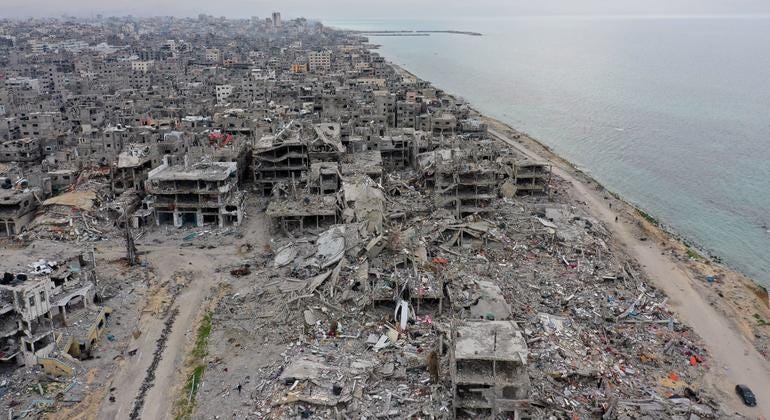
Furthermore, the humanitarian crisis in Gaza is a profound tragedy and, for Israel, a significant strategic liability. A stable and secure future for the entire region depends on what comes "the day after" Hamas. An environment of starvation and chaos is merely a crucible for the next, perhaps more extreme, iteration of terror. For this reason, facilitating aid and planning for a post-Hamas Gaza are not just concessions to international pressure; they are critical components of a sound Israeli security strategy.
The ultimate failure, therefore, is not one of squandering a political "moment." It is the failure of analyses like Kingsley's to grapple with the core dilemma. When you believe the choice is between a terrible war today and a catastrophic one tomorrow, the strategic logic, however brutal, points toward seeing the fight through. Without understanding this bleak calculus, the world will continue to prescribe solutions for a peace that isn't yet possible.