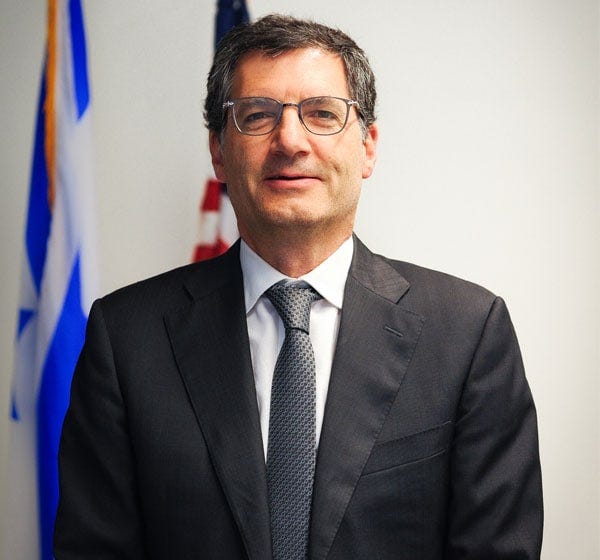
Rabbi Steven Weil, CEO of Friends of the Israel Defense Forces (FIDF), recently appeared on Rabbi Elliot Cosgrove's "Conversations with Cosgrove," where he brazenly misrepresented the reality facing IDF soldiers by making dangerously inaccurate claims about equipment and supplies. His assertions were not merely misleading; they were outright harmful and undermined ongoing efforts to address legitimate equipment shortages.
Weil claimed explicitly that the IDF faces "no shortage" of helmets, citing procurement figures that suggest 85,000 helmets had been obtained, far exceeding the alleged number of soldiers—15,000 to 16,000—actively serving on frontline duty. However, anyone familiar with the IDF’s recent logistical struggles understands that frontline service numbers fluctuate significantly during sustained operations, and the reserve forces called up in emergencies frequently double or triple active deployment numbers. Moreover, helmets and ceramic plates have expiration dates, a critical fact Weil deceptively omits. A helmet issued decades ago, even as early as 1979, does not guarantee it functions properly today, placing soldiers at unnecessary risk. Furthermore, the 85,000 helmets Weil references were initially ordered in December 2023, with significant production and delivery delays. The first batch of helmets from that order did not reach soldiers until many months later, leaving them unprotected during critical periods.
Additionally, Weil's definition of "frontline" is misleadingly narrow. Soldiers stationed in Judea and Samaria require protective helmets and gear just as urgently as those deployed in Gaza. Weil's failure to clearly define or acknowledge this broader operational reality dangerously underestimates the comprehensive needs of the IDF.
Even more troubling was Weil’s dismissal of concerns about night vision goggles (NVGs). According to him, no military, Israeli or American, "allows more than 10% to wear night vision goggles," claiming prolonged training requirements and peripheral vision limitations. This dangerously simplistic assessment ignores documented accounts from frontline IDF commanders and soldiers themselves who have consistently emphasized the vital importance of NVGs for nighttime operational effectiveness. Multiple verified sources, from frontline commanders to direct testimonies of soldiers in Gaza and Lebanon, consistently affirm a severe shortfall in functional NVGs, directly contradicting Weil’s assertions.
Rabbi Weil’s most disturbing falsehood may have been his statement that "brigade commanders" have never reported an unmet need, claiming that when asked directly, brigade commanders always receive everything they request. The reality on the ground starkly contrasts Weil’s rosy depiction. Soldiers and their families have repeatedly and publicly reported the desperate shortages of basic protective equipment, particularly since the devastating October 7th Hamas attacks. Brigade commanders themselves, often constrained by hierarchical and bureaucratic realities, frequently encounter shortages that hinder immediate readiness and effectiveness. Indeed, groups like Unit 11741 have coordinated extensively with brigade commanders, providing critical gear, such as the vest and ceramic plates worn by Prime Minister Benjamin Netanyahu himself during a visit to Gaza.
Members of the Israeli Knesset, including MK Moshe Tur-Paz, have openly discussed incidents in which soldiers have died due to faulty equipment. Tur-Paz revealed that a reserve soldier was killed because his ceramic plate was substandard, resulting in deadly fragments penetrating the soldier’s body. Such tragic incidents starkly contradict Weil’s assertions and underscore the urgency and severity of equipment failures that Weil minimizes or outright denies.
Weil also disturbingly blamed "well-intentioned" reservists and their family members, suggesting these individuals misinterpret personal "wants" as "needs." Such condescension dangerously trivializes legitimate and urgent requests from soldiers who place their lives at risk daily. Reservists, sacrificing careers, academic progress, and precious family time, report shortages not out of whimsy but from direct operational experience.
Perhaps most alarming was Weil’s reckless claim concerning civilian-provided drones. Weil falsely alleged that over 300 IDF soldiers had been injured due to unsecured drones provided by well-meaning American supporters, asserting these devices lacked necessary cybersecurity and had to be shot down by Iron Dome missiles and Apache helicopters. The truth is far different: civilian-provided drones have saved hundreds if not thousands of lives, greatly aiding in reconnaissance and operational efficiency. Their effectiveness was recognized by the Ministry of Defense itself, which subsequently began procuring drones to bolster operational capabilities.
If Weil had any respect for the facts on the ground, he could simply state that anything involving equipment procurement or status is outside the scope of his job and leave it at that. Instead, he spreads outright falsehoods, engaging in a disturbing act of gaslighting soldiers who have already sacrificed so much. Helmets, worn daily and frequently damaged or compromised through regular use, must be routinely examined and replaced if compromised. Weil's condescension on this point is unspeakable; these are people's lives—real human beings, someone's child, sibling, parent, or friend—at stake.
Weil wants the public to place absolute trust in the very military leadership whose spectacular failures were tragically exposed on October 7th. Given their devastating failures, how can these officials claim credibility or reliability regarding logistical and equipment readiness?
FIDF, under Weil’s leadership, should serve as a reliable support channel addressing real, well-documented shortages faced by soldiers. Instead, Weil’s misinformation threatens to undermine genuine efforts and discredit those highlighting critical needs. Soldiers, commanders, and their families deserve honesty, transparency, and support—not deceptive claims that mask bureaucratic inadequacies or administrative failures.
It is incumbent upon Weil and FIDF leadership to cease spreading harmful inaccuracies, immediately correct these false claims, and transparently address the urgent and ongoing logistical deficiencies that jeopardize soldiers' lives. Failure to acknowledge these truths is a profound disservice to the brave men and women defending Israel’s security and betrays the very values Weil professes to uphold.
Update: I was recently reminded of a fact that makes FIDF’s dishonesty even more egregious: the drone that helped locate Hamas leader Yahya Sinwar wasn’t supplied by the IDF—it was donated by a civilian initiative based in New Jersey. That’s right—one of the most critical tools in tracking the architect of the October 7th massacre came from ordinary citizens stepping in where the official system failed. For Rabbi Steven Weil to smear these life-saving efforts with false claims about injuries and Iron Dome interceptions isn’t just misleading—it’s reprehensible.