There is a legitimate and pressing case for a class-action lawsuit against Friends of the Israel Defense Forces (FIDF). The organization, entrusted with the critical responsibility of supporting IDF soldiers, presents bullet points and promotional materials that, under scrutiny, appear misleading, if not outright deceptive.
Immediately following the horrific Hamas attack on October 7th, FIDF initiated aggressive fundraising campaigns with powerful imagery and urgent language, compelling donors to contribute by declaring "support Israel's defenders—their fight is our future!" Yet, the stark reality uncovered shortly afterward was that these emotionally charged appeals led to funds being used for items entirely unrelated to front-line emergency needs, such as flip-flops, mouthwash, and candy. This clear disconnect between donor intent and actual expenditure constitutes a grave case of false advertising, misleading well-intentioned contributors who believed their money would provide meaningful, direct assistance to soldiers in active combat situations.
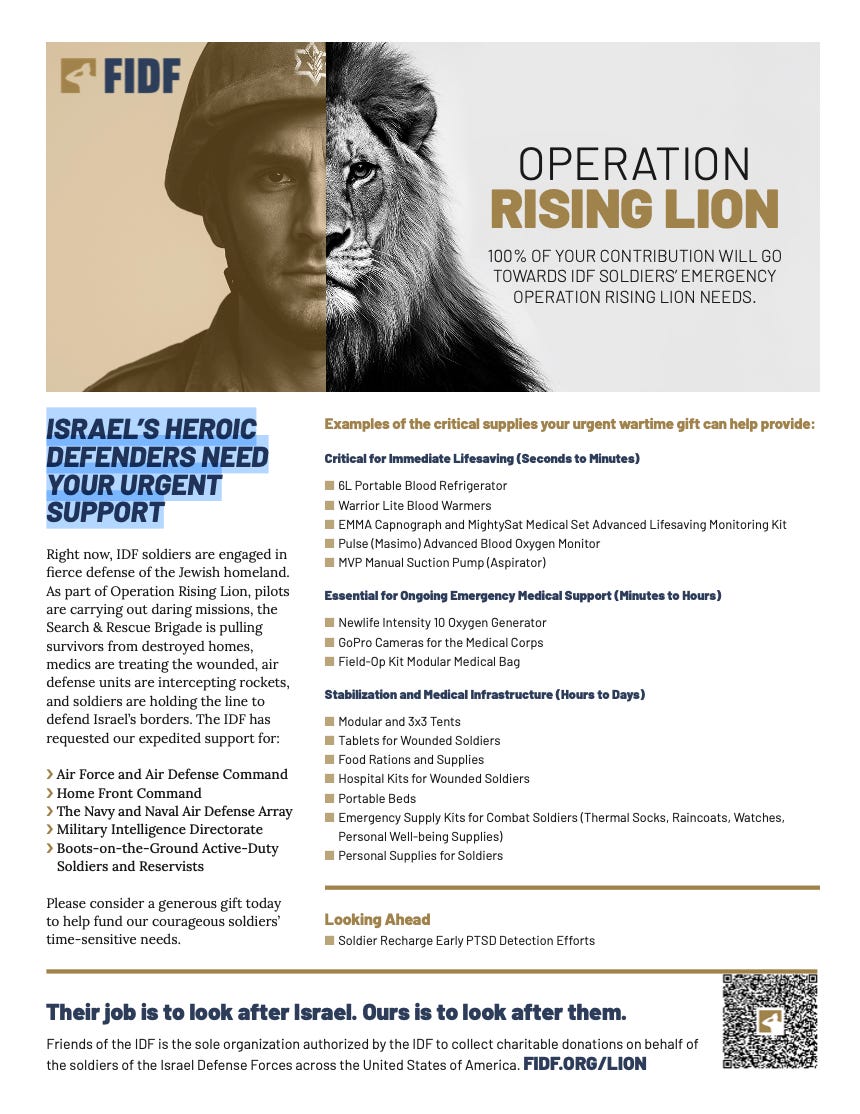
The recent campaign under Operation Rising Lion prominently highlights support for the "Air Force and Air Defense Command," among others. Yet, FIDF provides scant detail to back these sweeping claims. Merely stating they support critical defense components such as the Air Force is profoundly insufficient. Potential donors deserve clear, demonstrable examples of how their funds specifically benefit pilots, maintenance crews, or essential infrastructure. Without such specifics, there is a troubling opacity around what exactly FIDF funds or achieves.
FIDF’s promotional language claiming, "ISRAEL’S HEROIC DEFENDERS NEED YOUR URGENT SUPPORT," becomes especially absurd when viewed in context. This language misleadingly portrays FIDF as an essential, frontline entity directly contributing to Israel's wartime success. In reality, FIDF is a massively bureaucratic organization far removed from immediate battlefield effectiveness. Its claims to urgent action starkly contrast with its sluggish, administrative-heavy structure and minimal direct impact on actual military outcomes.
Further scrutiny of FIDF’s materials reveals a troubling pattern. They list tangible medical and logistical supplies, such as portable blood refrigerators, medical kits, and personal soldier supplies, providing the appearance of transparency. Yet, alongside these detailed lists, broader claims regarding support for large-scale military units, including the Air Force, lack equivalent clarity. This selective transparency begs scrutiny and necessitates deeper investigation.
Moreover, questions arise regarding the financial stewardship of FIDF. How is it possible that the organization urgently needs to fundraise for emergency supplies when significant portions of their emergency funds have reportedly been spent on college scholarships and other non-pressing initiatives? Redirecting resources initially earmarked for critical, immediate needs into long-term programs undermines donor intent and trust, particularly in an environment of genuine, pressing military emergencies.
An internal email from FIDF National Chairman Morey Levovitz explicitly confirmed that the organization did not engage in supplying essential military supplies due to organizational constraints and an assertion that such assistance was neither requested nor wanted by the IDF leadership. This raises profound ethical questions about FIDF's fundraising appeals which suggest otherwise. Given this level of contradiction, how can donors trust anything FIDF says regarding the proper use of funds?
Further, long-time board member Sloane Citron publicly condemned FIDF, describing it as "poorly run" and "disingenuous." Citron highlighted that despite explicit approval from an IDF commander to provide improved gear, his initiative was dismissed without explanation. Citron's resignation and pointed criticism underline serious internal concerns about organizational integrity and effectiveness.
From a legal perspective, the basis for a class action lawsuit hinges on false advertising, deceptive fundraising practices, and a failure to substantiate promotional claims. Donors who have collectively given millions under potentially misleading pretenses may have substantial grounds to seek legal remedy and financial restitution.
Given the urgency and gravity of the current geopolitical climate, organizations like FIDF must operate with impeccable clarity and honesty. Donors, moved by genuine concern for Israel’s security, deserve unequivocal proof of precisely how their contributions are used. Vague assurances and emotionally charged campaigns without solid, transparent backing undermine public trust and potentially divert critical resources from genuinely impactful efforts.
If FIDF has nothing to hide, they should welcome greater scrutiny and publicly detail their expenditures, explicitly demonstrating their support for units like the Air Force. Until that happens, donors—and the broader public—have every right to question, demand answers, and potentially seek accountability through the courts. Transparency is not merely ethical; it is legally obligatory, especially for an organization operating on behalf of soldiers risking their lives in defense of their nation.