In the calculus of foreign policy and private philanthropy, clarity of purpose is paramount. For decades, the Friends of the Israel Defense Forces (FIDF) operated on a clear and compelling premise: to provide for the welfare of Israeli soldiers, funding projects that the state presumably could not. This mission, rooted in an appeal to both communal duty and strategic foresight, has been remarkably successful. Yet, a confluence of recent disclosures and persistent scandal now demands a serious, unsentimental re-examination of its foundational logic.
The first challenge is a matter of simple fiscal reality. Recent reporting, citing U.S. Army documents, has illuminated the sheer scale of American investment in Israeli military infrastructure. Beyond the annual $3.8 billion in aid, the United States is directly financing a $1.5 billion program for the construction of IDF headquarters for Shayetet 13, clinics, and other core facilities.
This is not a trivial expenditure. It represents a deep, structural commitment by a superpower to the operational integrity of the IDF. The consequence of this fact is profound: the Israeli military is not a developing-world army struggling for resources. It is, by any rational measure, one of the most technologically advanced and financially robust fighting forces on the planet.
This reality presents an inescapable logical problem for the FIDF’s traditional mission. The central question is no longer whether a new recreation center is beneficial, but whether it is necessary. If a given facility were deemed critical to the well-being and morale of the troops—a factor with undeniable strategic importance—why would it not be funded by the IDF’s own multi-billion-dollar budget?
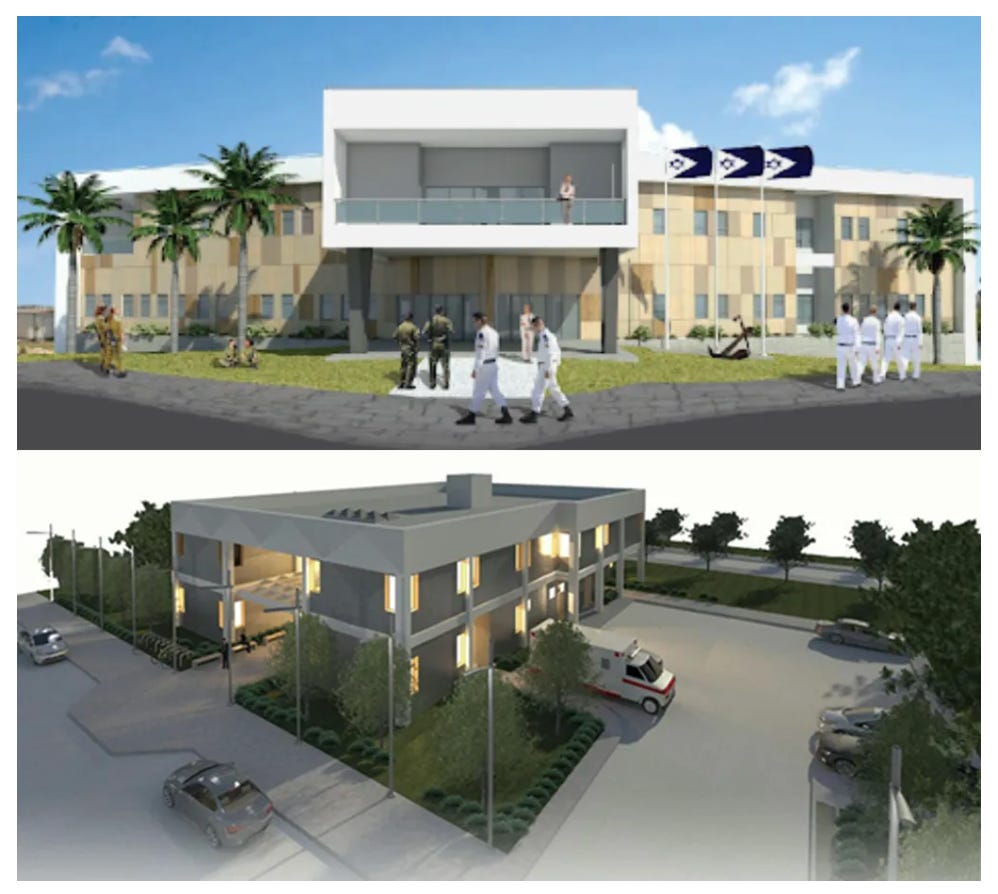
The unavoidable conclusion is that the projects relegated to FIDF fundraising are, by definition, secondary. They are items the Israeli military command has already assessed as non-essential to its primary mission. Philanthropy is thus being marshaled not to fill a vital gap, but to furnish the ancillary.
This structural critique is now compounded by a crisis of confidence. The recurring allegations of financial mismanagement and a lack of transparency within the FIDF are not mere public relations challenges. They corrode the very trust upon which all charitable enterprises depend. For the discerning donor, the question is twofold: is the mission valid, and is the organization a worthy steward of the capital entrusted to it? The FIDF is now vulnerable on both fronts.
The issue, therefore, transcends the organization’s internal governance and strikes at its core purpose. Why should private, charitable capital be directed toward brick-and-mortar projects that the recipient state has effectively deemed a luxury? Would not this capital be more efficiently and morally deployed in addressing direct human needs—financial assistance for the families of soldiers, expanded mental health services, or other post-service essential needs? These are needs that infrastructure, however well-intentioned, cannot address.
The soldiers’ sacrifice is not in question. Their welfare is a legitimate and worthy concern. The question is one of method and priority. The current model, where private charity funds non-essential construction for a state-of-the-art military, is a model whose logic has begun to buckle under the weight of fiscal reality and institutional doubt. For a donor community motivated by serious purpose, it is time to ask whether there is not a more direct, more effective, and more rational means of achieving its honorable ends.