


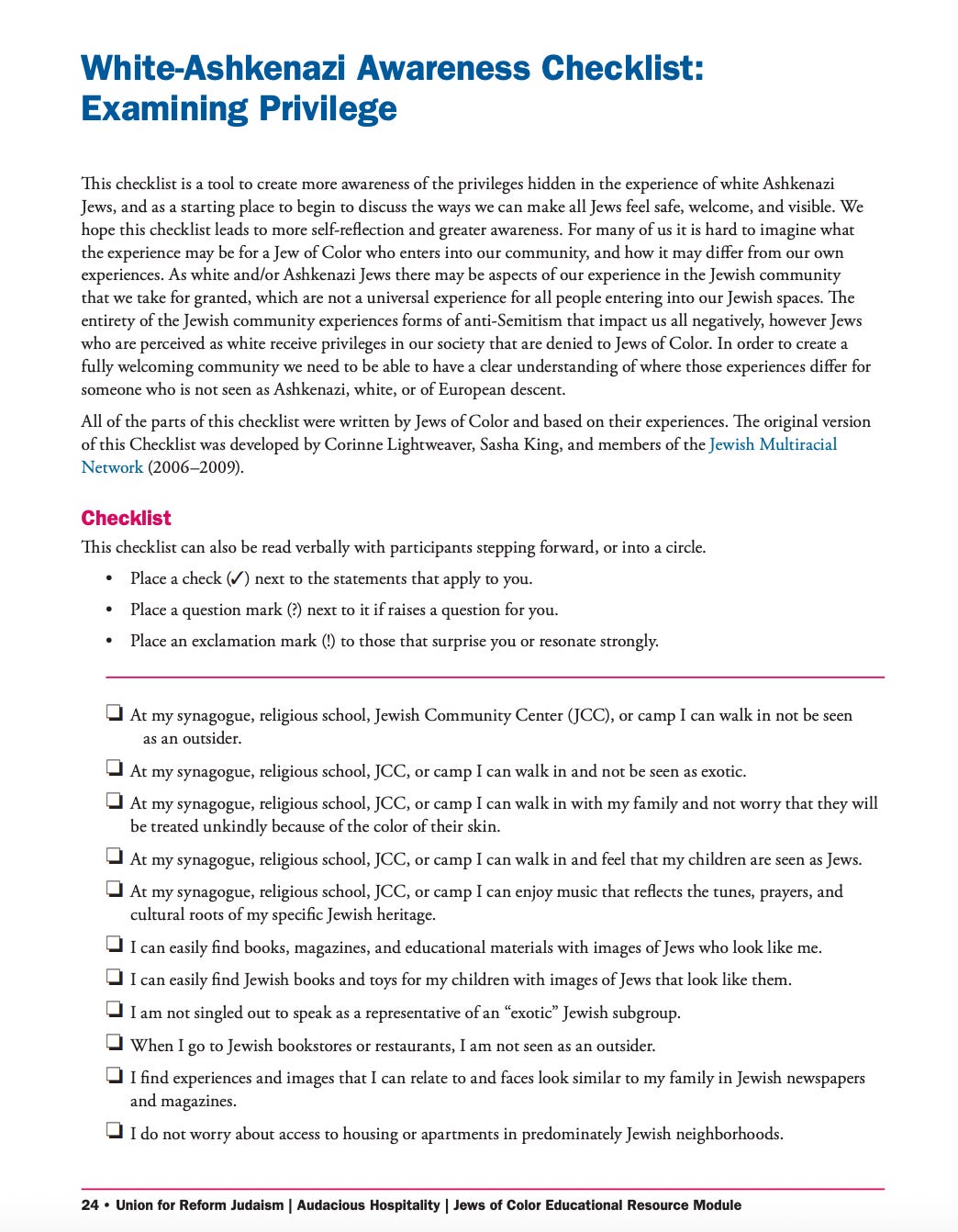
If you want to understand how a moral tradition corrodes from within, read the “White-Ashkenazi Awareness Checklist” published by the Union for Reform Judaism. It is not a work of theology or moral reflection; it is a political catechism. Under the language of “Audacious Hospitality,” Jews are now urged to confess their “white privilege” — to treat the color of their skin as a moral failing rather than a divine accident.
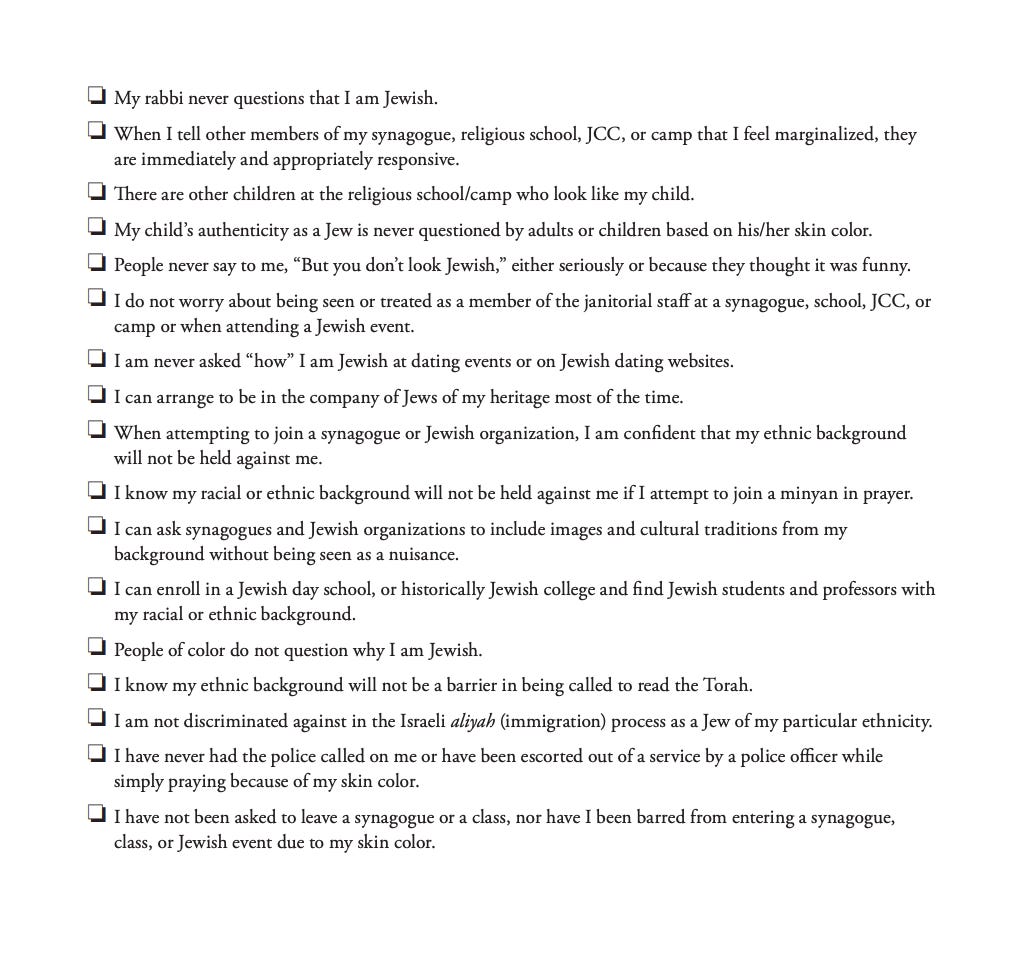
This document, presented as a tool for “awareness,” reduces Judaism to a racial accounting exercise. It asks worshippers to consider whether they can “walk into a synagogue and not be seen as exotic,” or whether their “rabbi never questions that I am Jewish.” These are not the questions of a religious community concerned with truth, covenant, or holiness. They are the questions of an ideological movement obsessed with power and victimhood. The vocabulary of Torah has been replaced with the vocabulary of the social sciences.
The premise that Ashkenazi Jews are “privileged” is morally grotesque. The descendants of pogrom survivors and concentration camp victims are told to apologize for being “white.” The same people who rebuilt Jewish life from the ruins of Europe are now taught to feel guilty for having survived. It is a cruelty disguised as compassion — and it has become the spiritual posture of an entire movement.
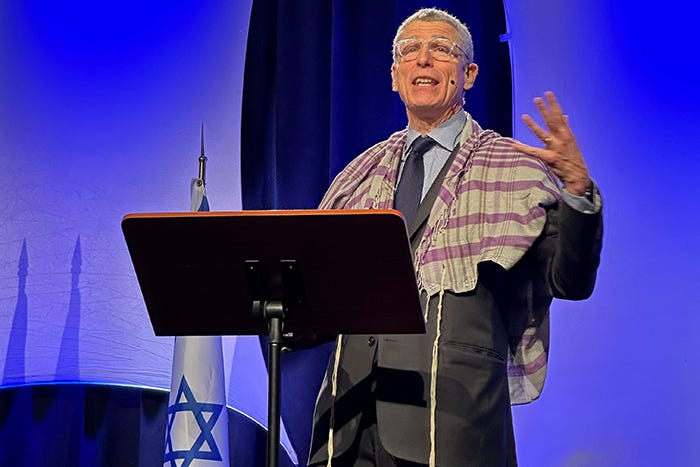
This sickness of ideology explains much about the paralysis of Reform leadership today. When Assemblyman Zohran Mamdani built his career attacking Israel and normalizing anti-Semitic rhetoric, the Reform establishment — from Rabbi Rick Jacobs to Rabbi Angela Buchdahl — hesitated to confront him directly. These are figures who sermonize endlessly about “moral courage,” yet they cannot summon it when the target of hate is the Jewish state. They hide behind institutional neutrality and procedural language about “welcoming all perspectives.”
But the truth is that Mamdani is a small issue compared to the larger rot. The Reform movement’s silence is not caused by fear of one politician; it is caused by allegiance to an ideology that teaches Jews to distrust their own moral standing. When you have been taught that your community is “white” and therefore complicit in oppression, you lose the will to defend it. You confuse self-critique with virtue and surrender moral clarity for social approval.
Woke ideology has replaced G-d as the ultimate authority in these sanctuaries. It demands confession without redemption, guilt without grace, and hierarchy based on grievance rather than goodness. It divides Jews by skin tone and trains rabbis to see privilege where Torah sees the image of G-d. It tells them that repentance for “whiteness” is more urgent than reverence for the divine.
Judaism commands self-examination, not self-hatred. It teaches that moral worth is earned through action, not inherited through race. The Reform movement’s adoption of this secular dogma is not an act of progress; it is a surrender. The “Ashkenazi Awareness Checklist” is not inclusion — it is indoctrination. It replaces gratitude with guilt, covenant with sociology, and holiness with political fashion.
The danger is not merely institutional decline. It is spiritual suicide. A people that learns to apologize for its own existence cannot survive. The Jewish mission was never to mimic the moral fads of the surrounding culture; it was to elevate them. Hashem’s first command to Abraham was to leave — to separate from the moral confusion of his time. Reform leaders today must make the same choice: to leave Egypt once more, this time the Egypt of ideological conformity, and return to Sinai: to truth, to courage, and to the G-d who created man, not in colors, but in His image.
This is what woke theology looks like.
Thank heavens that these days I’m a member of Chabad in my area and not a Reform congregation.