


The recent Jerusalem Post article, “Israel launches $1.5 b. armored vehicle surge amid Gaza war,” paints a rosy picture of a proactive and decisive Israeli government strengthening its military might. The piece, penned by Anna Ahronheim, celebrates a $1.5 billion initiative to accelerate the production of Merkava tanks and Namer and Eitan armored personnel carriers (APCs). It’s a narrative of strength, of a nation making a “strategic decision” to maintain its “qualitative military edge.” But this narrative is a carefully constructed fiction, a deliberate cover-up of a long-festering and systemic crisis within the Israel Defense Forces (IDF): a chronic shortage of armored vehicles that has been ignored for years, with deadly consequences.
The truth is that this “surge” is not a sign of foresight, but a desperate reaction to a problem that has been repeatedly swept under the rug. For years, budgetary constraints have been cited as the reason for slow-walking the production of modern APCs like the Namer, leaving Israeli soldiers to rely on the dangerously outdated and vulnerable M113. As far back as 2014, reports surfaced of the IDF postponing the purchase of new APCs, a decision that has had fatal repercussions. The current war in Gaza has simply laid bare the consequences of this neglect.
While the Jerusalem Post lauds the “combat success” of Israeli armor, it conveniently ignores the reports of “severe equipment fatigue” and “technical failures” that have plagued the IDF in recent months. The 7th Armored Brigade has reported “serious difficulties in securing tank spare parts,” with “key components like engines, tracks, and control systems being depleted.” A Haaretz opinion piece went so far as to describe a “desperate shortage of professionals to maintain armored vehicles.” This is not the story of a well-oiled military machine, but of an army stretched to its breaking point, its equipment worn down by years of underfunding and neglect.
The Jerusalem Post article is a masterclass in propaganda, reframing a crisis as a triumph. By presenting this emergency spending as a proactive “strategic decision,” it obscures the reality of a military that has been forced to confront its own long-standing vulnerabilities. The real story is not one of strength, but of a desperate scramble to fix a problem that should have been addressed years ago. The soldiers on the front lines are paying the price for this systemic failure, and no amount of celebratory headlines can change that fact.
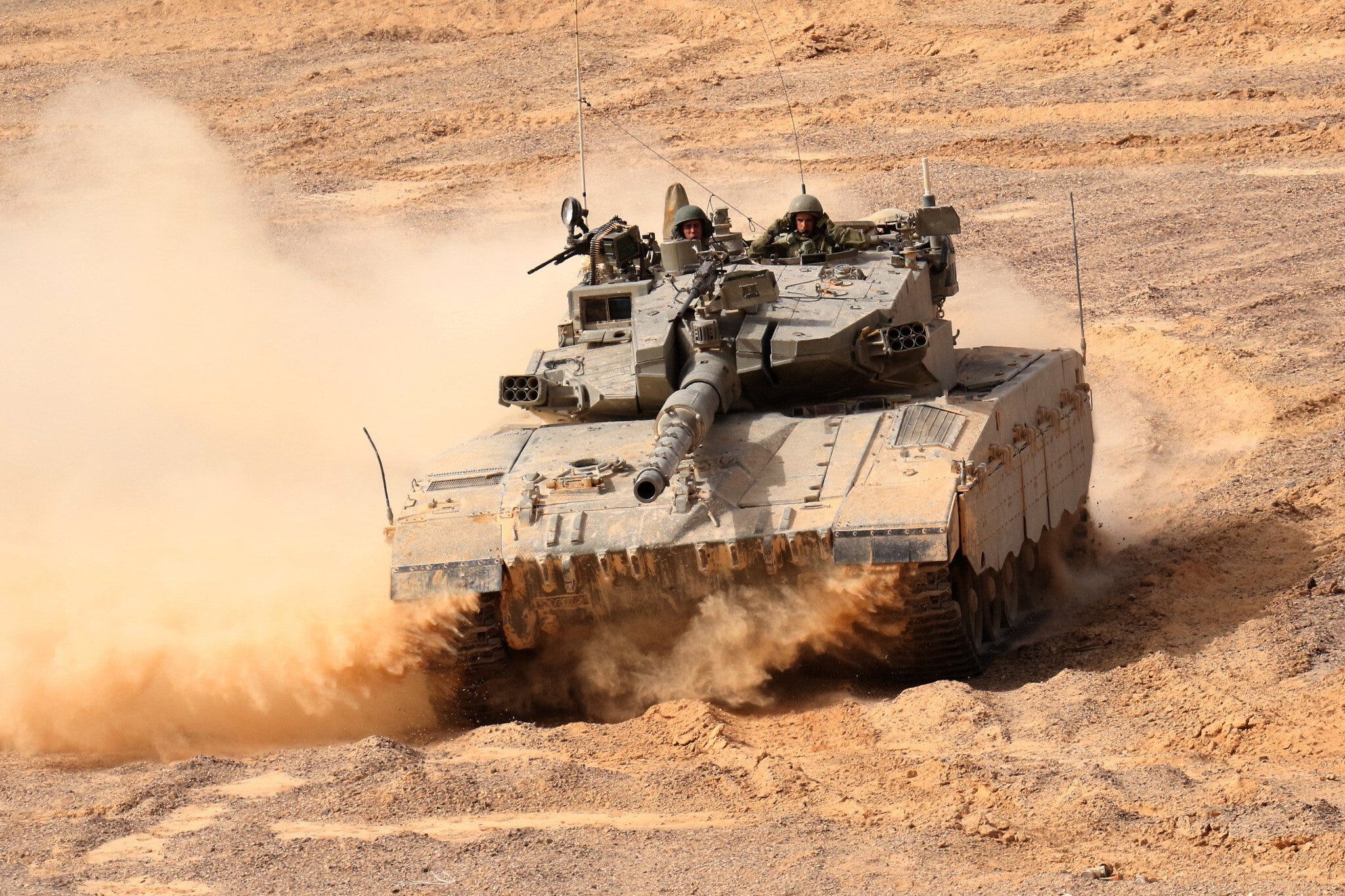
There was an essay by Ran Baratz in Mosaic claiming that the deemphasis of a large armored force was the result of many IDF chiefs rising from the special forces and the prevalence among Western thinkers that a "small, technologically advanced" force was the ideal way to apply the new precision targeting technologies. The failure to produce Merkavas, Namers and Eitans in quantity is the result of this.
The current IDF chief, Lt Gen Eyal Zamir, rose from the Armored Corps and has said that actually what Israel needs is a large, technologically advanced force. The new contracts for armored vehicles are one result.
https://ideas.tikvah.org/mosaic/essays/whats-wrong-with-the-postmodern-military
Was not the idea that we'd have cyber wars and no longer need ground troops part of the reason we have ended up here? The consceptia was embraced by both left and right and was clearly wrong.