Florida’s Live Local Act was sold to the public as a bold, free-market fix for a real problem. The state needs affordable housing for the teachers, nurses, and service workers who keep its economy running. The 2023 law offered developers a straightforward deal: build workforce housing, and the state will let you bypass local zoning. Simple enough, and on its face, reasonable.
It has not worked out that way. The ongoing fight between the Village of Bal Harbour and the Whitman family, owners of the Bal Harbour Shops, is the clearest example yet of how the law has been twisted into something its architects almost certainly never intended: a blank check for luxury developers to override local communities, dodge public scrutiny, and build whatever they want under the cover of social good. As Etan Mark, the attorney representing the village, put it on a recent podcast: “You put lipstick on the pig by calling it affordable housing. This is not about affordable housing. This is about putting a lot of money in the pockets of developers.”
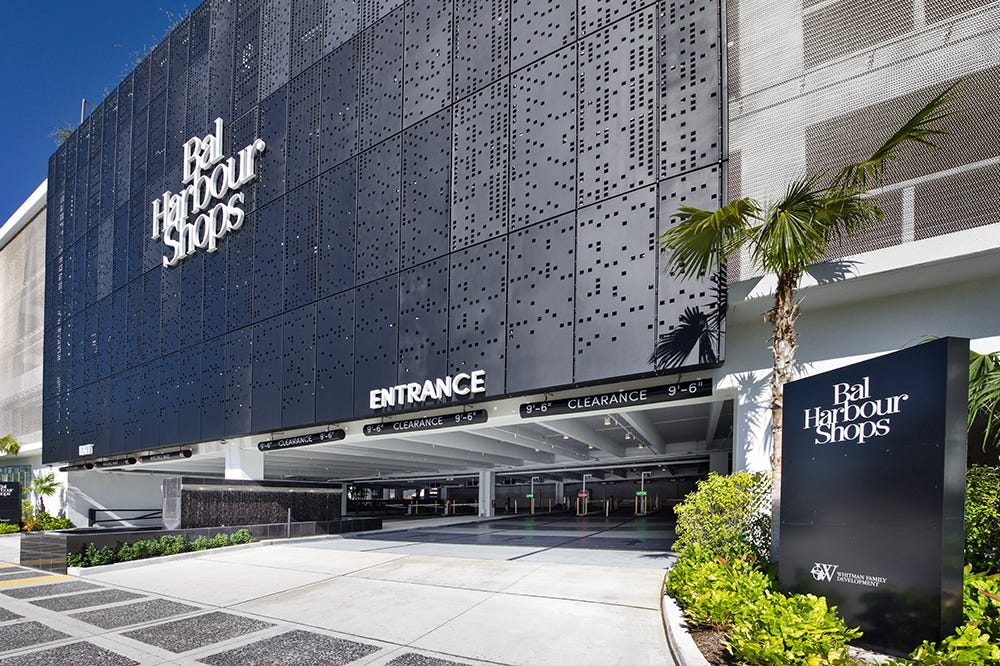
The Whitmans want to build four towers on their 17-acre property, the tallest rising 30 stories over Collins Avenue, adding 2 million square feet of development to a site where they have not even finished the 800,000-square-foot expansion the village approved back in 2017. The numbers are worth sitting with for a moment. They are asking to more than triple the size of one of the most exclusive shopping destinations in the country, in a municipality that is less than a square mile, has one main road, no subway, and no public transit to speak of. Mayor Seth Salver did not reach for diplomatic language when describing what that would look like: “The density would rival the densest parts of downtown New York City or Tokyo, Japan. And we’re talking about Bal Harbour, where there isn’t a subway and public transportation.”
To get there, the Whitmans invoked the Live Local Act, promising that 40 percent of the units would qualify as workforce housing. When the village pushed back, the developers sued. Four times. And in their amended complaint, they went further than a simple legal challenge. They accused the village of opposing the project because it views affordable housing as incompatible with its identity as an exclusive community. They pointed to Bal Harbour’s history of racial and religious discrimination to imply the current resistance is rooted in the same ugliness.
It is a serious charge, and it deserves a serious answer. Mayor Salver, who is Jewish himself, gave one: “Bal Harbour has a history of discriminating against Jewish people. I’m Jewish myself. At one point, non-Caucasians couldn’t own land in Bal Harbour. So, we are very understanding of diversity, and this is not in any way about the affordable housing.” The village called the allegations scurrilous, and that is the right word. Reaching back to deed restrictions from the mid-twentieth century to cast a zoning dispute as a civil rights violation is not a legal argument. It is a pressure campaign.
Now look at what the Whitmans are actually proposing to build. The “affordable” units under the Live Local Act can be priced for households earning up to 120 percent of the area median income. In Miami-Dade, that means individuals earning well over $100,000 a year. That is not a teacher struggling to afford rent. That is a comfortable professional who has plenty of housing options. The law’s income ceiling is so high that developers can charge near-market rents on the designated units while still collecting the full density and height bonuses the state offers in exchange. It is a subsidy dressed up as a sacrifice.
And the units themselves? The Whitmans’ plan stacks the affordable apartments on the lower floors, makes them as small as possible, and routes their residents through separate corridors. Mark called it what it is: “It sort of hearkens back to the service entrance.” When the village passed an ordinance to ban this kind of arrangement, requiring that all residents share the same entrances, elevators, and amenities regardless of what they pay in rent, the Whitmans went to court to fight it. Think about that. A developer claiming to champion workforce housing sued to preserve its right to give those workers a worse door.
The village’s objections are not pretextual. They are practical. Bal Harbour has one road. Its sewer system, its emergency services, its parks and schools were built for a small, quiet residential community, not for a development that would function as a city within a city. Mayor Salver raised the stakes plainly: “If someone calls 911 and the ambulance can’t get there, then there might be a problem.” That is not a rich person complaining about their view. That is an elected official doing the math on infrastructure that was never designed for this.
What makes the Whitmans’ play especially brazen is the structural loophole they are using to make it work. Under the Live Local Act, a developer can import the floor-area ratio from any parcel within a mile of their site, regardless of what zoning district that parcel sits in. The Bal Harbour Shops is in a commercial district, but by assembling parcels and borrowing the density rights from the village’s high-rise oceanfront district, the Whitmans have manufactured a 17-acre “super-site” with development entitlements that have no organic relationship to the land they are building on. It is technically legal. It is also the kind of thing that makes a mockery of the idea that zoning law means anything at all.
And all of this happens without a single public hearing. The Live Local Act was deliberately structured as an administrative process, cutting local governments and residents out of decisions that will reshape their communities for generations. Mayor Salver was direct about what that means: “They’re trying to add two million square feet without having one public hearing, without getting input from anybody that’s going to be affected by this project for their whole lifetime.”
Into this fight stepped Florida Attorney General James Uthmeier, who filed a brief siding with the developers and accusing the village of systematically obstructing the project. It is a remarkable intervention. The chief law enforcement officer of the state of Florida is using his office to help a billionaire family override a small community’s planning process, in the name of affordable housing that will mostly serve six-figure earners and that the developers fought to keep segregated. If that is what the Live Local Act has become, the legislature should be embarrassed.
The Village of Bal Harbour is not asking for special treatment. It approved a major expansion of the Shops in 2017, a deal worth over $122 million in public benefits to the community. It is not anti-development. What it is against is being told that a state law strips it of any say over a project that will define the character of its community for the next half-century, with no hearings, no review, and no recourse. That is not a housing policy. It is a developer’s dream, written into law, and enforced by the state.
Florida has a real housing problem. The Live Local Act, in theory, was a real attempt to address it. But a law that can be used to build luxury towers with service entrances for the poor, in a community with no infrastructure to support them, approved through a process that cuts out every resident who will have to live with the consequences, is not solving anything. It is just making certain people very rich. The Whitmans have made that plain enough. The only question now is whether anyone in Tallahassee is paying attention.