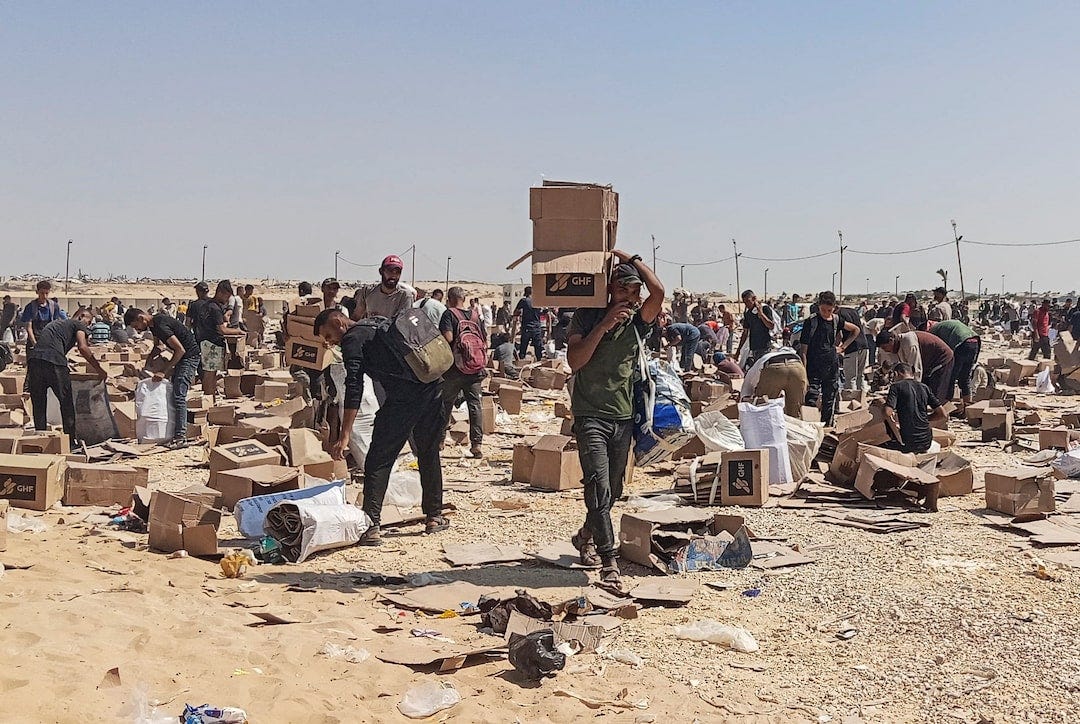
The New York Times, in its reporting on the U.S. decision to allocate $30 million to the Gaza Humanitarian Foundation, has once again showcased its knack for moral equivalence masquerading as objective journalism. The framing is masterful in its sleight of hand—an exercise in selective moral outrage conveniently sidestepping the barbarity that has defined Hamas rule.
The Times laments that the new aid model, backed by Israel and run predominantly by American contractors, is criticized for "militarizing humanitarian assistance" and allegedly endangering Gazans. They dutifully quote unnamed humanitarian groups and the United Nations—the same United Nations that has routinely minimized Hamas’s brutality and allowed aid, intended for suffering civilians, to be systematically pilfered by Hamas terrorists.
This framing not only obscures reality but also advances a pernicious narrative: that aid delivered under Hamas’s watch was somehow preferable. Aid previously funneled through Hamas was systematically weaponized—supplies appropriated, redirected, and exploited to tighten the regime's chokehold on Gaza's population. Hamas did not merely loot; they weaponized aid, turning relief packages into instruments of power and coercion.
But where is the Times's outrage about that? Where is their critique of the failed status quo ante? Silent, of course, lest it disrupt their careful balancing act.
The Times meticulously documents Israeli soldiers stationed near the aid centers, implicitly suggesting culpability for ensuing violence. But when it comes to Hamas, the Times only vaguely acknowledges "problems with looting." Problems? Looting? Such sanitized language betrays a staggering moral obtuseness. Hamas is not merely looting; it is deliberately starving its own people to sustain its tyrannical grip.
Moreover, the article paints Israel’s legitimate security measures as dangerously provocative, as though the Israelis should passively accept Hamas militants commandeering humanitarian sites. By fixating on Israeli defensive actions, the Times conveniently neglects the repeated provocations and abuses by Hamas.
What the Gaza Humanitarian Foundation represents is not a militarization of aid but a reclamation of humanitarian principles from terrorists who have perverted them. Any violence surrounding these distribution points is not the fault of those attempting to ensure aid reaches its intended recipients, but rather of the fanatics who exploit every opportunity for bloodshed and propaganda.
The New York Times should reconsider its priorities. Humanitarian aid under Hamas's rule was a cruel joke played on the suffering Gazan populace. The new foundation is a belated effort to provide genuine relief—something the Times would recognize if it paused long enough to prioritize truth over ideological convenience.