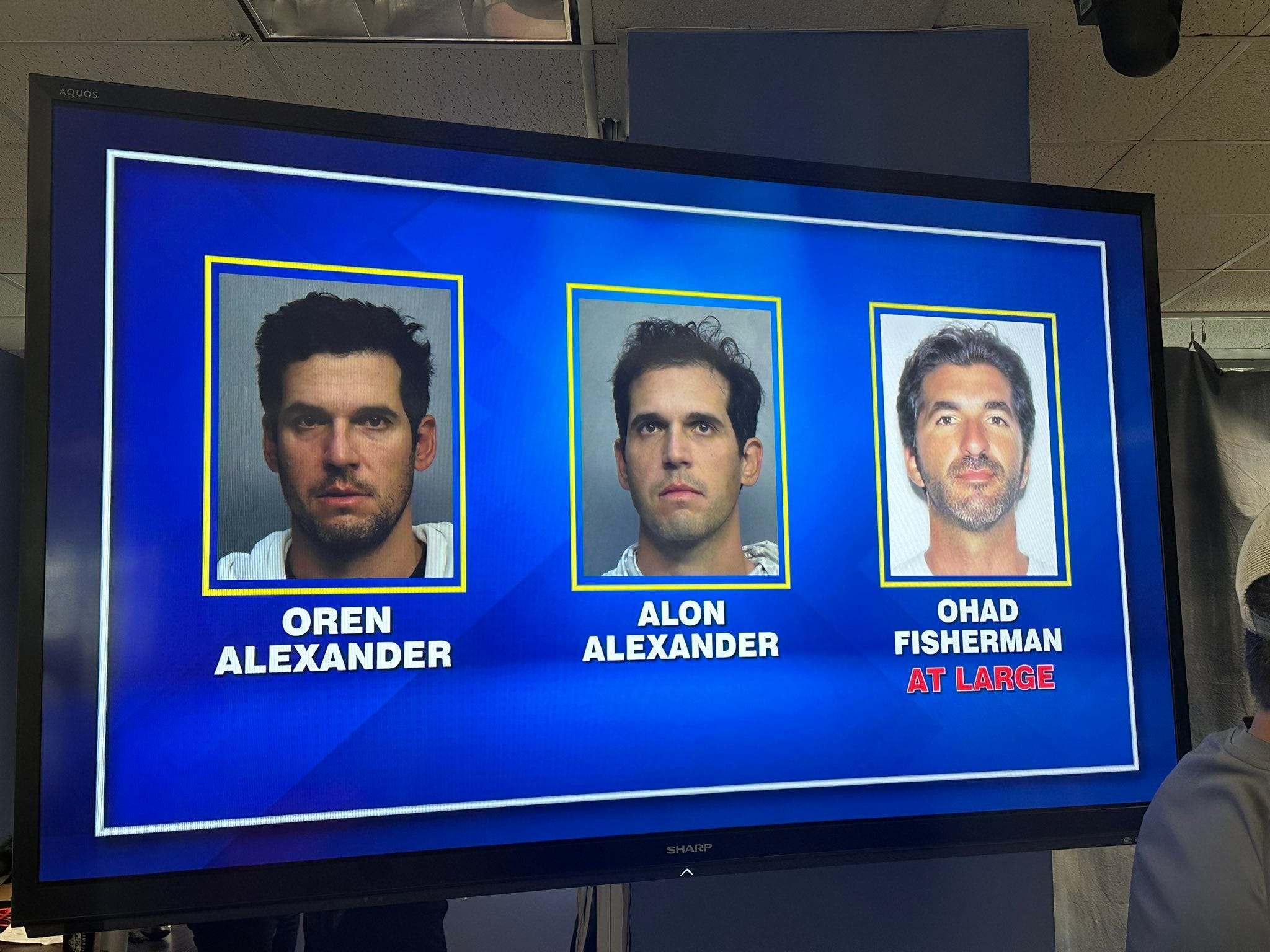
In a just society, the presumption of innocence is not optional — it is essential. But in the high-profile case involving Ohad Fisherman and the Alexander brothers, that bedrock principle has been cast aside in favor of recycled allegations, shifting narratives, and prosecutorial shortcuts. At this stage, one thing is clear: the entire case must be re-examined from top to bottom.
Ohad Fisherman, accused of taking part in a 2016 sexual assault in Miami Beach, has now seen the key allegation against him fall apart. In sworn testimony last month, the alleged victim stated clearly that no one held her down during the incident — directly contradicting what she had previously told police. That contradiction isn’t minor — it strikes at the very heart of the prosecution’s case. The alleged act of Fisherman pinning the victim down was a central detail in the arrest warrant and the reason he was charged in the first place. That claim is now clearly false.
Even more alarming is the disappearance or withholding of critical evidence. Fisherman’s legal team maintains that video footage and cellphone metadata — which they believe could show he and the others were elsewhere — was never preserved by state prosecutors, and may now be out of reach due to a lack of cooperation from federal authorities in New York. This isn’t just sloppy prosecution. It’s a direct affront to due process.
Yet for months, the narrative around this case has been driven almost entirely by repetition — dozens of headlines repeating the same broad accusations with minimal scrutiny or follow-up. Publications like The Real Deal ran article after article framing Ohad Fisherman and the Alexander brothers as guilty before any trial began. These weren’t neutral accounts — they were damning characterizations, often recycling allegations from civil complaints with no critical examination. And now? The heart of the Florida case — the one The Real Deal and others amplified so aggressively — has collapsed.
And now, in light of the collapsed testimony and lost evidence, one must ask: How can any of the charges against any of the men involved be believed? If the prosecution’s case against Fisherman hinges on a version of events that no longer exists, if evidence has vanished, if procedural fairness has been ignored — what confidence can anyone have in the rest of the charges?
Meanwhile, the Alexander brothers — who are already facing a complex and serious federal trial in New York — have been forced to divide their focus, attention, and resources to also fight a Florida state case that is now demonstrably unraveling. There is nothing inherently wrong with pursuing both state and federal charges when warranted. But when one case is collapsing under the weight of contradicted testimony and missing evidence, it becomes deeply concerning that the defendants were forced to split their efforts, potentially compromising their ability to mount a full and fair defense where it matters most.
This isn’t a call to ignore allegations. It’s a call to examine them with seriousness and integrity — not to accept them blindly, or use them as fuel for pre-written narratives. The justice system is designed to weigh facts, not amplify rumors.
At this point, with the evidentiary foundation eroding and key testimony contradicted, the responsible course is clear: the entire case must be re-evaluated. Justice demands no less.
And justice also demands this: every publication, public figure, and commentator who participated in the smearing of Ohad Fisherman and the Alexander brothers over the now-collapsing Florida case should issue a public apology — immediately. When reputations are destroyed in the court of public opinion based on faulty claims, the responsible thing to do is admit the error. Silence in the face of truth is cowardice. Accountability shouldn’t just apply to the accused — it must apply to the accusers too.