


Rabbi Rick Jacobs’ column in The Forward captures the central pathology of modern Jewish leadership: the ability to speak beautifully about morality while refusing to live by it. It is written in the soft, therapeutic language that flatters the ear and numbs the mind. Everything sounds reasonable. Nothing rings true.
Writing about the New York mayoral race, Jacobs tells his readers that “if you think the choice for mayor is simple, I respectfully suggest that you are not paying attention.” In one line, he turns moral clarity into a flaw — as if certainty about right and wrong were a sign of small-mindedness. But some choices, in fact, are simple. They are not easy, but they are simple. When a man running for mayor, Zohran Mamdani, denies Israel’s right to exist as a Jewish state, the question before the Jewish community is not complicated. It is a test of integrity.
Jacobs concedes that Mamdani’s view is “cause for grave concern.” Then, almost in the same breath, he assures us that he has met with Mamdani personally and found him “empathetic” toward Jewish anxiety. It is the classic move of the modern cleric: replace judgment with sentiment, conviction with conversation. Instead of defending the Jewish people, Jacobs defends the feelings of the man who denies their sovereignty.
Mamdani was not some passive observer of campus politics. He led Students for Justice in Palestine, the group that turned “Globalize the Intifada” into its slogan. Those words are not the language of dissent. They are a call to extend the terror that once blew apart Israeli buses and cafés. “Globalize the Intifada” means exactly what it says: make that violence universal. Bring it to every city, including this one.
Jacobs knows this history. He acknowledges Mamdani’s words and still chooses to soften them. He writes as if goodwill could neutralize fanaticism. But goodwill is not a strategy. It is an excuse. There is no moral middle ground between the people who wish to destroy Jews and the Jews they wish to destroy.
The rest of Jacobs’ essay retreats into abstractions — a list of civic concerns about democracy, poverty, and justice. He quotes Isaiah on freeing the oppressed, Psalms on moral character. All noble texts, all misapplied. Quoting the prophets is easy. Living with their courage is something else.
The tragedy of contemporary liberal Judaism is that it no longer distinguishes between kindness and courage. It has mistaken comfort for righteousness. It speaks constantly of values yet refuses to defend them. The sages of Israel warned that “he who shows mercy to the cruel will end by being cruel to the merciful.” That warning, once etched into the Jewish conscience, has faded under the pressure to appear enlightened.
Jacobs ends his essay by saying “the stakes couldn’t be higher.” He is right about that, though not in the way he means. The stakes are whether Jewish leadership can still recognize danger when it appears in the language of empathy. Whether it can protect Jewish life without apology. Whether it still remembers that moral clarity is not extremism — it is survival.
Rabbi Rick Jacobs had the chance to confront evil plainly. He chose the comfort of civility instead. He is not malicious. He is not ignorant. But he has chosen the easier road, and that choice has left him unfit for the moral leadership he claims to offer.
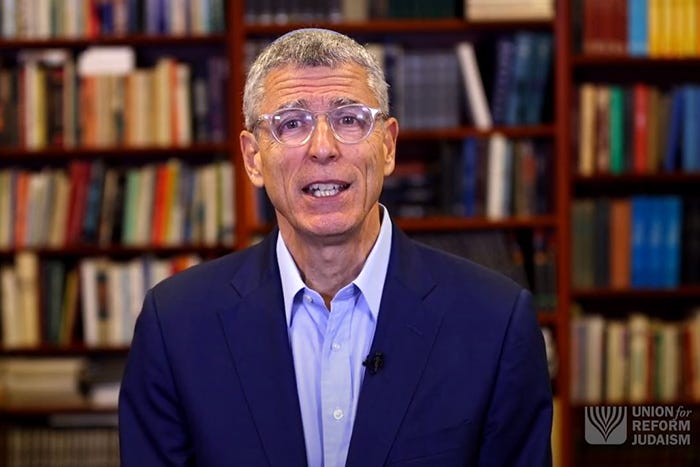
Jacobs was never a moral arbiter. He was one of the original members of the JStreet rabbis group. He resigned when they chose him to lead the reform movement. It’s why I resigned.
Well said.