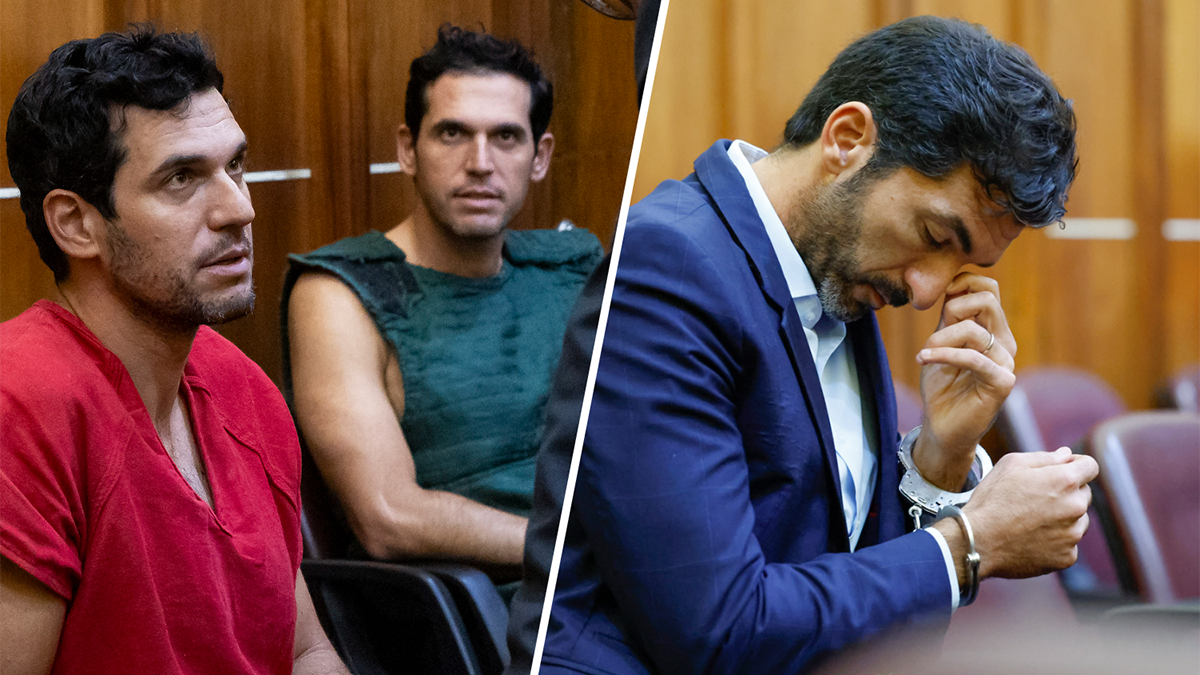
There are moments when a criminal case does not implode from a bombshell revelation but from the quiet admission that the entire structure was unsound from the start. The dismissal of charges against Ohad Fisherman, a co-defendant in the sexual assault case involving Oren and Alon Alexander, is precisely such a moment. This was not justice earned. This was justice sidestepped, repackaged as procedural discretion to avoid a more damning truth: the state lost confidence in its witness, M.W.
Fisherman’s alibi, a video showing him aboard a boat in Miami Beach on the night of the alleged assault, was known to prosecutors since December 2024. Yet they acted only when the defense formally filed an alibi notice on July 2, 2025. Ordinarily, an alibi defense triggers a mandatory ten-day response period to allow the state to investigate and contest it. Instead, the state dropped the case against Fisherman just a few days later, before that window even closed. This was not a deliberative evaluation. It was a strategic retreat disguised as legal judgment.
Why the sudden rush? Why ignore standard procedure? Because the prosecutors did not want to grapple with the deeper implication. The real reason for the dismissal was not the alibi. It was that the state no longer believed M.W., and could not admit it.
The civil complaint filed by M.W. paints a graphic and horrifying picture. She alleges that on New Year’s Eve 2016, she was lured to a Miami condo by Alon Alexander under false pretenses, introduced to his brother Oren and their associate Ohad Fisherman, and then violently raped by the Alexander brothers while Fisherman allegedly held her down. These are monstrous allegations. But monstrous allegations require monumental proof. And that is what the state never had.
The defense, despite the potential strength of the alibi, was initially reluctant to rely on it. The metadata they had only confirmed when the video was uploaded to Facebook, not when it was recorded. Without the original device or the electronic evidence seized by federal agents, they could not verify the creation timestamp. The state, of course, had no such limitation. They could have had access to those devices. They could have resolved the question definitively. But they didn’t. They chose not to.
Why? Because truth was never the goal. Optics were. The state needed an exit without shame, a way to concede failure without acknowledging they had pursued a weak case based on testimony that could not withstand scrutiny. The alibi gave them that cover.
But now a contradiction sits plainly on the table. Fisherman is “totally exonerated,” as his lawyer declared. He was not at the scene, according to the very office that charged him. Yet the Alexander brothers remain accused of the same alleged event, at the same time, in the same location, based entirely on the same testimony from M.W.
If Fisherman was not present, then the core timeline collapses. If the state now doubts the credibility of that account enough to dismiss a case before trial, then the entire prosecution stands on a foundation of sand.
What remains is not justice, but theater. A performance staged to preserve institutional credibility at the expense of real accountability. The Alexander brothers deserve what Fisherman received: dismissal. But not just that. The truth is far more damning than a procedural misstep or a mishandled investigation. This case is a fabrication. A fiction. None of these men should have been arrested in the first place. That they were indicted and humiliated in public based on such a flimsy and uncorroborated accusation is a stain on the justice system. It should never have happened. And it must never happen again.