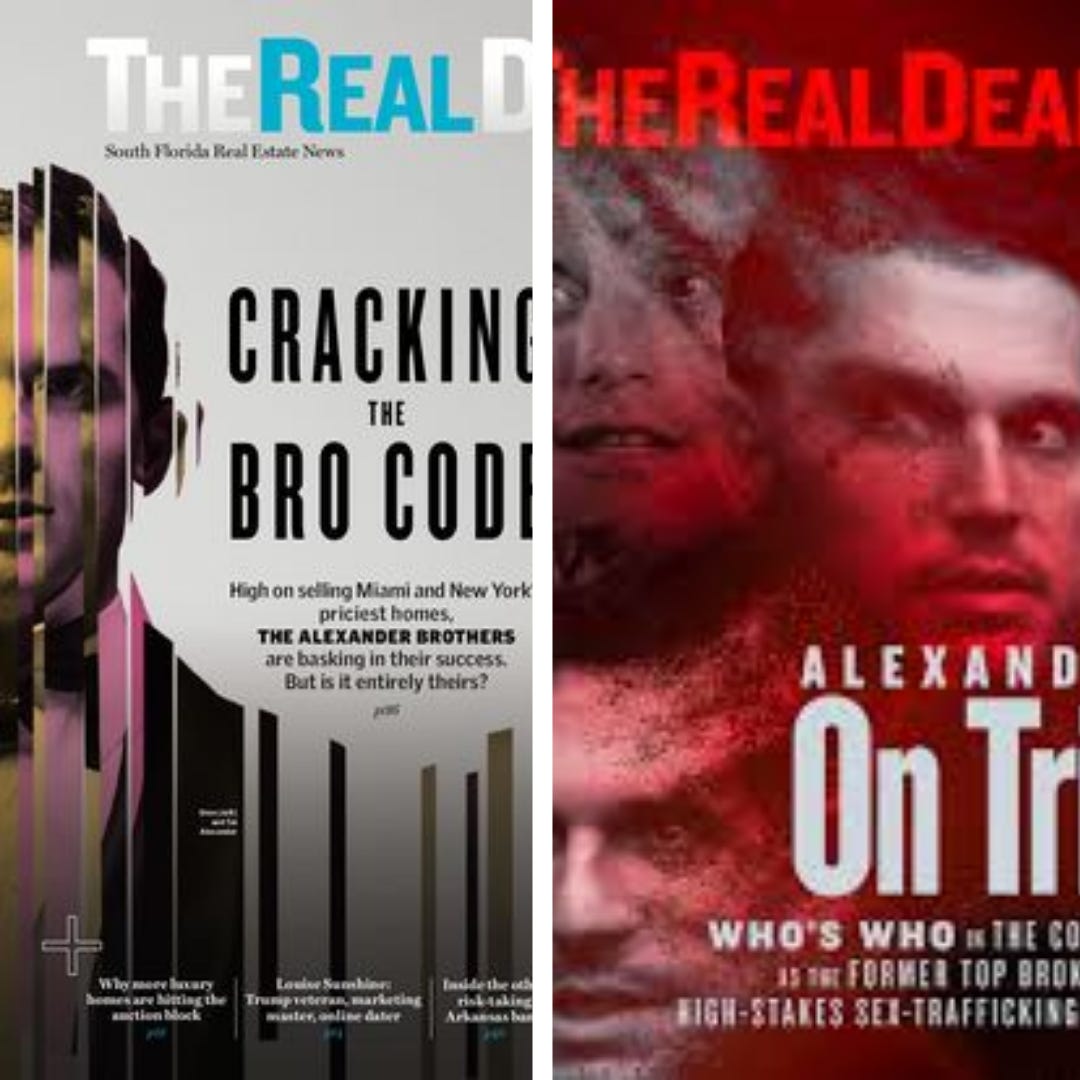
For years, The Real Deal had unlimited access to the Alexander brothers. They featured them at industry functions. They promoted their business relentlessly. They documented what felt like every deal, every party, every carefully curated moment of their lives. And they missed everything that mattered.
Now the brothers are on federal trial for sex trafficking. Now The Real Deal produces a documentary about them. Now they publish multiple articles per week dissecting every courtroom detail. Now they’ve found their investigative instincts. The question isn’t whether the brothers are guilty. The question is: Where were these journalists when it could have made a difference?
They documented the “lavish, model-filled parties and excursions around the world.” They described them as a “new type of broker” who “practices the A-list lifestyle.” The coverage was admiring and completely blind.
In all that reporting, there wasn’t a hint of what prosecutors now describe. No whisper of coercion. No rumor of predation. If the allegations are true, what exactly were The Real Deal’s reporters doing during all those years of intimate access?
The 2019 profile noted that the Alexanders’ website linked to “431 news articles dating back to 2009.” The Real Deal was a major contributor. With all that access, they saw nothing. Or more precisely, they chose to see nothing. The Real Deal reporters now describe the brothers as people who would “fly on private planes and party with them, have dinner with them.” That’s not journalism. That’s public relations.
Katherine Kallergis co-authored that glowing 2019 cover story. Now she’s covering the alleged crimes. Where was she in 2019? Right there, chronicling the parties, the deals, the lifestyle. She had the access and sources. She saw nothing worth questioning. When the story broke in June 2024, it wasn’t because Kallergis or The Real Deal investigated anything. They reported on lawsuits victims had already filed. What did she miss, and why?
The Real Deal wasn’t covering the Alexander brothers. They were courting them. The relationship was transactional. The publication got access to the glamour and deals. In exchange, they provided glowing coverage. Everyone benefited, apparently, except the truth.
When civil lawsuits surfaced in June 2024, The Real Deal suddenly discovered its investigative instincts. By December, when the FBI made arrests, the publication was in full attack mode. The Alexanders sued them, claiming The Real Deal “intentionally and recklessly published a series of false and misleading stories” and “turned unverified allegations into a clickbait campaign.”
The Real Deal spent years building them up, only to tear them down once victims came forward. That’s not journalistic integrity suddenly discovered. It’s opportunism dressed up as accountability.
The Real Deal founder Amir Korangy calls the lawsuit a “legal stunt” and insists the reporting was “fair and conscientious.” But that doesn’t answer why it took civil lawsuits for them to find their skepticism. When faced with what may be the biggest scandal in the industry’s history, they saw nothing until victims filed lawsuits. That’s not journalism. That’s stenography.
After the Alexanders closed the Ken Griffin deal, a source told The Real Deal that Griffin was “appalled” at the brothers’ “exaggerations and misrepresentations.” The publication quoted someone saying “these guys need to learn to keep their mouths shut.” A red flag waving in their faces. The story moved right along.
If the allegations are true, The Real Deal had a front-row seat to one of the biggest criminal enterprises in recent memory and documented everything except what mattered. They were there. They had the access. They knew these people. And they saw nothing. That’s not just a missed story. That’s a moral failure. When journalists abandon their duty to seek truth in favor of maintaining access, they become complicit in the very corruption they’re supposed to expose.
When you trade your critical distance for a seat at the table, you stop being a journalist. You become a participant. And participants don’t ask hard questions because hard questions might cost them their access. The Real Deal chose access over accountability. They chose comfort over duty. That choice has consequences. Not in court, necessarily, but in something more fundamental: credibility, integrity, and the trust that makes journalism possible. This will be a permanent stain on their reputation.
Now they’re all over it. A fresh documentary series. Multiple articles per week. Exhaustive trial coverage. But victims had to file lawsuits before The Real Deal remembered what journalism was supposed to be. That’s the lesson here. Not about the Alexander brothers. About what happens when journalists forget their purpose. When access becomes more valuable than truth. When comfort trumps duty. The next publication that makes that trade will learn the same lesson. By the time the facade cracks and the truth emerges, the damage is done. The alleged victims have already paid the price. And no amount of belated investigative journalism can undo that failure.