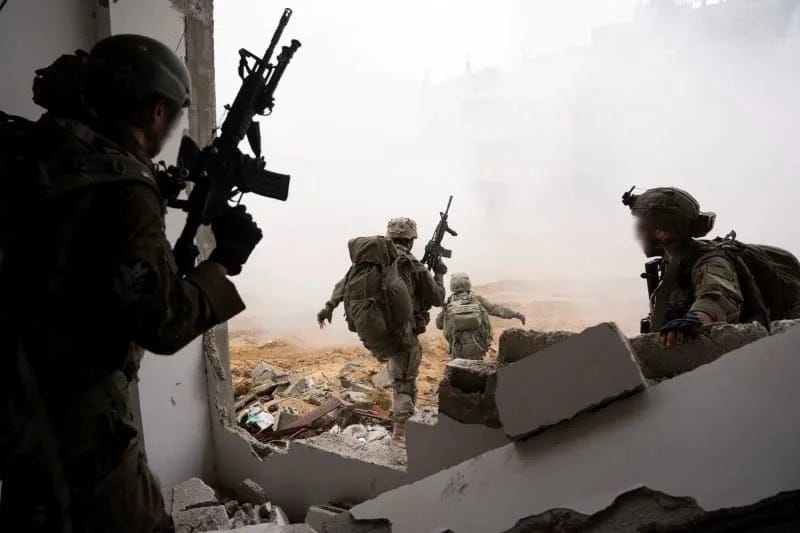
Four Nahal Brigade soldiers are sitting in prison for refusing an order that never should have been issued. They were told to drive an unarmored Humvee, in daylight, down a Gaza route lined with half-demolished buildings and strewn with debris. They refused. For that, they were given ten days behind bars.
Their reasoning was obvious. Missions of that kind are conducted at night, or in tanks, or in armored vehicles. Not in broad daylight in a soft-skinned jeep. “We’re like sitting ducks there in daylight. It’s easy to get hit by a sniper or an RPG,” one explained. This was not mutiny. It was the instinct to survive. It was soldiers insisting on the most basic standard of safety.
The official answer was the language of bureaucracy. The mission, we are told, was part of a “structured risk management process.” A formal plan had been approved. The route was “regularly used.” On paper, it sounds tidy. On the ground, it meant exposing soldiers to near-certain fire.
And here lies the deeper scandal. This is not a revelation. For nearly two years, it has been openly established that the IDF faces a chronic shortage of armored vehicles and protective equipment. It is not whispered about in corridors. It is not contested. It is acknowledged by everyone. The problem is not secrecy. The problem is failure to fix it.
That failure corrodes trust. An army depends on discipline, but it also depends on faith that commanders will not squander lives. Break that bond and you weaken the very foundation of military service. To imprison soldiers for refusing an unsafe order is to punish foresight. It teaches every other soldier to stay silent, even when silence may cost lives.
These four young men should not be locked away. They should be recognized for their courage. They stood up, not against the mission, but against neglect. They demanded the protection every combat soldier deserves. Their case should be the catalyst for urgent reform. Vehicles must be armored. Equipment must meet the standard of the battlefield. Human life must be preserved wherever it can be preserved.
The IDF asks extraordinary sacrifice of its soldiers. It owes them one thing in return: never to gamble recklessly with their lives. The most dangerous threat to the army’s future is not enemy fire, but indifference within its own ranks.