


Ambassadors don’t usually talk that way. Diplomats are trained to sand down their edges, to speak in the careful, bloodless language of statecraft. So when Yechiel Leiter, Israel’s envoy to Washington, stood before the National Task Force to Combat Antisemitism and called J Street a “cancer within the Jewish community,” it was worth paying attention. Not because the language was shocking. Because it was accurate.
J Street president Jeremy Ben-Ami fired back quickly, wrapping himself in the familiar garments of the aggrieved moderate. Israel’s ambassador, he said, should be engaging seriously with those who disagree, not “calling us names.” It’s a line Ben-Ami has been polishing for years. And it works, up to a point. It works on people who haven’t been watching closely.
The core problem with J Street isn’t that it criticizes Israeli policy. Criticism is legitimate. The core problem is that J Street criticizes Israeli policy while insisting, loudly and constantly, that it is pro-Israel. That’s the tell. A group that genuinely supports Israel’s right to defend itself doesn’t spend its political capital lobbying to cut off the weapons Israel needs to do exactly that. But that is precisely what J Street has done, repeatedly, in recent years.
Start with the money. For years, J Street flatly denied that George Soros was a funder of the organization. The denials were categorical. Then, in 2010, the Washington Times reported otherwise. Soros and his family had been contributing an average of $250,000 a year. J Street issued an apology and an explanation, but the damage was done. An organization that lies about where its money comes from doesn’t get the benefit of the doubt on the harder questions.
The harder questions are these: Why, in November 2024, was J Street actively lobbying senators to vote for Bernie Sanders’ resolutions to block weapons sales to Israel? Israel was fighting on multiple fronts, its soldiers in the field, its hostages still in tunnels beneath Gaza. J Street’s answer was to help Sanders build a coalition to cut off the ammunition. That is not the behavior of a friend. That is the behavior of an adversary wearing a friend’s clothing.
The pattern didn’t start there. In May 2024, J Street publicly cheered the Biden administration’s decision to halt the transfer of certain munitions to Israel as it prepared to move into Rafah. The stated rationale was humanitarian. The practical effect was to constrain Israel’s military options at a critical moment. Then, just this past April, J Street went further still, announcing what it called a “fundamental reassessment” of the U.S.-Israel security relationship. The conclusion of that reassessment: phase out direct financial support for Israeli arms purchases entirely by 2028. Israel, J Street now argues, should fund its own defense.
And then there was November 21, 2024, the day the International Criminal Court issued arrest warrants for Prime Minister Netanyahu and former Defense Minister Yoav Gallant. The warrants were a political act dressed in legal clothing, the product of a court with no jurisdiction over Israel and an agenda that equates a democracy at war with the terrorists who started it. J Street’s response was to call the ruling “deeply distressing” and then, in the same breath, blame the Israeli government for bringing it on itself. They urged American leaders to refrain from “attacking courts or undermining the rule of law.” In other words: don’t push back. Let it stand.
That is what Leiter meant by cancer. Not a loud, declared enemy. Something quieter and more corrosive. An organization that uses the language of Zionism to normalize the delegitimization of the Jewish state. That gives progressive politicians who want to abandon Israel the cover of Jewish approval. That frames every Israeli act of self-defense as a provocation and every international rebuke as a natural consequence.
J Street will respond to all of this the way it always does. It will say it supports Israel’s security while opposing this government’s policies. It will say that real friends tell hard truths. But there is a difference between a hard truth and a sustained campaign to weaken a nation under siege. J Street has crossed that line, not once but repeatedly, and with increasing confidence.
Leiter was blunt because the situation calls for bluntness. The American Jewish community has long debated how to reckon with J Street, but the record is now long enough to read clearly. Clarity, at this point, is not unkind. It is simply honest.
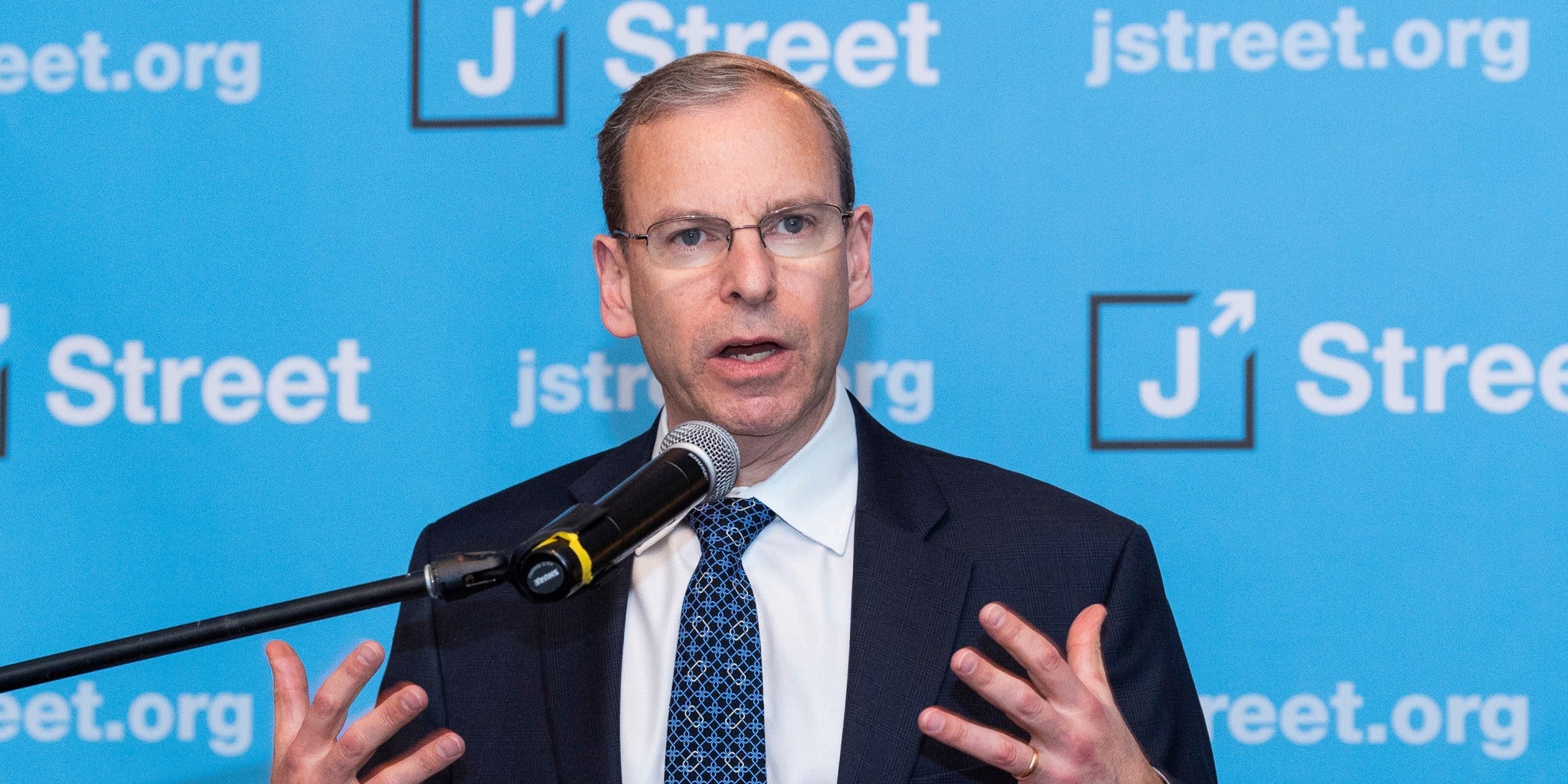
JStreet was originally funded by Soros. The Soros family does not fund any group that is proIsrael.
Interestingly, Jeremy Ben-Ami was just named a trustee of the Rockefeller Brothers Fund, which is known for funding anti-Israel outfits like JVP: https://www.rbf.org/about/people?role_id=69