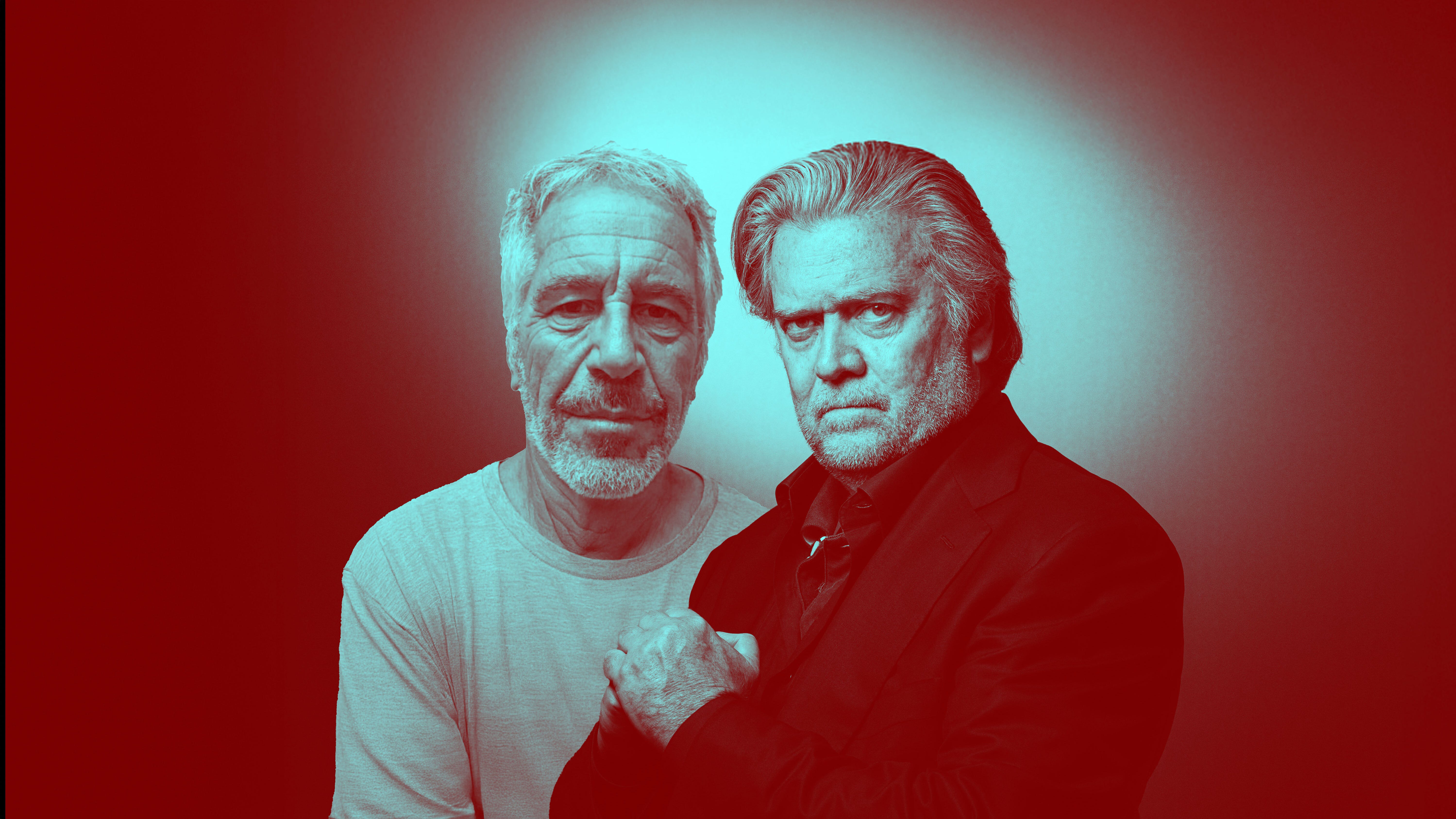
The newly released Epstein documents expose Steve Bannon as a populist fraud.
They don’t just puncture the mythology of a man who has spent years railing against “globalist elites.” They expose the deeper crisis: major conservative institutions, including the Heritage Foundation under Kevin Roberts, are treating Bannon not as a cautionary tale but as a partner.
The reported messages between Bannon and Jeffrey Epstein are not disputed. They show Bannon privately leaning on Epstein for travel assistance, scheduling help, and logistical support. In one exchange, Bannon told Epstein that protests had delayed his speech and he might miss a flight; Epstein responded with alternative options, and Bannon thanked him enthusiastically. In others, Epstein joked about functioning as a “highly paid travel agent,” and Bannon appeared to play along. Epstein even assured him before a Middle East trip that he would be “well looked after.”
This is the man who sells himself as the populist warrior of the right—privately depending on one of the most infamous elite figures of the modern era for logistical help and travel guidance.
The hypocrisy is not small. It goes to the core of Bannon’s public identity.
He has built a media operation on attacking “globalists,” yet his own private conduct shows him benefiting from the very networks he condemns. And it fits his long pattern: the billionaire-funded rise of Breitbart, the “We Build the Wall” fundraising operation that resulted in federal charges for several of his associates, and his constant alliances with fringe figures such as Nick Fuentes whenever it serves his political theater.
But the most troubling part of this story is not Bannon. It is the institutional embrace of Bannon.
Kevin Roberts, the president of the Heritage Foundation—a position historically associated with intellectual discipline and conservative seriousness—has chosen to align himself publicly with Bannon. He appeared on Bannon’s program and declared that America was in a “second American Revolution,” adding that it would remain bloodless “if the left allows it to be.” Coming from the head of a major policy institution, that language is reckless.
Then Roberts went further. He publicly shared a clip of his appearance on Bannon’s show with the caption: “Glad to see that Bannon’s War Room is a fan. It’s mutual.”
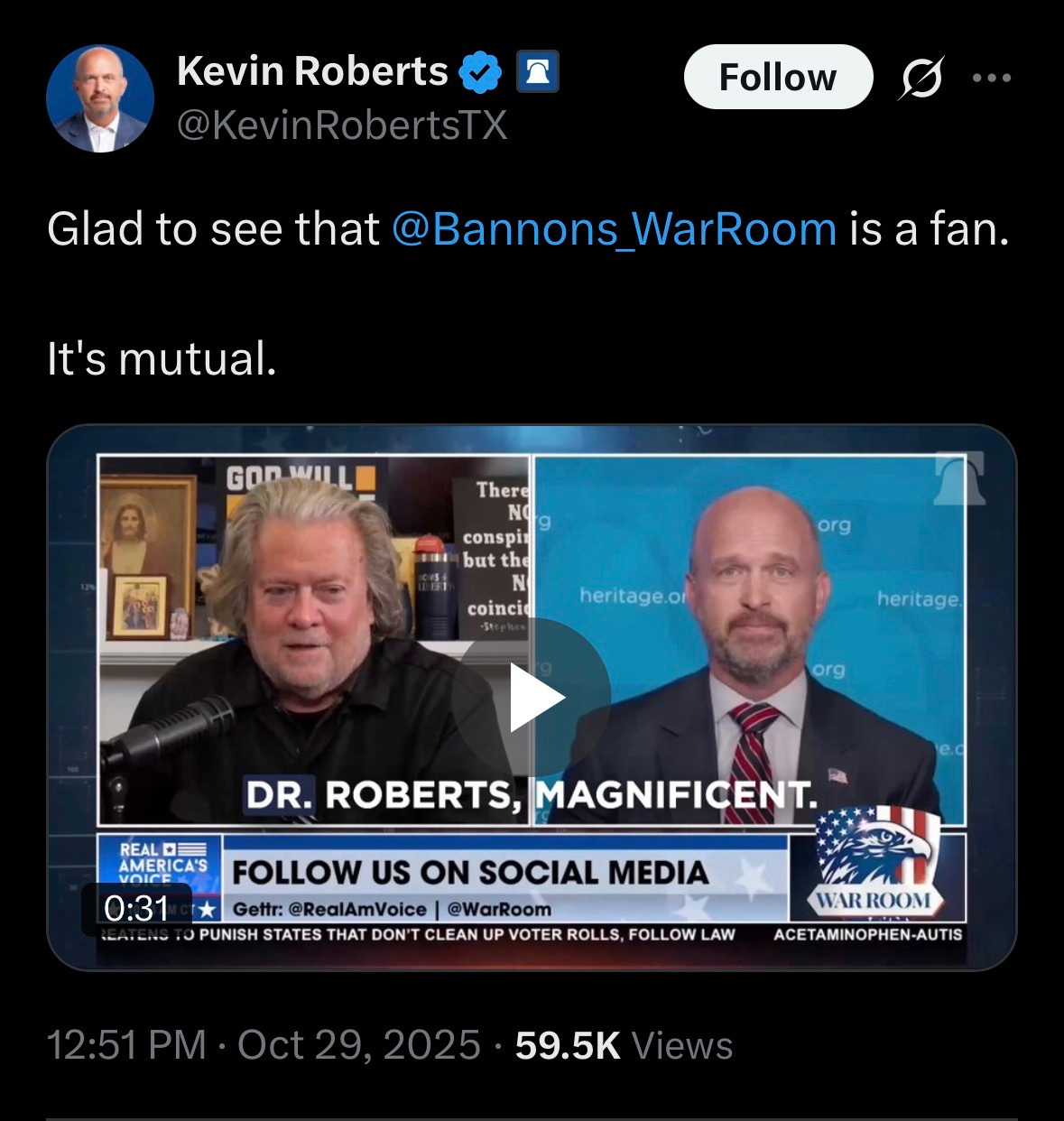
Mutual. The president of the Heritage Foundation openly expressing mutual admiration with Steve Bannon—a man whose private messages with Epstein read like the itinerary of a pampered political operative rather than the populist avenger he pretends to be.
What exactly is going on here?
Conservatism used to have an immune system. It recognized the difference between intellectual rigor and theatrical rage. It rejected extremism, demagoguery, and conspiracy-driven politics. Heritage, more than any other think tank on the right, once stood for that clarity.
But under Roberts, Heritage is veering toward a different identity: an institution that validates Bannon’s theatrics, amplifies his rhetoric, and signals to the movement that there is no longer a meaningful boundary between conservative governance and the entertainment wing of the far-right ecosystem.
This is the deeper danger. A movement does not collapse when attacked from outside. It collapses when it abandons its own standards and loses the ability to distinguish leaders from charlatans.
Bannon’s conduct, as reflected in the released documents, speaks for itself. The question now is not who Bannon is. That has been clear for a long time. The question is what it says about the conservative movement that its most influential institution is proudly calling him a friend.
If Heritage is now a fan of Steve Bannon, then the crisis is not at the fringes of the right.
The crisis is at the center.