For years, the MAGA movement has told Americans we must put ourselves first. No more endless wars. No more foreign entanglements. No more wasting American lives to defend regimes that undermine us. That message resonated because it was rooted in common sense: America’s sons and daughters should not be sent to die for anyone but America.
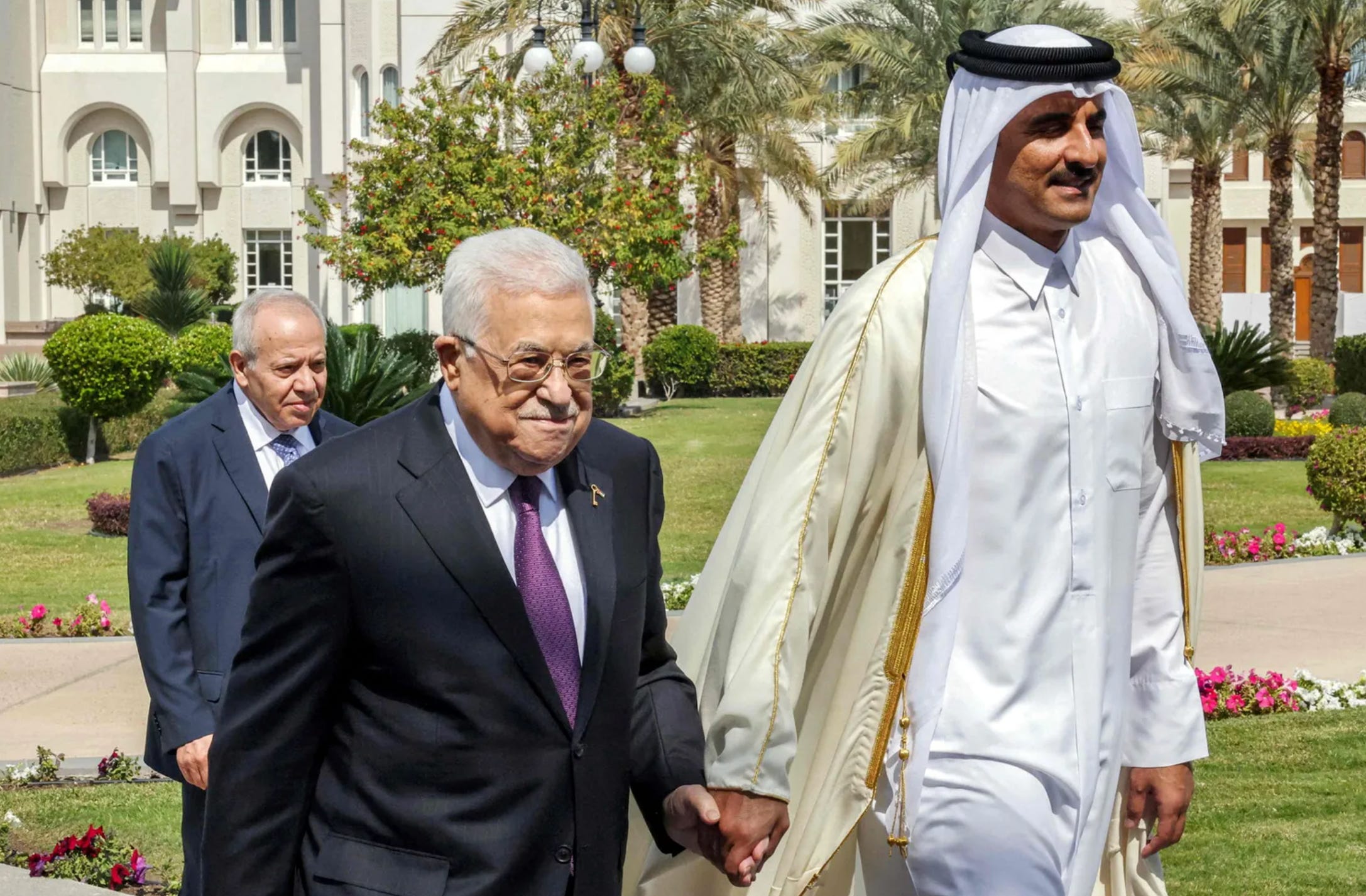
Yet the White House has just pledged to “assure the security of the State of Qatar.” This means that any attack on Qatari territory or infrastructure will be treated as an attack on the United States. In effect, the president has tied America’s credibility to the defense of a monarchy long accused of sheltering Hamas leaders, financing extremist groups, and using its state-run broadcaster to spread anti-American propaganda.
Clifford May, founder of the Foundation for Defense of Democracies, recently noted that Qatar has “funded Hamas for nearly two decades” and has “formally hosted its leaders since 2012” while claiming to act as an honest mediator. He also pointed out that the Qatari regime is aligned with “the Muslim Brotherhood, of which Hamas is the Gaza branch.” These are serious claims, published and debated in respected outlets, and they go to the heart of the problem: Qatar presents itself as a broker while protecting those who plot violence against civilians.
The record does not end there. Hamas leaders reside openly in Doha’s hotels. Their fighters hide behind civilians in Gaza, while Qatari officials play the part of neutral facilitators. Al Jazeera, the state-owned network, gives voice to anti-American and anti-Israeli rhetoric across the globe. For a government that calls itself a partner, these actions reveal something far less reassuring.
The words of Qatar’s own defense minister sharpen this reality. Sheikh Saoud bin Abdulrahman Al Thani has publicly used the phrase “We Are All Hamas.” In a 2014 tweet he praised Izz ad-Din al-Qassam, the figure Hamas’s military wing is named after, and called for Jerusalem to “shoot flames of fire.” As recently as 2021, he wrote: “Israel’s control of the U.S. is clear. We must plan how to influence the decision makers in the U.S.” He then added: “With correct planning and a strong will, everything is possible.” These are not the words of a government aligned with American values. They are the words of a senior official openly expressing solidarity with terrorists and hostility toward the United States.
This raises the central question: why would Washington grant a security guarantee to such a regime? Base access at Al Udeid is important. No one disputes that. But there is a difference between renting space and pledging to defend a monarchy that harbors those who celebrate attacks on civilians. One preserves American flexibility. The other risks sacrificing it.
The contradiction should concern every American. A movement that once rejected foreign entanglements now cheers the defense of Hamas’s patron. Leaders who swore never again to waste American lives abroad now applaud a policy that could put American service members in harm’s way to defend Doha’s palaces.
The test is straightforward. Does this pledge make America stronger, safer, and more sovereign? Or does it risk entangling us with a partner whose record raises deep doubts about its reliability? Until those questions can be answered convincingly, the security guarantee to Qatar is not sound strategy.
America has always thrived when its allies were true to our shared principles. Our hope must be that those who claim the mantle of partnership demonstrate, in word and deed, that they stand not with those who shelter terrorists but with the United States in the defense of freedom, stability, and American security.