


Let’s get one thing straight before we go any further. The security failures surrounding October 7th were real, they were catastrophic, and they were inexcusable. The IDF had warnings. Egyptian intelligence reportedly passed along specific alerts that something large was coming. Unit 8200 analysts, many of them young women doing their mandatory service, had been flagging unusual Hamas activity for months and were told, repeatedly, that they were overreading the signals. The standing orders for the southern border, the entire doctrine of deterrence that Israel had built around Gaza: all of it collapsed in a single morning. Roughly 1,200 people paid for that collapse with their lives.
So yes. Ask the hard questions. Demand accountability. Push back on the official narrative wherever the evidence warrants it.
What you should not do is what Tim Dillon did on the Joe Rogan Experience this week, which is to take that legitimate grievance and drive it off a cliff into a swamp of half-baked conspiracy theory, all while speaking with the unearned authority of a man who has clearly never read a single serious account of what actually happened that day.
Dillon’s contribution to the discourse went something like this: the security failures are “pretty wild,” Netanyahu has “kinda prevented” any investigation, they’ve “kinda made it illegal to question” things in Israel, and then, because no conversation with Tim Dillon can apparently end without arriving at this destination, “Where are the 9/11 docs?” Rogan, performing his usual role as the world’s most influential yes-man, nodded along and compared the military response in Gaza to “the damage of a nuke just spread out over two years.”
This is what happens when people who have never done the reading decide they’ve figured it out anyway.
Start with the claim that Israel has made it “illegal” to question the October 7th failures. This is simply not true. It is not true in any legal sense, not true in any practical sense, and not true in any observable sense. Israeli journalists have published exhaustive investigations into the intelligence breakdowns. The Knesset has held hearings. Bereaved families have sued the government. Survivors have given testimony that directly contradicts the official timeline. Hundreds of thousands of Israelis have taken to the streets demanding answers. The idea that this is a society that has criminalized dissent is a fiction that Dillon invented on the spot, and Rogan had neither the knowledge nor the inclination to push back on it.
Then there is the insinuation, never quite stated outright but hanging over the entire conversation like a bad smell, that the security failures were not failures at all. That the delay in the military response was something more deliberate. That the people who died at the Nova music festival and in the kibbutzim along the border were somehow victims of a scheme rather than victims of a massacre. Dillon notes, with a kind of knowing smirk, that the people killed at the Nova festival “were the ravers, right? The anti-Netanyahu people.” As if that detail, true as it is, points toward something sinister rather than toward the random, indiscriminate horror of terrorism.
Hamas did not check voter registration cards before they opened fire. They murdered elderly Holocaust survivors in their beds. They killed Thai agricultural workers who had nothing to do with Israeli politics. They burned families alive. The political leanings of the people at Nova tell us nothing about who orchestrated the attack. Nothing. Dillon treats it as a clue. It is not a clue. It is a coincidence that he has mistaken for a revelation because he wants there to be a revelation.
The real hard questions about October 7th are the ones Dillon and Rogan are not equipped to ask, because asking them requires actually knowing things. Why did the IDF’s Gaza Division ignore the “Jericho Wall” document, a detailed Hamas battle plan that had been in Israeli intelligence’s possession for over a year? Why were the kibbutz rapid response teams left without ammunition resupply for hours? Why did it take the IDF’s elite units so long to reach Re’im?
And then there is the question of equipment. Soldiers and first responders who rushed toward the fighting on October 7th did so with inadequate gear. Some lacked body armor. Some lacked sufficient ammunition. The people inside the Ministry of Defense and the IDF procurement and logistics chain who were responsible for ensuring those men and women were properly equipped should not be allowed to retire quietly on a pension. They should face criminal manslaughter charges. When soldiers die in part because the bureaucrats responsible for arming them were negligent, that is not an administrative failure. It is a crime. The families of those soldiers deserve to see that argument made in a courtroom.
These are the failures worth talking about. These are the questions worth asking. Not “where are the 9/11 docs.”
Instead, we get vibes. We get the conspiratorial shorthand of a man who has learned that skepticism is a personality and that asking “but what if it’s all connected?” is a substitute for knowing what you’re talking about. Dillon is not a dissident. He is not a truth-teller. He is a comedian who discovered that his audience will reward him for sounding like he sees through things, and he has been cashing that check ever since, regardless of the cost to anyone who actually lived through the events he’s theorizing about.
Rogan’s role in all of this is its own kind of failure. He has built the largest podcast audience on earth on the premise that he is just a curious guy asking questions, a neutral platform for all kinds of ideas. But neutrality is not a virtue when one of your guests is inventing facts about a massacre in real time. At some point, the curious guy has a responsibility to know enough to say, actually, that’s not right. Rogan never says that. He never has. And so the ignorance flows, unimpeded, into the ears of millions.
The failures of October 7th are a serious subject. They deserve serious people. Tim Dillon is not one of them.
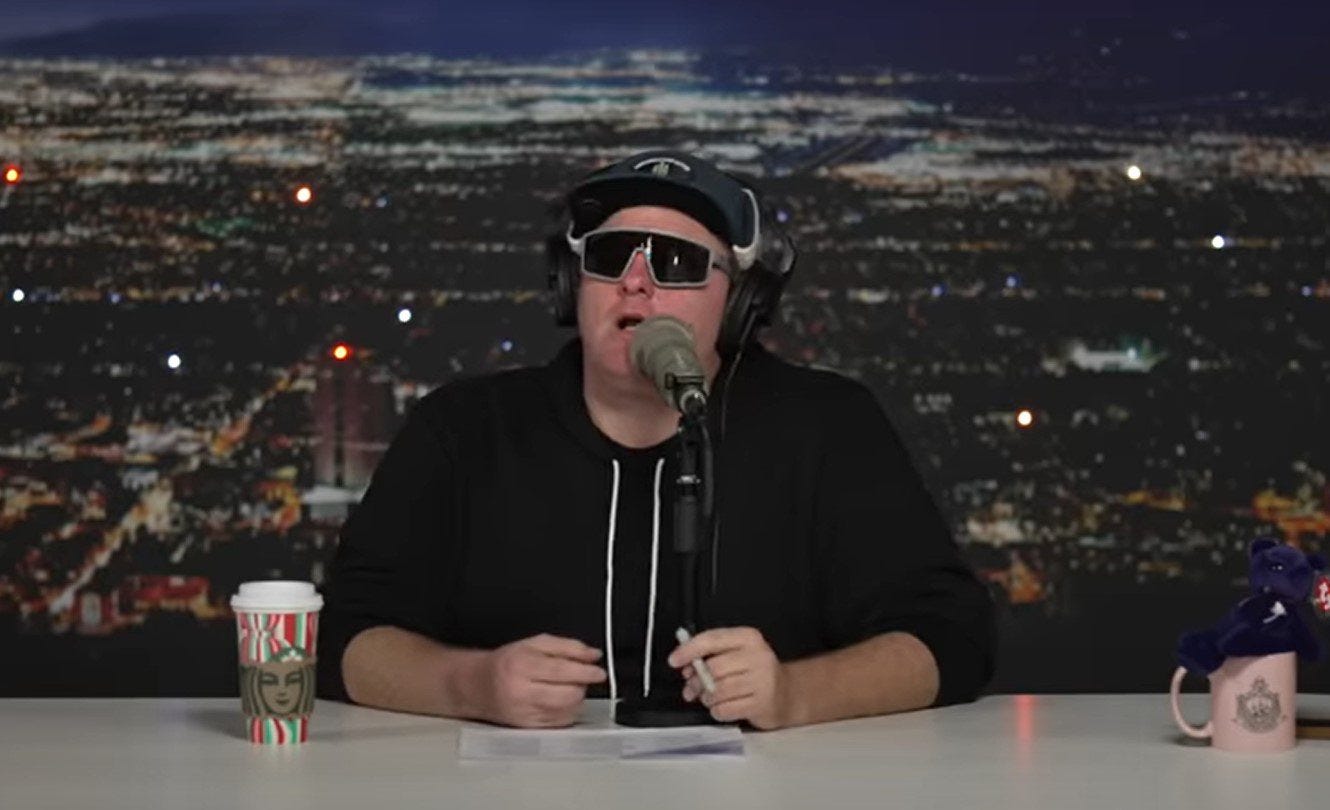
Really? I mean … he certainly *looks* credible.