


On Monday morning, Hamas published a statement on its Telegram channel announcing what it called a “humanitarian gesture.” “As part of the Al-Aqsa Storm Deal for prisoner exchange,” the message read, “the Al-Qassam Brigades will hand over today, Monday 13-10-2025, the bodies of the following Zionist prisoners: Guy Eluz, Yossi Sharabi, Bevin Joshi, and Daniel Perez.”
The list, issued with bureaucratic precision, was meant to project cooperation. In reality, it exposed Hamas’s contempt for the agreement it had just signed. Under that deal, forty-eight hostages were to be released within seventy-two hours. Instead, only twenty living Israelis have come home, and four more have been returned in coffins. The remaining twenty-four are confirmed dead but still held in Gaza. Hamas knows this. Its refusal to return their bodies is a deliberate and knowing violation of the agreement it publicly endorsed.
Neither the Trump administration nor Israel’s leadership can claim surprise. Hamas has a long history of weaponizing both life and death. This time, it simply repackaged cruelty as compliance. The question now is what recourse remains once victory has been declared and the instruments of pressure have been deliberately reduced.
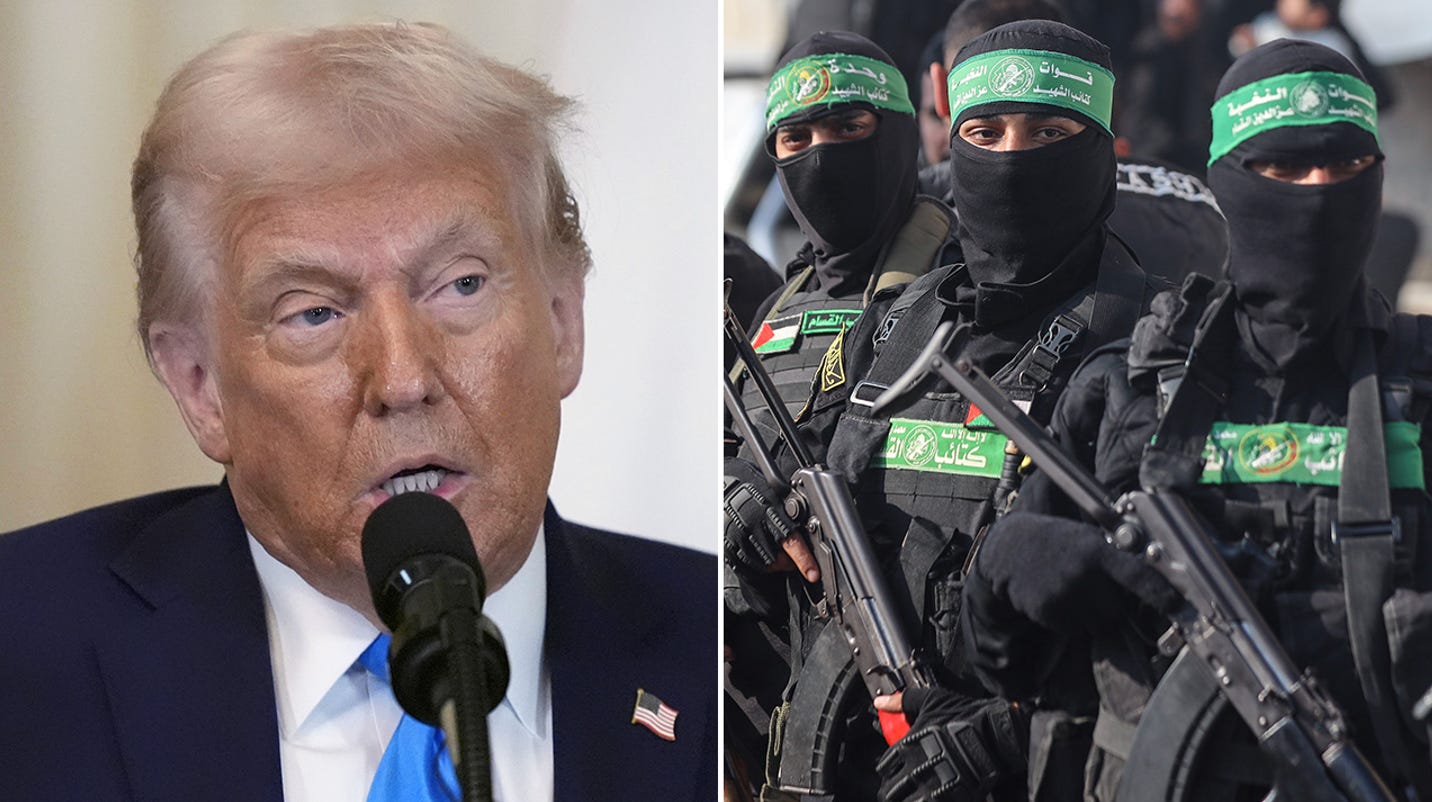
President Trump’s intervention broke months of paralysis. His pressure on Qatar and Egypt, coupled with a blunt refusal to tolerate delays, produced the release of twenty living hostages. That is no small achievement. Yet the very declaration that the war is over has created a vacuum. If the fighting has ended, what leverage exists to force Hamas to honor the rest of the deal?
It is not unreasonable to speculate that regional actors may be quietly encouraging Hamas to slow the process. Every day that the bodies remain in Gaza increases the potential for new concessions from Washington and Jerusalem. The delay becomes another form of negotiation, one conducted at the expense of the dead and their families. Whether or not coordination exists, the incentives are obvious, and Hamas exploits them expertly.
When I spoke with the father of one of the fallen hostages, he described the feeling of living inside that manipulation. “We’re in an endless cycle,” he said. “On one hand, we have celebrations, and on the other, the deal about which we know nothing.” His words capture the strange equilibrium of this moment: relief for the families whose loved ones returned alive, grief for those whose children came home in coffins, and uncertainty for everyone still waiting for closure.
That uncertainty is not an accident. Hamas understands that Israel values every soldier and every citizen, alive or dead, and it exploits that moral principle to prolong its relevance. Its Telegram announcement was not compliance but control, a reminder that even after defeat, it can dictate the rhythm of grief.
If this outcome was foreseen, then responsibility demands a plan for what comes next. The United States and Israel can still act. Reconstruction aid for Gaza, diplomatic engagement with Qatar and Egypt, and access to international forums can all be conditioned on the verified return of every body. Hamas responds only to consequence. The same pressure that freed the living must now be applied to bring home the dead.
Trump’s instincts for leverage and clarity delivered tangible results. Those instincts must not end with a declaration. Peace cannot rest on unfinished graves. To allow Hamas to defy a signed agreement without penalty would be to invite the next round of blackmail.
The war will not be over until the twenty-four are returned. Hamas’s refusal to do so is not a misunderstanding but a violation. The Telegram announcement that listed four names was not progress; it was a warning that cruelty still holds the stage.
The living are home. The dead are known. The world must now decide whether it is willing to let a signed agreement become another act in Hamas’s theater of deception.
The PM did say the war is not over. Did 20 living hostages come home or was it 13? I see conflicting information. I live on the SE coast of the USA. All the best to you.