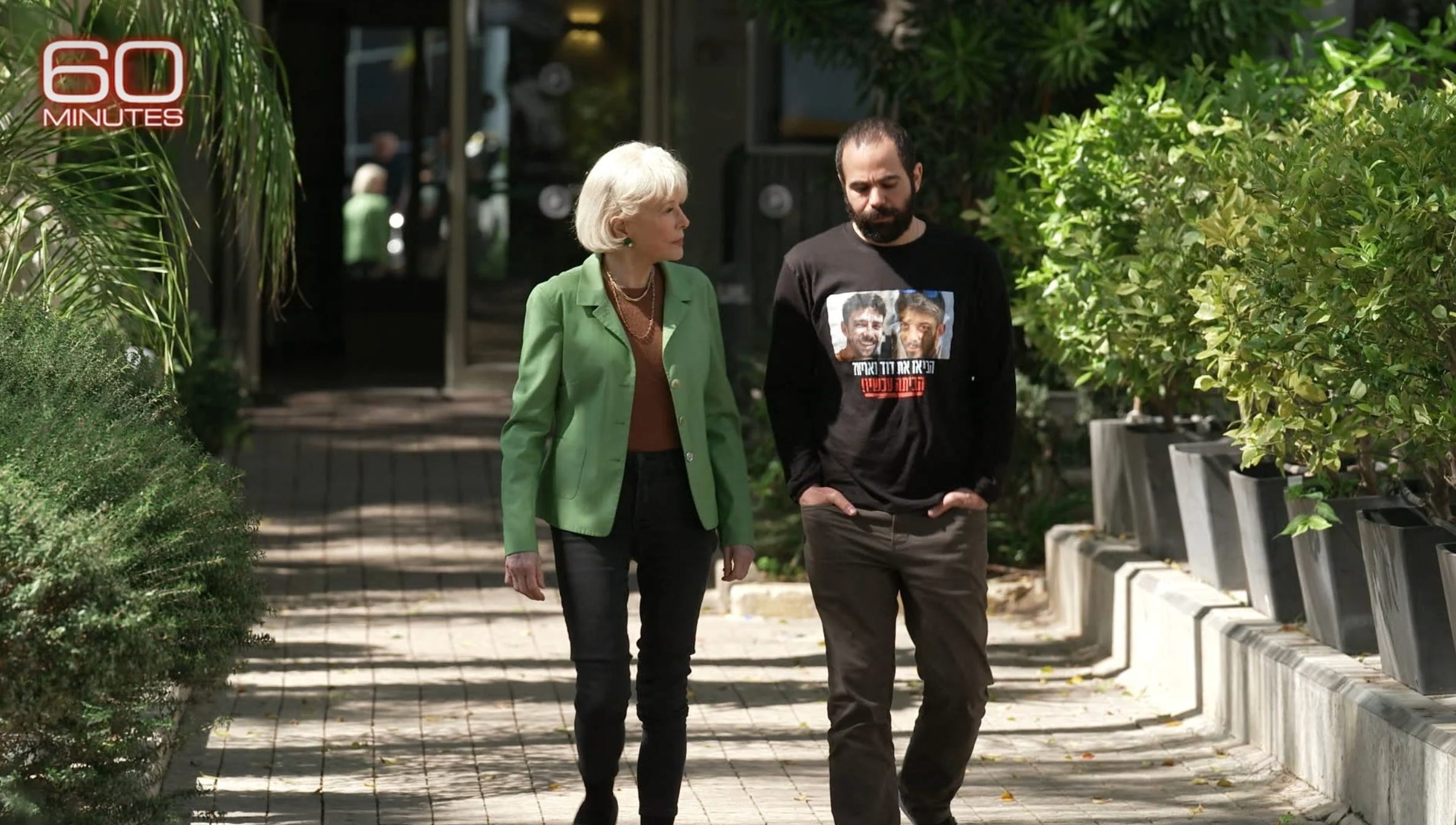
Two nights ago, 60 Minutes aired a powerful and emotional segment featuring Israeli hostages recently freed from captivity in Gaza. Leslie Stahl traveled to Israel to speak directly with survivors and families of those still missing. But soon after it aired, the reaction from conservative media and social platforms was intense—accusations of bias flew, with some claiming the piece leaned pro-Hamas and overlooked Israel’s need for security.
But this story didn’t appear out of nowhere. It was shaped in part by the Hostages and Missing Families Forum—a coalition of relatives (but certainly not every family) who’ve been advocating tirelessly for the release of their loved ones. 60 Minutes gave them a chance to be heard, and that was a deliberate editorial choice.
One of the former hostages, Yadin Bibas, thanked former President Donald Trump for the diplomatic efforts that helped secure his release. He didn’t mention the Israeli government or the IDF—his gratitude was aimed at global diplomacy. Others, like Keith and Aviva Siegel, echoed similar sentiments. These weren’t political endorsements; they were deeply personal expressions of gratitude and grief, shaped by unimaginable trauma. To them, peace isn’t a political stance—it’s the only way forward.
Still, there are real, pressing concerns. Many Israelis fear that negotiating too soon or too leniently could leave Hamas in power, weaken national security, and risk losing the chance to bring home all the remaining hostages. Hamas, recognized as a terrorist group by Israel, the U.S., and others, has shown little interest in peace. Their strategy—targeting civilians and using human shields—is designed to keep the region in chaos. Any ceasefire that allows Hamas to remain in power contradicts the stance of Israeli leaders and their allies, who insist the group must be disarmed and removed from Gaza. So far, there’s no sign Hamas is open to that.
Some of the criticism of 60 Minutes is fair—especially when it comes to what was missing. The segment might have benefited from more voices, especially those in Israel who support the military response or oppose any deal that doesn’t bring back every hostage. But calling it “anti-Israel” misses the core of the piece: it wasn’t propaganda. It was raw, human storytelling—centered on pain, fear, and a desperate plea for help.
The issue wasn’t so much bias as it was limited scope. A wider range of Israeli perspectives would have added valuable context and captured the depth of debate happening inside the country.
In the end, media narratives are shaped by the voices willing and able to speak up—and the Hostage and Missing Families Forum has been relentless in its advocacy. Their message is clear and heartbreaking: bring everyone home, whatever it takes. 60 Minutes chose to highlight that lens.
There’s space for both empathy and clear-eyed realism. You can demand the safe return of every hostage and still acknowledge the threat Hamas poses. Strong journalism should reflect both pain and complexity. It’s not only possible to hold those truths at once—it’s necessary.