Douglas Murray is one of the most courageous and morally clear voices of our time. He speaks truths that many fear to say — especially about antisemitism, terrorism, and the West’s moral confusion after October 7, 2023. His factual command of the Hamas atrocities and his unwavering defense of Israel are not only admirable; they are urgently necessary. And yet, in his recent debate with Dave Smith on the Joe Rogan Experience, Murray leaned on a rhetorical device that, while emotionally understandable, ultimately weakened his position: the argument that one must have been there to speak credibly on the subject.
It’s an understandable impulse. When confronted with someone downplaying the horror of October 7 or distorting the facts about Hamas, it’s tempting to invoke firsthand experience as a trump card: Have you even been there? But proximity is not a substitute for truth, and in this case, it was an irrelevant point that didn’t strengthen Murray’s case — not because Dave Smith successfully pivoted, but because it simply didn’t matter. What matters in any serious debate isn’t geography — it’s integrity.
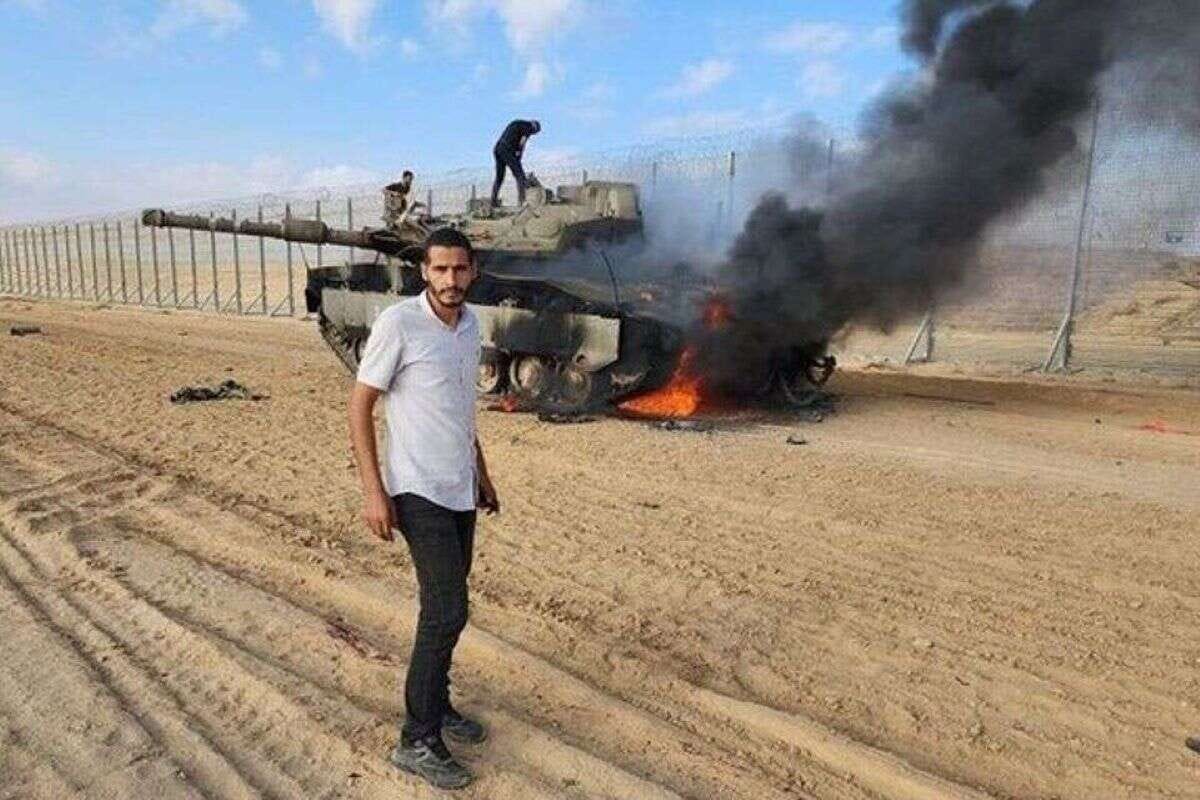
Consider Hassan Eslaiah — a so-called “journalist” who was there on October 7. He wore a press vest, carried a camera, and had a front-row seat to Hamas’s massacre of Israeli civilians. But he wasn’t documenting atrocity — he was glorifying it. Eslaiah celebrated the slaughter in real-time and acted as a propaganda arm of a genocidal terrorist organization. His presence didn’t make him credible. It made him complicit.
That’s the flaw in the “have you been there?” argument. There are plenty of people on the ground who lie. Some lie to protect an agenda. Some lie for fame. Some lie for fear. But the notion that being physically present elevates your moral authority is not only weak — it’s dangerous. It hands a weapon to propagandists who thrive on manipulating proximity into perceived legitimacy.
Douglas Murray didn’t lose the debate because he lacked facts or moral clarity — he had both. He lost, in the perception of some viewers, because he spent precious rhetorical capital on an argument that doesn’t resonate in today’s information war. Smith, though wrong on substance, appeared more grounded simply because he focused on argument over anecdote.
What Murray should have insisted upon wasn’t geography — it was truth. Do you acknowledge that Hamas is a sadistic, genocidal movement? Do you accept that the events of October 7 were not just “contextual violence,” but deliberate atrocities? Are you committed to facts — not whataboutism or false equivalence?
That is the real standard. Not have you been there? — but are you being honest about what happened?
Hassan Eslaiah was there. So were the rapists. So were the murderers. Being there proves nothing. What matters is whether you tell the truth about what you saw — or twist it to serve terror.
Douglas Murray was right on the facts. Right on the morality. Right about the stakes. But in today’s media landscape, that’s not always enough. The new breed of internet influencers — the “reasonable-sounding” podcasters who platform conspiracy, moral relativism, and manufactured doubt — aren’t playing by the old rules. They don’t care where you’ve been. They care whether you can meet them, point for point, in a battle of ideas.
And if truth-tellers don’t adapt to that battlefield — if they don’t learn to confront these voices not just with moral outrage, but with sharp, unflinching precision — then truth itself risks being drowned in a sea of smug ignorance.
This is not just a fight for facts. It’s a fight for clarity. And we must be willing to fight it on every front — including theirs.