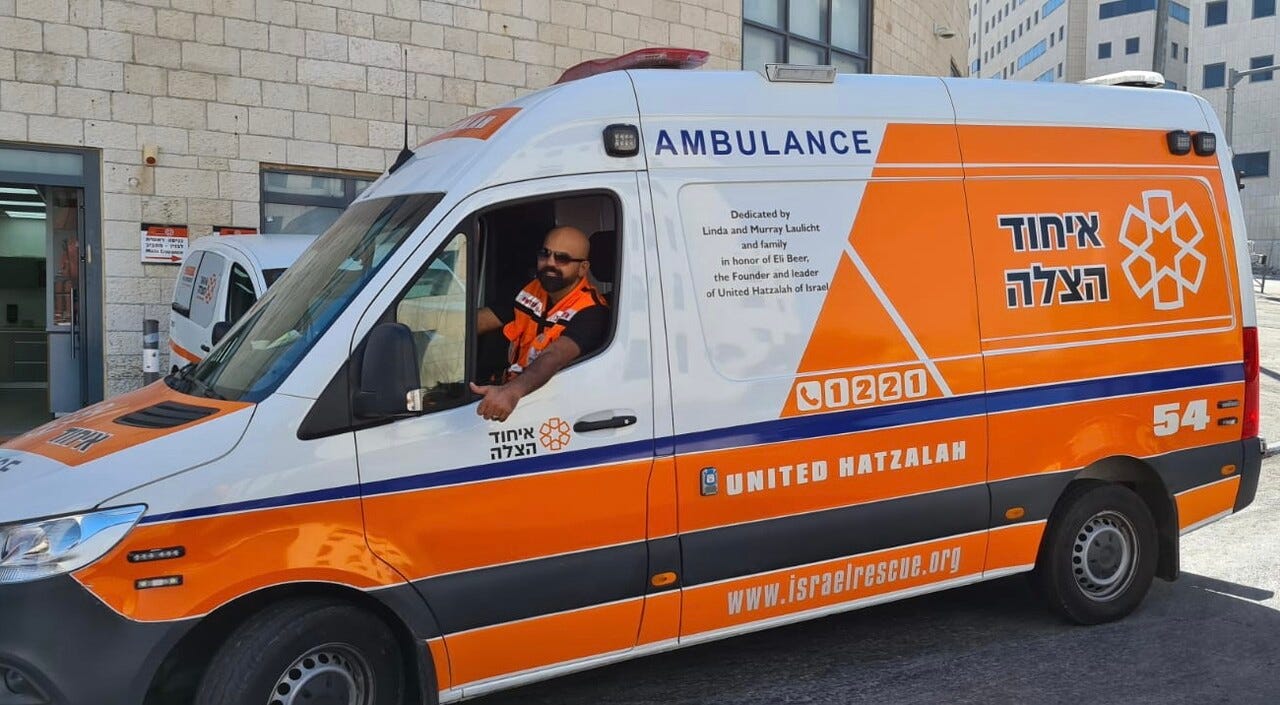
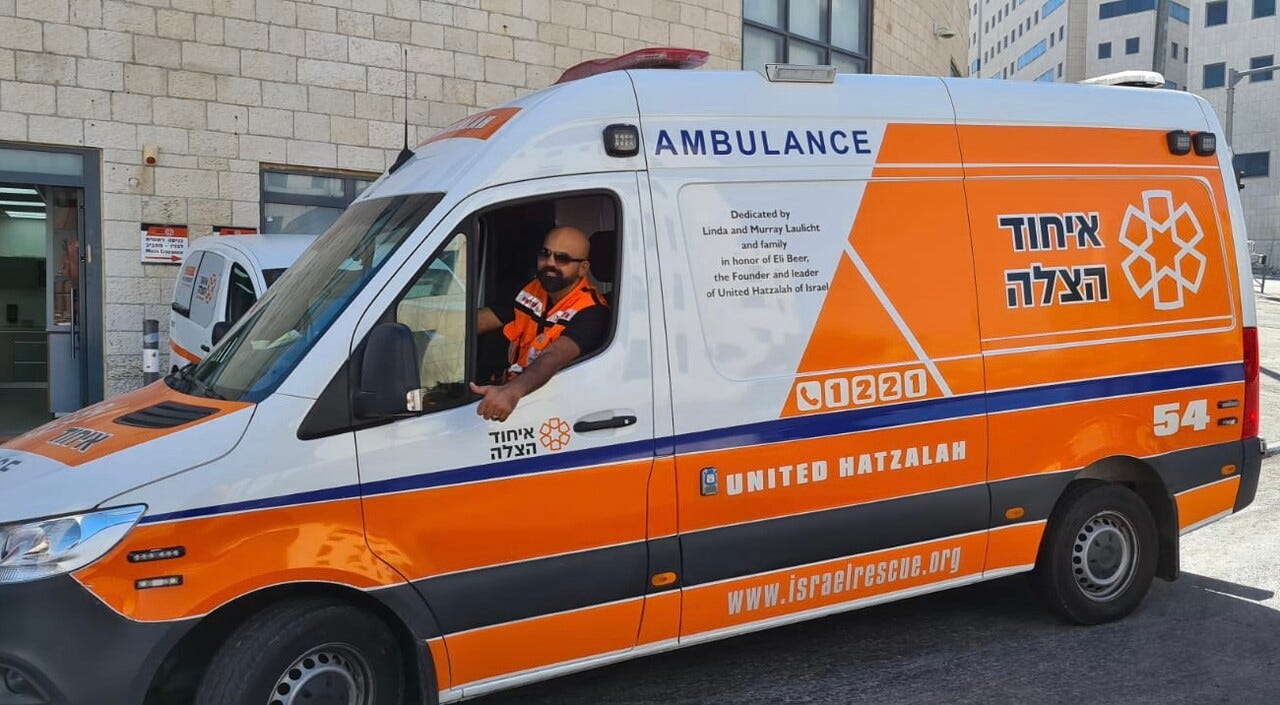
United Hatzalah’s volunteers deserve admiration for their dedication and for the thousands of hours they give to help their fellow citizens. Their commitment to saving lives, often under difficult circumstances, is unquestionable. It is precisely because of that commitment that accuracy in reporting matters so much. In an age when too many institutions dismiss hard questions as hostility, the very fact that UH circulated an internal memo in reply to recent reporting, and spoke of a “commitment to transparency,” is welcome. Transparency is the lifeblood of trust. The memo is a starting point, but its explanations invite further clarification. Numbers are not decorations for glossy infographics. They shape how the public understands reality, and if presented without precision, they risk creating confusion rather than clarity.
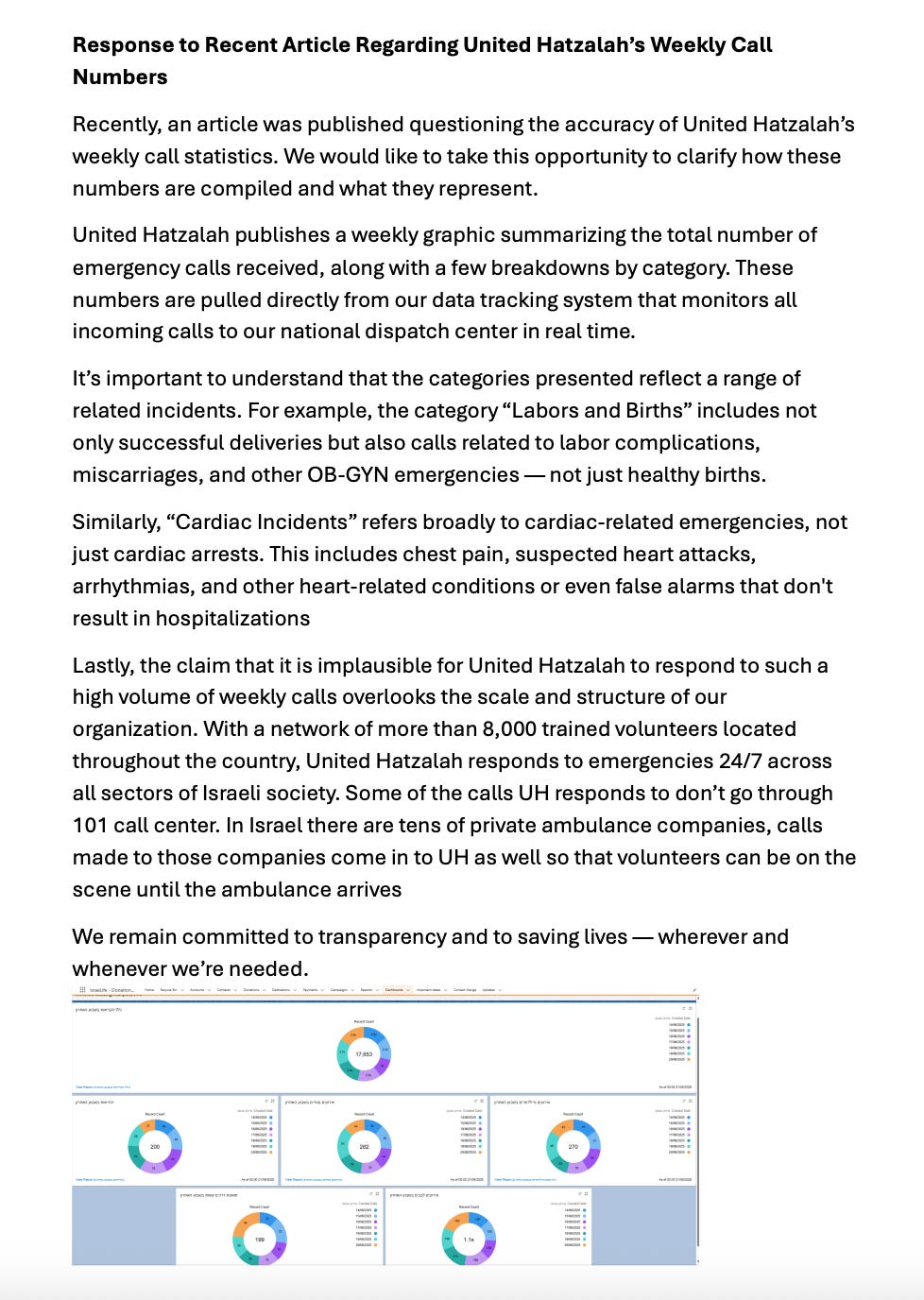
Consider the scale of the claims. In recent weeks UH reported between 15,500 and 17,600 emergency calls per week. Add to this more than 1,000 cardiac incidents, nearly 200 CPRs, over 250 births, and hundreds of strokes and serious accidents. These numbers suggest UH accounts for nearly a quarter of Israel’s entire emergency system. Yet Magen David Adom, the national EMS authority, handled 3.6 million calls in 2024, averaging about 70,000 per week. How could a volunteer organization without official dispatch authority be operating at near parity with the national service?
According to the internal memo, UH’s answer is to broaden the categories. “Labors and Births,” they explained, includes not only deliveries but miscarriages and other complications. “Cardiac Incidents” covers chest pain, arrhythmias, suspected heart attacks, and even false alarms. This framing may be technically accurate, but to the public, “births” suggests deliveries, and “cardiac incidents” suggests heart attacks. Without clearer definitions, what looks like dramatic lifesaving may actually represent a wider, less acute set of cases.
Proportionality raises further questions. Israel averages fewer than 200 out-of-hospital cardiac arrests per week. UH claimed more than 1,000 “cardiac incidents.” Nationally, about 115 CPRs are attempted weekly. UH reports nearly double that. MDA, the official service, assisted in roughly 22 births per week last year. UH claimed more than 250. These are not small gaps. They suggest there may be differences in how incidents are defined and counted, differences that call for more explanation.
The memo also noted that some calls come from private ambulance companies. That may account for some additional volume, but it raises another question: when both UH and a private provider respond to the same incident, is the call counted twice? Add to this the practice of “buffing”—volunteers listening to MDA frequencies and self-dispatching to incidents—and it becomes important to know how UH ensures that its statistics reflect actual dispatches rather than overlapping responses.
United Hatzalah deserves praise for mobilizing thousands of volunteers and for stating, in its own internal documents, that it welcomes scrutiny. The next step is to translate that openness into clarity. Numbers must align with verifiable evidence so that donors and the public can understand the scope of UH’s impact.
If UH chooses to lead in this way, it could set a standard for nonprofits everywhere: show the data, explain the records, invite the scrutiny, and allow trust to grow from truth. Such an approach would strengthen, not weaken, its reputation. And in a world already saturated with suspicion, that model of honest communication may be as lifesaving as the work itself.
7 Outstanding Questions for United Hatzalah
Based on publicly available information, Friends of United Hatzalah, Inc. raised roughly $144 million in the United States in 2023. In that same year, its Israeli arm reported revenue of $77.8 million, expenses of $57.9 million, and a surplus of $19.8 million. That appears to leave $66.2 million in funds raised in the U.S. not transferred to Israel, creating a combined surplus of roughly $86 million. To the best of my knowledge, there has been no clear accounting for this gap. Where is that money deployed?
Can UH provide more clarity about the extent of its Ukraine initiative, including how many flights were operated, how many people were transported, and whether an official passenger record exists to help the public understand the full scope of that effort?
How many of UH’s reported calls originate from its own dispatch system versus volunteers self-dispatching after listening to MDA frequencies, and how should those be represented in public reporting?
What systems are in place to prevent double counting when UH, private ambulance companies, and MDA all respond to the same incident?
When a case overlaps categories, for example a pregnant woman experiencing chest pain, how does UH decide which category it belongs in, and what safeguards prevent double counting?
What forms of independent confirmation, whether from hospitals, the Ministry of Health, or other partners, could help the public better understand and trust UH’s weekly figures?
What evidence exists for the pregnant woman story that was shared at the RJC conference, and why are those same claims missing from Angels in Orange, UH’s own official record?