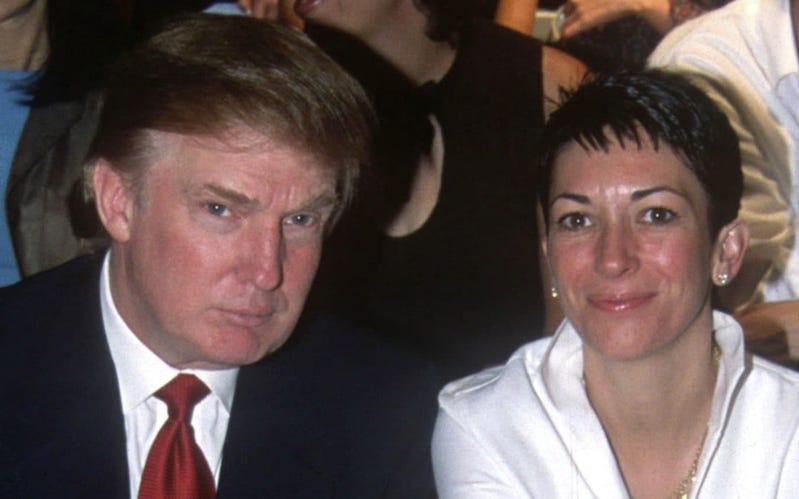
When President Donald Trump was asked in 2020 about Ghislaine Maxwell—who at the time was facing serious federal charges for sex trafficking minors—he replied, “I wish her well.” The reaction was swift and visceral. Many were outraged. How could anyone extend goodwill toward someone tied so closely to Jeffrey Epstein’s abuse of children?
But just this past week, in a new interview with Axios, Trump doubled down. Now speaking of a convicted sex trafficker, he repeated the same words: “Yeah, I wish her well.”
To most, the comment remains indefensible. Yet Jewish tradition urges us to ask a deeper question: Is it inherently wrong to wish even the guilty well?
According to Torah law, the answer is no. The Lubavitcher Rebbe, Rabbi Menachem Mendel Schneerson, addressed this very point in a 1976 talk. He said:
“If a person is being held in prison, the goal should not be punishment, but rather to give him the chance to reflect on the undesirable actions for which he was incarcerated. He should be given the opportunity to earn, improve himself, and prepare for his release when he will commence an honest, peaceful, new life…”
This is not soft-on-crime sentiment. It is a justice system rooted in the dignity of the human soul. Torah law does not institutionalize prison. Its punishments are designed to bring accountability, restitution, and moral change—not permanent exile from society.
To wish someone well, in that context, is not to condone their crime. It is to express hope that they reckon with it, grow from it, and return to a better path. The Jewish concept of teshuvah—repentance and return—is not reserved for minor mistakes. It applies even to those who have fallen far.
Trump’s words were not the product of deep moral theology. But the instinct to affirm the possibility of a person’s rehabilitation is not without precedent. The Rebbe taught that justice should never erase the possibility of transformation.
Many people like to inject their religious principles into politics. They quote scripture when it flatters their worldview. But when it comes to incarceration—the stripping of freedom and identity—those same values are curiously silent. Judaism is not. It remembers the soul, even when the world has stopped looking.