Israel faces a complicated and uncomfortable reality when it tries to call out Qatar for its relationship with Hamas. This difficulty stems from the fact that, before the October 7th attacks, Israeli officials were not only tolerating Qatar's support for Hamas in Gaza but were actively engaged with Qatar, encouraging it to continue funding the group. This background makes any sharp denunciation today look not just hypocritical, but deeply cynical.
In the years before October 7th, Qatar provided significant financial aid to Gaza, with Israel's quiet approval. The logic behind this was straightforward: by injecting money into Gaza, Qatar could help prevent humanitarian collapse, maintain relative calm, and, crucially, divide Hamas from more radical elements like Palestinian Islamic Jihad. Israeli defense and intelligence officials often viewed the Qatari money as a tool to "manage" Gaza without engaging in a full-scale reoccupation or providing direct aid themselves. Qatar, for its part, was willing to fund basic services, pay civil servant salaries, and distribute cash payments to families under a system coordinated with Israel and the UN.
Israeli leaders across multiple governments, including Prime Minister Benjamin Netanyahu's, defended this arrangement in private and public forums. The theory was that Hamas, though an enemy, could be "contained" and incentivized to maintain quiet. By ensuring that Gazans had some economic lifeline, Israel hoped to avoid another costly war while preserving the political division between Hamas in Gaza and the Palestinian Authority in the West Bank.
This approach was always risky. Funding a group that openly calls for Israel's destruction, even if indirectly through humanitarian channels, created a moral hazard. It treated Hamas less as an existential threat and more as a local authority to be managed. Many Israeli analysts warned that this strategy could backfire. October 7th proved them right in the most brutal way possible.
After the attacks, the Israeli government shifted its tone dramatically. Officials lambasted Qatar as a state sponsor of terrorism, accusing it of shielding Hamas leaders and facilitating their activities. While these criticisms are not baseless — Qatar does host Hamas' political bureau and provides a degree of diplomatic cover — Israel's prior engagement with Qatar undermines the force of its accusations. There is an inherent hypocrisy in attacking Qatar's role in the negotiations now when, just a few years ago, Israel was championing Qatar as a useful and even essential intermediary.
This inconsistency has diplomatic costs. It weakens Israel's credibility with international partners, some of whom recall that Israel itself treated Qatar as a critical tool in managing Gaza. It complicates efforts to build a unified front against Hamas and its backers because critics can point to Israel's own role in legitimizing the financial networks it now decries. The situation becomes even murkier when factoring in figures like American real estate mogul Steve Witkoff, who has extensive personal business dealings with Qatar. Witkoff, now playing a role in hostage negotiations for the United States, has publicly praised Qatar's "essential role" in facilitating hostage releases, further highlighting the blurred lines in this geopolitical tangle. His statements complicate the narrative that Qatar is solely a malign actor, reinforcing the perception of double standards in how different players approach Doha.
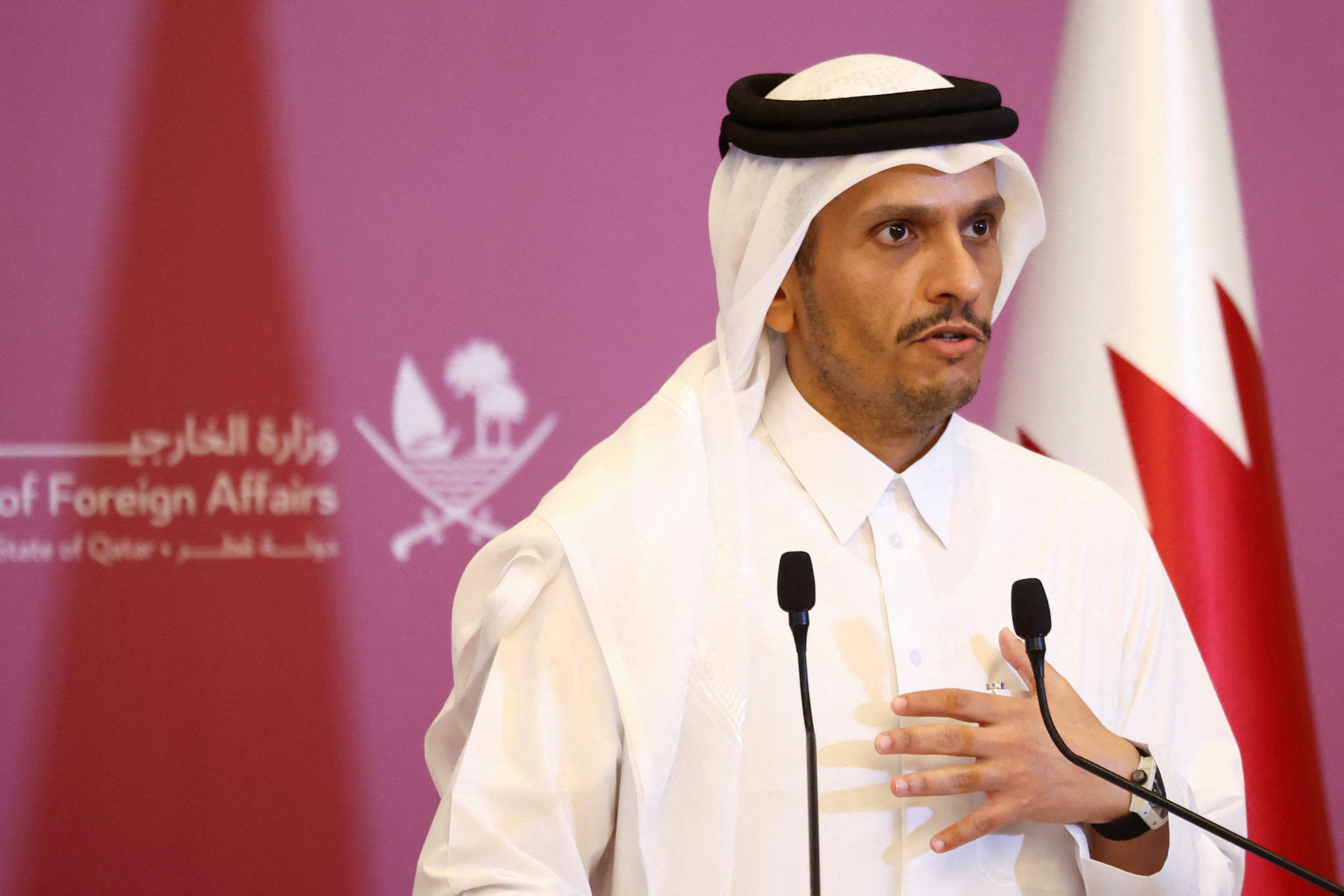
Adding to the complexity, Qatar's Prime Minister recently called Israel's blockade of humanitarian aid to Gaza an "immoral stain on the world's conscience," during hearings at the International Court of Justice. Israel, for its part, harshly criticized these proceedings as biased and politically motivated. This public clash underscores the wider diplomatic gap between Israel and Qatar and shows that Qatar is not simply a neutral intermediary but an active and vocal critic of Israeli policy. Yet this condemnation from Doha, coming from a country Israel once collaborated with in Gaza, highlights again the contradictions embedded in Israel's shifting posture toward Qatar.
Further compounding the controversy is the "Qatargate" affair, in which financial documents linked to Qatari influence efforts surfaced in connection with Israeli officials. A court recently extended the remand of a senior aide to Prime Minister Netanyahu after reviewing evidence suggesting inappropriate financial ties to Qatari entities. This scandal fuels suspicions that Qatar's reach extended deeply into Israeli politics, blurring ethical lines and making any present-day criticism of Doha seem even more hollow.
Meanwhile, it is impossible to ignore that the United States itself maintains a massive military presence at Al Udeid Air Base in Qatar, home to U.S. Central Command operations. This close and longstanding strategic relationship further muddies the waters. When Qatar plays a critical role in American security policy even as it faces accusations of funding Hamas, it becomes harder to separate diplomacy from dependence, and principle from pragmatism.
It also raises tough questions inside Israel. Was the strategy of containment fatally flawed? Was there an overreliance on short-term tactical gains at the expense of long-term strategic security? These are not abstract debates. They cut to the core of how Israeli leadership understood and mishandled the threat from Gaza.
In trying to recalibrate its approach post-October 7th, Israel is caught in a bind of its own making. It needs to isolate Hamas and pressure Qatar to stop its support. But it must do so while navigating the uncomfortable truth that, until recently, it saw Qatar's involvement as not just tolerable but necessary. That contradiction won't be easy to explain away, either to the world or to its own citizens.
And in the meantime, one must ask: is it fair that the families of the hostages — mothers, fathers, sons, daughters — who wake up every day with a hole torn through their lives, who live trapped between hope and despair, must continue to pay the ultimate price for years of political cowardice, miscalculation, and duplicity? How many more sleepless nights must they endure because leaders chose convenience over clarity? How can they know who to trust, when influence-peddling and undisclosed financial ties raise the disturbing question: who, exactly, is working for the hostages' freedom — and who is quietly on Qatar's payroll?