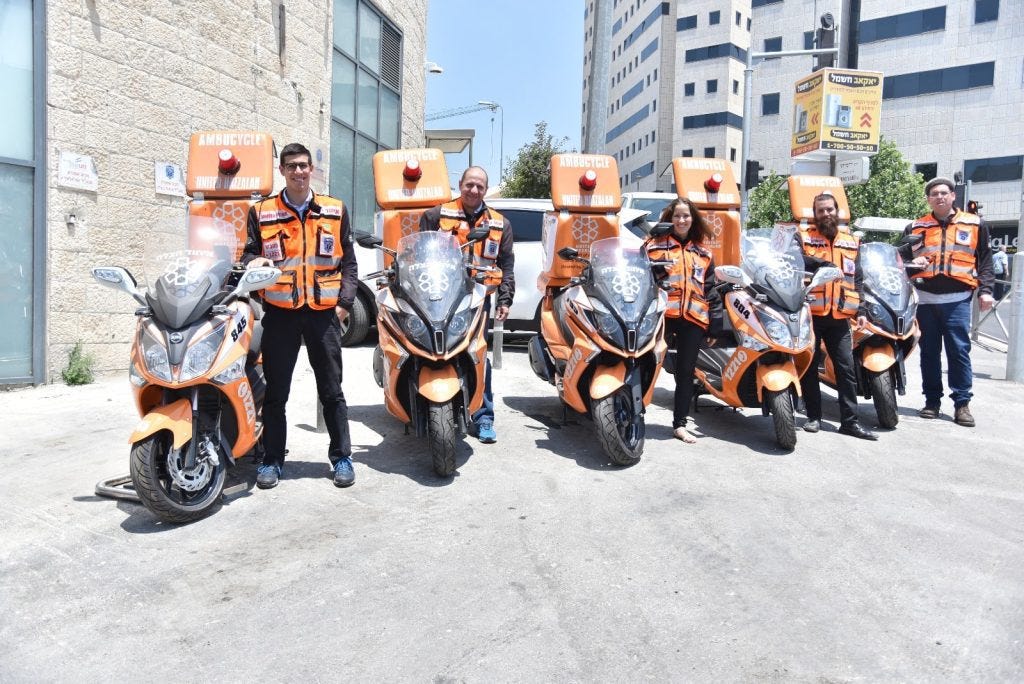
United Hatzalah of Israel’s audited 2023 financial statements contain a detail worth scrutiny. Of the NIS 288 million in reported revenue, 19 percent, or NIS 54.8 million, does not come from cash at all. It is listed as “money equivalent donations,” primarily the value of volunteer hours along with donated fuel, rent, and equipment. This treatment is permissible under Israeli GAAP and confirmed by auditors, but it leaves a distorted impression of organizational scale.
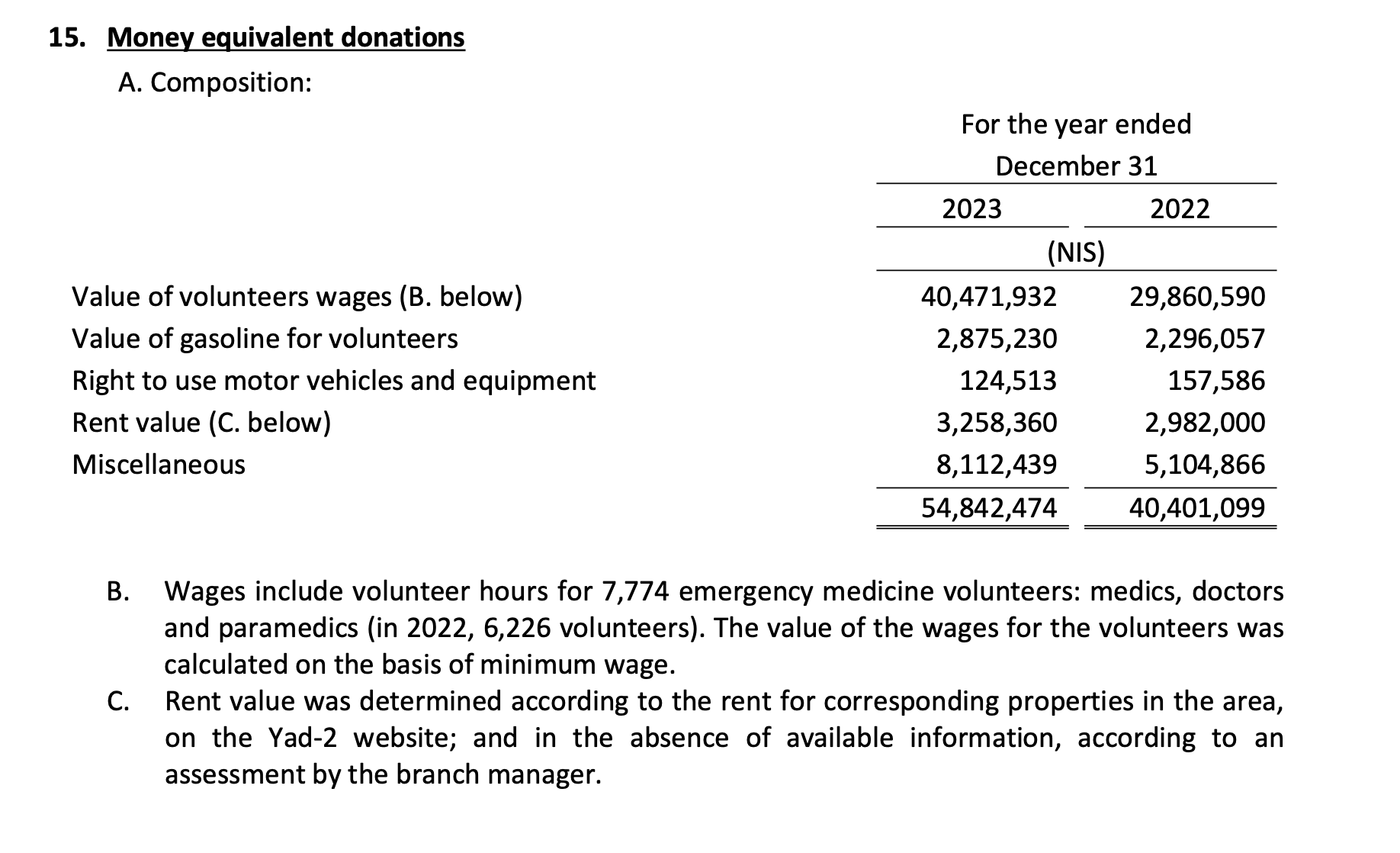
The linchpin of the calculation is the claim that United Hatzalah had 7,774 volunteer medics, doctors, and paramedics in 2023. Their hours are valued at Israel’s minimum wage, producing NIS 40.5 million of the NIS 54.8 million total. Yet the volunteer number comes solely from United Hatzalah’s reporting. It is not independently verified in the audited statements. Whether the figure represents active, regularly serving volunteers or a broader roster is unclear. The entire accounting uplift, nearly one fifth of reported revenue, rests on this untested assumption.
The benefits of this approach are obvious. Adding the 19 percent boost makes a NIS 233 million cash operation appear as a NIS 288 million enterprise. That larger headline number signals heft to donors, foundations, and government partners. Efficiency ratios also look stronger because volunteer hours booked as program expenses inflate the portion of spending shown as mission delivery rather than administration.
But the risks are equally plain. Donors may not realize that nearly one fifth of revenue is not liquid. Partners may assume the organization can take on larger projects than its cash base permits. United Hatzalah is potentially exposed if the public questions whether the volunteer count reflects genuine, consistent activity or simply enrollment on a list.
This tension is not unique to one organization. Nonprofits worldwide wrestle with how to honor volunteer labor without confusing it with financial strength. Ignoring it understates value, but folding it into revenue without clear distinction risks misleading. The path forward is greater clarity. United Hatzalah could publish on its website a breakdown showing cash revenue versus non-cash, explain its volunteer valuation method, and disclose whether the 7,774 figure represents certified active volunteers or broader registration.
The medics who serve deserve recognition. But the way their hours are booked, and the fact that the number of volunteers is largely unverified, creates a potentially inflated picture of organizational might. United Hatzalah’s audited accounts meet accounting rules, but perception matters as much as compliance. Donors deserve to know whether they are supporting a NIS 288 million powerhouse or a NIS 233 million cash operation whose reported size hinges on an untested assumption. Recognizing volunteers is vital. So is telling the truth about the money.