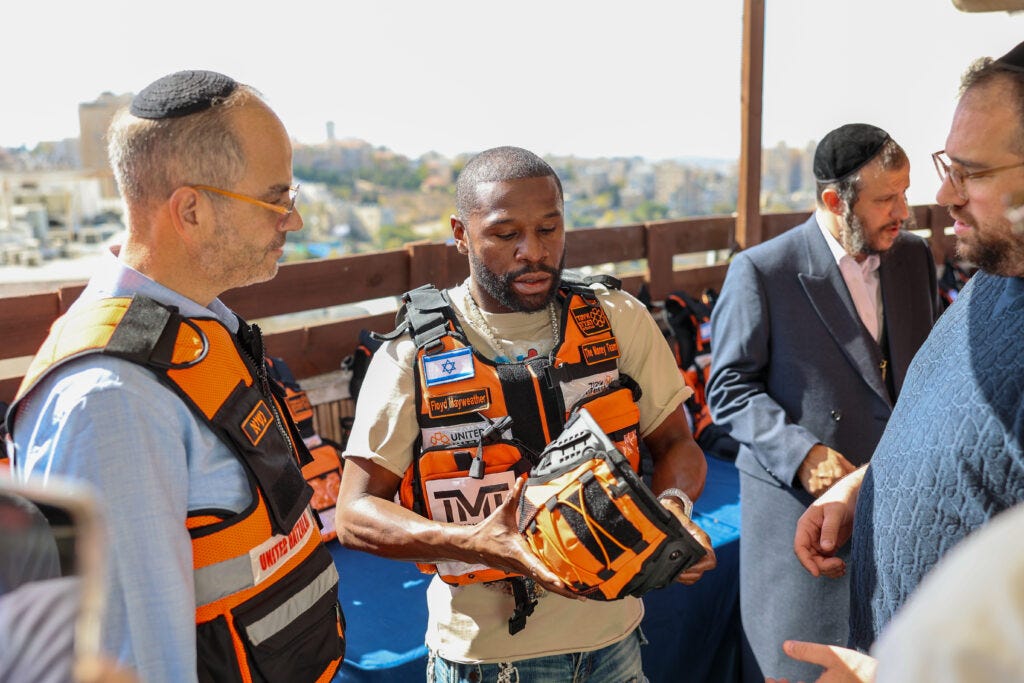
Say the words “United Hatzalah” in a synagogue or Jewish community center and people light up. The image is powerful. Orange-vested medics drop everything, leave their Shabbat tables, and race into the street to help a stranger. The organization tells the world it is “100 percent volunteer.” For many donors, that promise is irresistible. Who would not want to support neighbors helping neighbors, free of charge, powered only by goodwill?
The reality, however, is more complicated. United Hatzalah’s own 2023 audited financials show more than 44 million shekels, about 12 million dollars, in payroll and benefits. That includes salaries for operations staff, administrative staff, and civilian service workers. These are not symbolic stipends. They are recurring expenses, disclosed openly in black and white.

Related coverage
Judge Rules (2021): MDA Didn’t Kill — But United Hatzalah’s Words Did Damage
Did United Hatzalah Claim Magen David Adom Failed on October 7th?
More: United Hatzalah: The Full Investigation
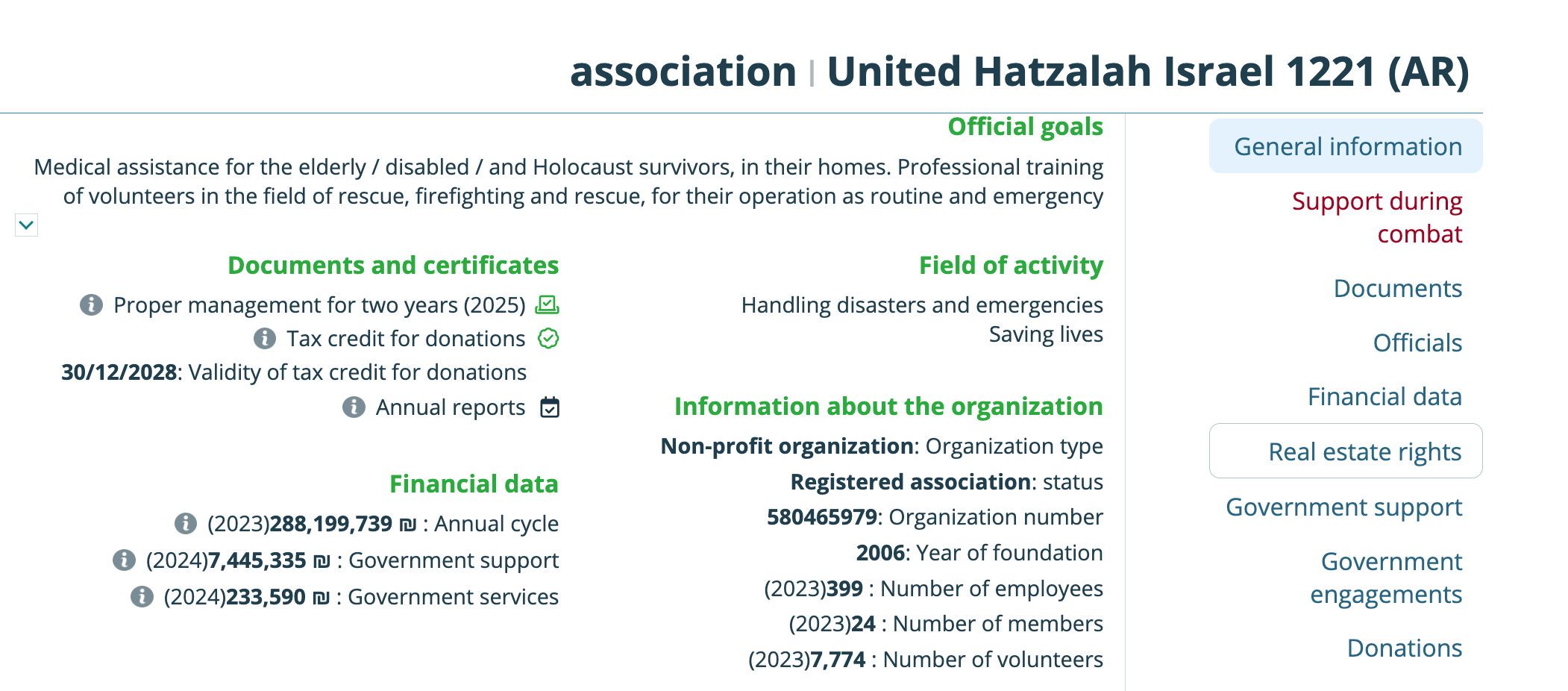
Israel’s nonprofit registry adds more detail. In 2023 United Hatzalah reported 399 employees in Israel. Alongside those employees, it listed 7,774 volunteers. Yet it is unclear how many of these volunteers are fully active and working exclusively with United Hatzalah, since the figure is reported by the organization itself.
It is also worth remembering that United Hatzalah does not operate Israel’s national emergency line. That role belongs to Magen David Adom. Instead, United Hatzalah runs a parallel non-emergency national dispatch system, which helps coordinate its volunteers. It is a sophisticated operation, but it is not the backbone of Israel’s official emergency infrastructure, and maintaining it requires professional staff and resources.
And Israel is only one piece of the puzzle. United Hatzalah raises money through affiliated nonprofits around the world. Each office has its own staff, payroll, and overhead. None of those additional salaries appear in the Israeli financials. The picture that emerges is not of a purely volunteer enterprise, but of a hybrid: thousands of self-reported volunteers supported by a significant paid apparatus.
There is nothing inherently wrong with employing staff. Running dispatch systems, maintaining vehicles and equipment, and raising hundreds of millions of shekels requires professionals. The issue is not whether salaries exist, but whether the story being told to donors reflects the reality.
When an organization advertises itself as “100 percent volunteer” while simultaneously disclosing hundreds of employees and tens of millions in payroll, transparency is the first casualty. Donors deserve the full picture.