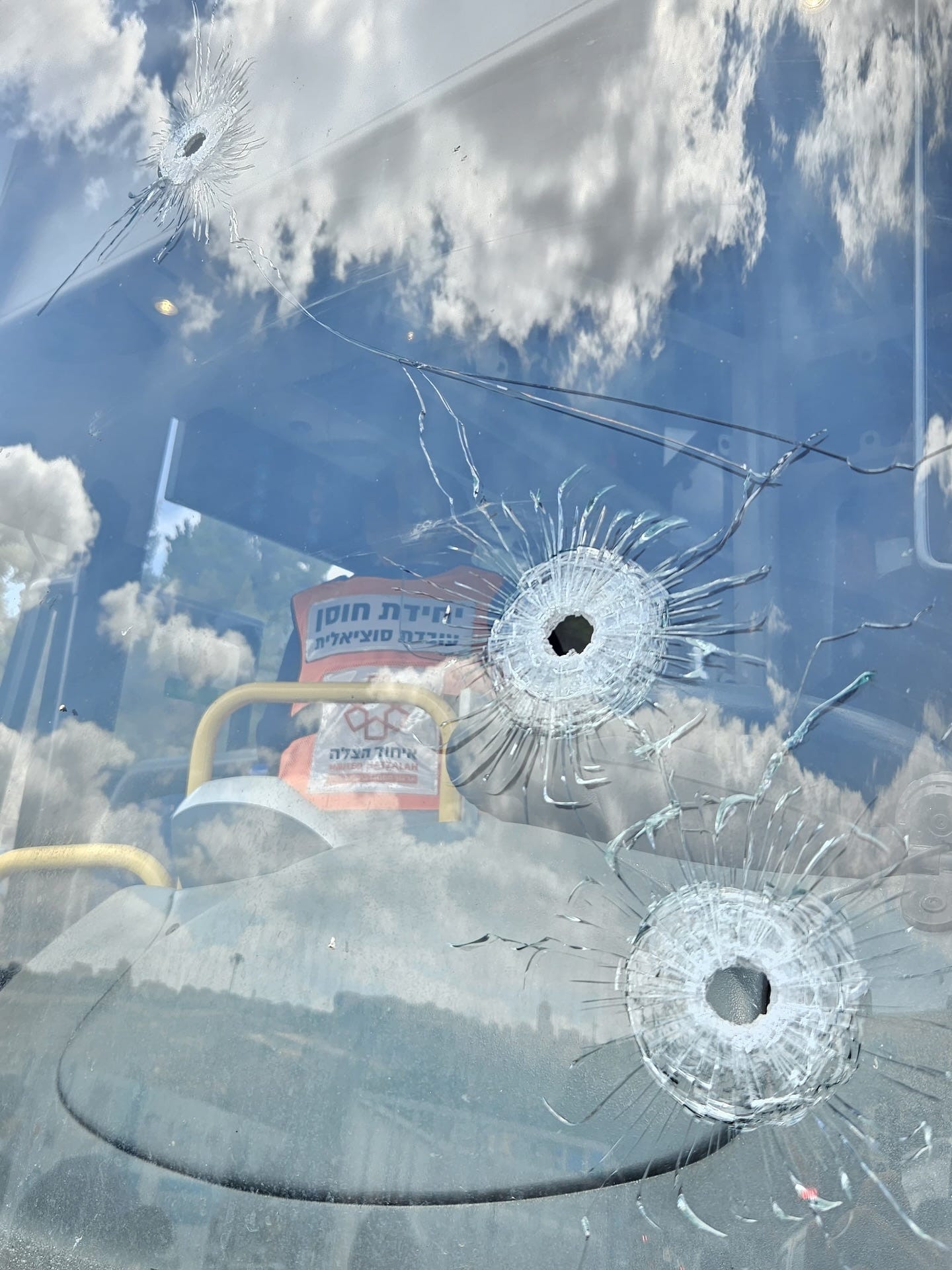
Jerusalem woke up to horror on Monday morning. At 10:13 a.m., two Palestinian gunmen opened fire at commuters standing at the Ramot Junction bus stop and at a bus that had just pulled up. The shooting lasted only a few minutes. An off-duty soldier and armed civilians returned fire and killed both attackers. By the time ambulances and medics arrived, the gunfire was over.
The human cost was devastating. Six people were murdered. According to official reports published in the Israeli press, the victims were Yaakov Pinto, 25; Rabbi Israel Matzner, 28; Rabbi Yosef David, 43; Rabbi Levi Yitzhak Pash; Rabbi Mordechai Steintzag, 79; and Sarah Mendelson, 60. All were adults.
Magen David Adom (MDA) said four victims were declared dead at the scene. A woman in her fifties who had been evacuated in critical condition later died at Shaare Zedek Medical Center. Eleven people were treated for injuries that ranged from light to critical. MDA’s blood services supplied 85 units to hospitals across Jerusalem. In MDA’s words, paramedics arrived to “a very difficult and tragic scene” with victims unconscious on the road and broken glass scattered around the bus stop.
That was the record presented by official agencies and the press. But it is not the story Eli Beer chose to share.
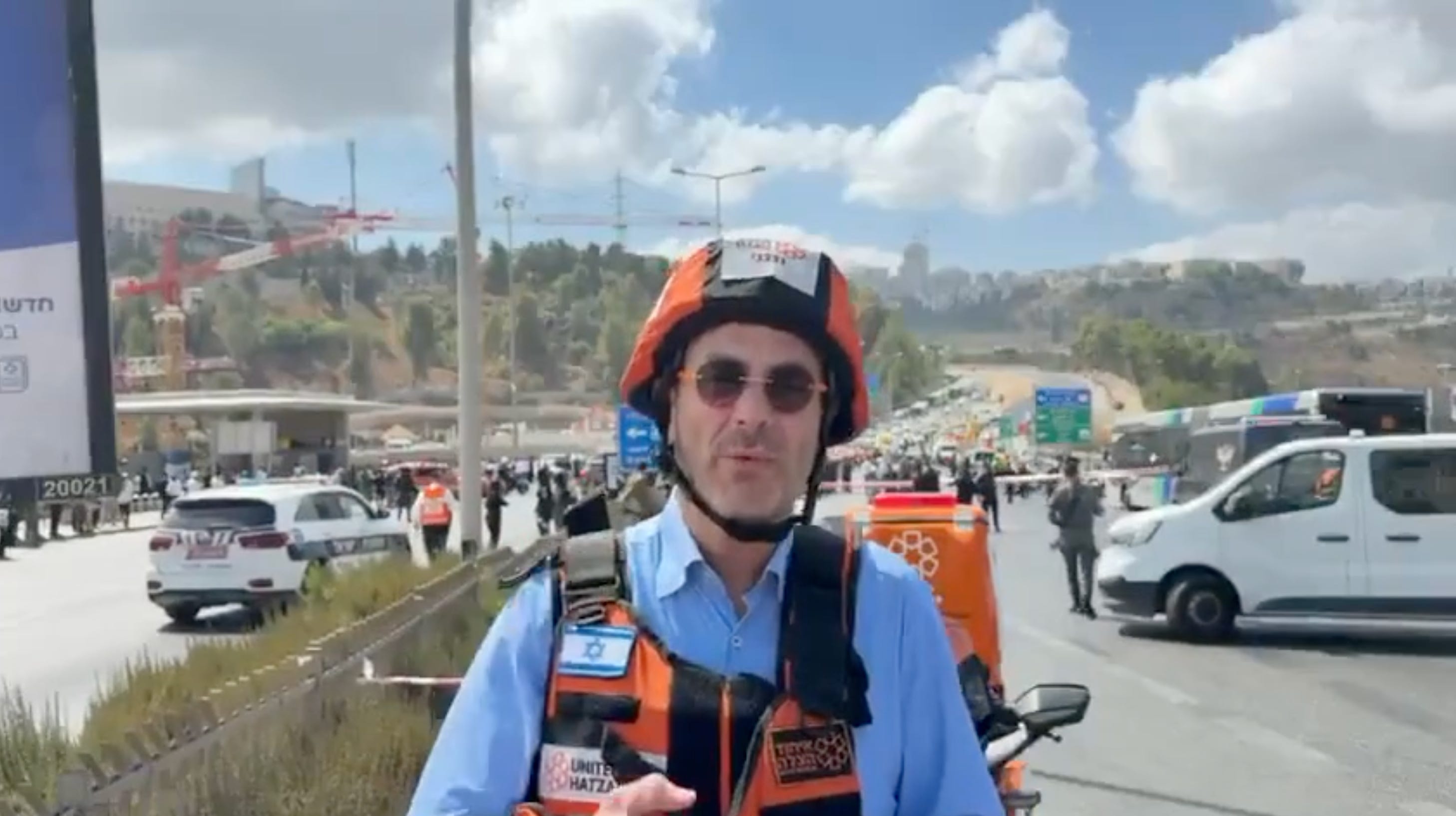
In a video posted soon after the attack, Beer, the founder of United Hatzalah, appeared wearing a helmet and told viewers his volunteers had responded “under fire, literally under fire.” He also said that a “young boy” was among the dead on the scene. Both statements were inconsistent with the information available from MDA and the casualty lists published by multiple outlets.
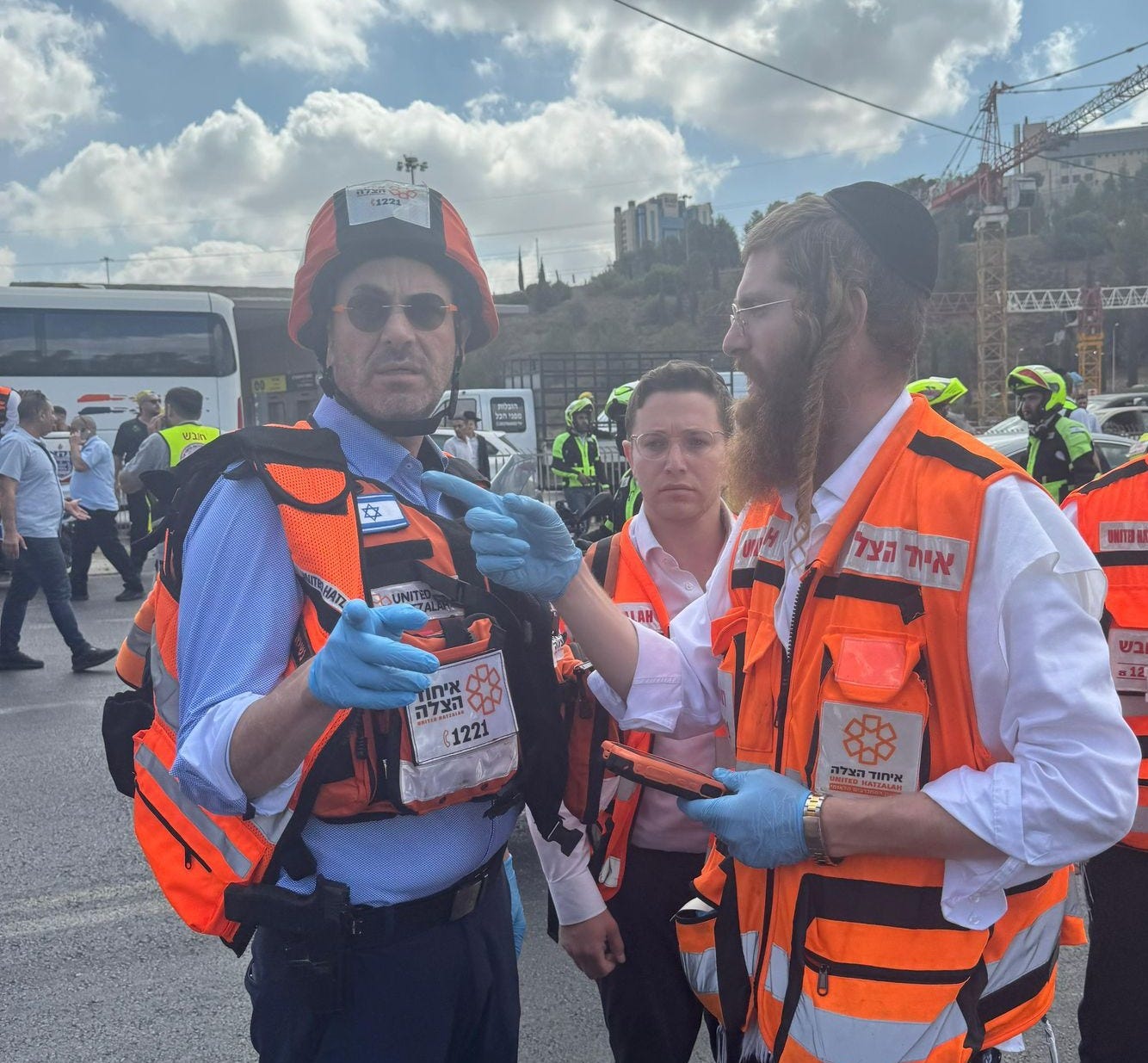
There was no young boy among the deceased victims on the scene. Every one of the dead on scene was an adult. And what “fire” and immediate danger was still taking place when Beer filmed his video? The attackers had already been neutralized. The shooting had ended. Footage from the scene shows responders and civilians without helmets. The only helmet in view belonged to Beer.
The question is why add details that did not align with the facts. Was it a mistake in the heat of the moment? Was it an attempt to heighten the sense of danger for viewers abroad? Or was it part of an effort to dramatize tragedy in ways that draw more attention and more donations? These are fair questions for the public to ask.
MDA’s account showed what accuracy looks like in real time. It listed where the wounded were taken, provided a breakdown of their condition, and included quotes from medics who described treating men and women in their forties, fifties, and seventies. The descriptions were harrowing but factual.
Beer’s framing was different. Helmet. Dramatic soundbites. A child victim who did not exist. A suggestion that medics were operating in an active firefight. Those additions may have created a powerful clip for social media, but they did not reflect the confirmed reality.
The danger of such embellishment is not only that it misleads. It also risks eroding public confidence in the very institutions people depend on in moments of crisis. The attack at Ramot Junction was already unbearable. Six lives were stolen on an ordinary Monday morning commute. Families were left broken. Survivors and paramedics gave testimony that was raw and searing. That truth did not need to be dramatized further.
The attack was real. The grief is real. The victims are real. What was not real were the claims of a “young boy” killed and medics working “under fire” once the shooting had stopped. Which leaves the hardest question of all. Why would an organization that claims to save lives present details that were not borne out by the facts? Is it simply the lure of social media clicks, or is it to raise money?